S. 1213: Protect Elections from Deceptive AI Act
Sponsor
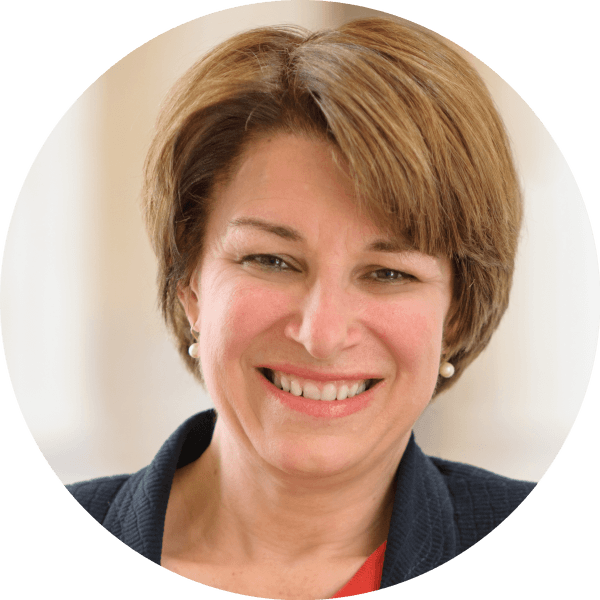
Amy Klobuchar
Democrat · MN
Federal candidates get a court tool against AI deepfakes
Why it matters
A fabricated video of a candidate saying something they never said can reach millions before anyone debunks it. S. 1213 gives federal candidates a way to fight back in court: sue to pull the clip down and collect damages. It's a rare bipartisan pairing — Sens. Amy Klobuchar (D-MN) and Josh Hawley (R-MO), joined by Susan Collins (R-ME), Chris Coons (D-DE), and Michael Bennet (D-CO). The catch: candidates have to clear a high evidence bar, and enforcement is civil lawsuits only — no criminal charges, no new agency.
S. 1213, the Protect Elections from Deceptive AI Act, makes it illegal to knowingly spread AI-faked audio or video of a federal candidate when the goal is to swing an election or raise money. It's narrow on purpose: the target isn't all synthetic media, just deceptive AI content aimed at federal politics.
The bill spells out what counts. The media has to be built by AI — machine learning, deep learning, and similar techniques — that either alters real footage or conjures something entirely fake that still looks authentic. Then it applies a reasonable-person test: would an average viewer come away with a fundamentally different impression of what the candidate looked like, said, or did? If yes, it can qualify.
Enforcement runs through the courts, not prosecutors. A candidate who's the subject of the media can ask a judge for an order to halt distribution, and those requests get bumped to the front of the line. The candidate can also sue for damages and recover attorney's fees if they win. But the bar is steep — they have to prove the violation by clear and convincing evidence, a tougher standard than most civil cases.
The bill carves out room for journalism and comedy. News outlets — broadcast, cable, streaming, newspapers, and online publications — are exempt when they show the media as part of real news coverage and clearly flag that its authenticity is in question. Satire and parody are exempt outright. The likely fights: what counts as "deceptive," how clear a disclosure has to be, and whether courts can move fast enough to matter during a campaign.
Bill Progress
Latest Action · Mar 31, 2025
Read twice and Referred to Rules and Administration. for review
S. 1213 Bill Summary
What S. 1213 actually does.
Faking a candidate to swing a vote or raise cash becomes illegal
The bill bars any person, political committee, or other entity from knowingly distributing materially deceptive AI-generated audio or video during federal election activity, or about a federal candidate, when the purpose is to influence an election or solicit funds.
Only federal candidates can sue
The protected party — what the bill calls a "covered individual" — is defined as a candidate for federal office. State candidates, local candidates, and ordinary voters don't get a private right of action under this measure.
The AI definition is written to be specific
Covered media is created by machine learning — including deep learning and natural language processing or more complex techniques — that either merges, replaces, or superimposes content to look authentic, or generates wholly fake content that still appears real.
A reasonable-person test decides what's deceptive
Content qualifies if a reasonable person, weighing both the media itself and where it appeared, would have a fundamentally different impression of the candidate's appearance, speech, or conduct — or would believe the candidate did something they never did.
Candidates can get fast court orders, but face a high burden
A targeted candidate can seek an injunction to stop distribution, and those actions get precedence in court. They can also sue for general or special damages and recover attorney's fees if they prevail — but must prove the violation by clear and convincing evidence.
News coverage and satire are exempt
Broadcasters, streaming services, newspapers, and online publications are exempt when they present the media as part of bona fide news coverage and clearly flag that its authenticity is questioned. Satire and parody are exempt as well.
Who benefits from S. 1213?
Candidates for federal office
Anyone running for the House, Senate, or president gets a direct legal remedy if a deceptive AI clip targets them. They can ask a court to halt distribution, sue for damages, and potentially recover attorney's fees if they win.
Voters in federal elections
The bill is aimed at the kind of last-minute AI fakes designed to give voters a false impression of what a candidate said or did, the period when a deceptive clip can do the most damage with the least time to correct it.
News organizations
Broadcasters, cable and streaming services, newspapers, magazines, and online publications get explicit carve-outs. They can show or discuss suspect media in genuine news coverage as long as they clearly flag the authenticity question.
Comedians and satirists
The bill expressly exempts satire and parody, so obvious jokes and political comedy aren't treated the same as a deceptive deepfake built to mislead voters.
Who is affected by S. 1213?
Campaigns and political committees
Political committees are named directly in the prohibition. Knowingly distributing a deceptive AI clip during federal election activity to influence a race or raise money could expose them to a lawsuit from the targeted candidate.
PACs, outside groups, and consultants
The ban reaches any "person" or "other entity," not just official campaigns. Super PACs, advocacy groups, vendors, and consultants who push deceptive AI content about a federal candidate fall within its scope.
Broadcasters and streaming platforms
Radio, TV, cable, satellite, and streaming services keep their exemption only if they air disputed media as part of real news coverage and clearly disclose the authenticity question in a way the average viewer can hear or read.
Online and digital publishers
Internet and electronic publications stay exempt only if they routinely carry general-interest news and clearly state that the media does not accurately represent the candidate's speech or conduct.
S1213 Legislative Journey
Committee Action
Mar 31, 2025
Read twice and referred to the Committee on Rules and Administration.
About the Sponsor
Amy Klobuchar
Democrat, MN · 19 years in Congress
Committees: Agriculture, Nutrition, and Forestry, Commerce, Science, and Transportation, Joint Committee of Congress on the Library
View full profile →
Cosponsors (4)
This bill has 4 cosponsors: 2 Democrats, 2 Republicans, reflecting bipartisan support. Cosponsors represent 4 states: Colorado, Delaware, Maine, and 1 more.
Committee Sponsors
Rules and Administration Committee
1 of 17 committee members cosponsored

7 Democrats across this committee haven't cosponsored yet. Mobilize their constituents
S. 1213 Quick Facts

- Committee
- Rules and Administration
- Chamber
- Senate
- Policy
- Government Operations and Politics
- Introduced
- Mar 31, 2025
Read twice and Referred to Rules and Administration. for review
Mar 31, 2025
Official Sources
The official bill page tracking text, sponsors, cosponsors, and committee status for the Protect Elections from Deceptive AI Act.
Lead sponsor Sen. Amy Klobuchar's announcement laying out the bill's aim to ban materially deceptive AI-generated content in federal elections.
Sen. Josh Hawley's announcement underscores the bipartisan framing of the deepfake legislation.
S. 1213 amends Title III of this statute; section 30101 defines 'candidate,' 'person,' and 'Federal election activity' that the bill relies on.
The FEC administers the Federal Election Campaign Act that this bill would amend; the page hosts the full statutory text.
The committee where S. 1213 was referred and currently sits awaiting action.
The bill gives candidate injunction actions 'precedence in accordance with' these rules, which govern federal civil litigation.
S. 1213 Common Questions
Can a candidate sue over an AI deepfake in a campaign ad?
Yes. Under S. 1213, a candidate for federal office who is the subject of a deceptive AI clip can ask a court to stop it from spreading and sue for damages. Those injunction requests get bumped to the front of the court's line.
Who can actually sue — what about state candidates or voters?
Only candidates for federal office. The bill limits the right to sue to people running for the House, Senate, or president. State and local candidates, parties, and ordinary voters don't get to bring a case under S. 1213.
How hard is it to win a deepfake lawsuit under S. 1213?
The bar is high. The candidate has to prove the violation by clear and convincing evidence — a tougher standard than the "more likely than not" test in most civil cases. They also have to show the media was distributed knowingly.
Does S. 1213 ban deepfakes used to raise campaign money?
Yes. The ban covers AI fakes spread to influence an election or to solicit funds. So a fabricated clip of a candidate used in a fundraising pitch falls within the prohibition, not just one aimed at swinging votes.
Can a news outlet still show a deepfake while reporting on it?
Yes. Broadcasters, cable and streaming services, newspapers, and online publications are exempt when they present the media as part of genuine news coverage and clearly flag that its authenticity is in question, in a way the average viewer can hear or read.
Are memes, satire, and parody covered by the bill?
No. S. 1213 expressly exempts satire and parody. The prohibition is aimed at AI media built to deceive voters, not at obvious political jokes or comedy.
Does the bill cover AI text and chatbots, or just audio and video?
Just audio and visual media. The bill defines covered content as an AI-generated image, audio, or video that looks authentic. Text-only fakes and chatbot output fall outside what S. 1213 prohibits.
Does S. 1213 create criminal penalties for election deepfakes?
No. Enforcement is entirely civil. There are no criminal charges and no new agency — the only remedy is a private lawsuit brought by the targeted candidate for an injunction and damages.
Based on S. 1213 bill text
S. 1213 Bill Text
“To prohibit the distribution of materially deceptive AI-generated audio or visual media relating to candidates for Federal office, and for other purposes.”
Source: U.S. Government Publishing Office
Get notified when S. 1213 moves
Committee votes, floor action, cosponsor changes — straight to your inbox.
Bill alerts + Legisletter's monthly briefing. Unsubscribe anytime.
Government Operations and Politics Bills
9 related bills we're tracking
Protect Our Letter Carriers Act of 2025
Referred to the Committee on the Judiciary, and in addition to the Committee on Oversight and Government Reform, for a period to be subsequently determined by the Speaker, in each case for consideration of such provisions as fall within the jurisdiction of the committee concerned.
Feb 6, 2025
John R. Lewis Voting Rights Advancement Act of 2025
Referred to the House Committee on the Judiciary.
Mar 5, 2025
Washington, D.C. Admission Act


Referred to the Committee on Oversight and Government Reform, and in addition to the Committees on Rules, Armed Services, the Judiciary, and Energy and Commerce, for a period to be subsequently determined by the Speaker, in each case for consideration of such provisions as fall within the jurisdiction of the committee concerned.
Jan 3, 2025
Rights for the TSA Workforce Act
Referred to the Subcommittee on Transportation and Maritime Security.
Mar 11, 2025
DISCLOSE Act of 2026
Referred to the Committee on House Administration, and in addition to the Committees on Ways and Means, and the Judiciary, for a period to be subsequently determined by the Speaker, in each case for consideration of such provisions as fall within the jurisdiction of the committee concerned.
Mar 4, 2026
Federal Retirement Fairness Act


ASSUMING FIRST SPONSORSHIP - Ms. Randall asked unanimous consent that she may hereafter be considered as the first sponsor of H.R. 1522, a bill originally introduced by Representative Connolly, for the purpose of adding cosponsors and requesting reprintings pursuant to clause 7 of rule XII. Agreed to without objection.
Jul 22, 2025
FIND Act
Referred to the House Committee on Oversight and Government Reform.
Jan 3, 2025
Fair Pay for Federal Contractors Act of 2025
Referred to the Committee on Appropriations, and in addition to the Committee on Oversight and Government Reform, for a period to be subsequently determined by the Speaker, in each case for consideration of such provisions as fall within the jurisdiction of the committee concerned.
Sep 30, 2025
Saving the Civil Service Act
ASSUMING FIRST SPONSORSHIP - Mr. Walkinshaw asked unanimous consent that he may hereafter be considered as the first sponsor of H.R. 492, a bill originally introduced by Representative Connolly, for the purpose of adding cosponsors and requesting reprintings pursuant to clause 7 of rule XII. Agreed to without objection.
Sep 16, 2025
Trending Right Now
Bills gaining momentum across Congress
North Platte Canteen Congressional Gold Medal Act

Referred to the House Committee on Financial Services.
Feb 21, 2025
America’s Olympic and Paralympic Games Commemorative Coins Act

Referred to the House Committee on Financial Services.
Jul 14, 2025
Fit to Serve Act
Referred to the House Committee on Armed Services.
May 21, 2025
Tracking Government Operations and Politics in Congress? Monitor bills, track cosponsor momentum, and launch advocacy campaigns — all from one advocacy platform.