Mr. Speaker, today, I mistakenly voted NAY on Roll Call No. 86, on Motion to Recommit on H.R. 7744, Department of Homeland Security Appropriations Act, 2026. Had I been present, I would have voted YEA on Roll Call No. 86. Stated against:
H.R. 7744: Department of Homeland Security Appropriations Act, 2026
Signed Into LawPublic Law 119-86
Enacted as part of HR7147: Homeland Security and Further Additional Continuing Appropriations Act, 2026.· Apr 30, 2026
Sponsor

Tom Cole
Republican · OK-4
House ends the DHS shutdown — and tightens the leash
4 min readLast updated June 23, 2026
Why it matters
Part of the Department of Homeland Security has been shut down since February 14, 2026, after its funding ran out. H.R. 7744 turns the lights back on: it funds DHS through September 2026, authorizes back pay for the workers caught in the shutdown, and ratifies the obligations the department had to incur just to keep essential operations going. In exchange, Congress is attaching unusually tight strings — monthly spending reports, a funding holdback until DHS answers its questions, and a big increase in money for watchdogs.
H.R. 7744 is the full-year spending bill for the Department of Homeland Security. It does two big things at once: it ends the partial DHS shutdown that began on February 14, 2026, when the stopgap funding expired, and it funds the department through September 30, 2026.
The bill reaches across all of DHS — Customs and Border Protection, Immigration and Customs Enforcement, the TSA, the Coast Guard, the Secret Service, CISA, FEMA, and Citizenship and Immigration Services. It also authorizes back pay, under existing law, for federal employees affected by the shutdown, and it formally approves the obligations the department had to take on to keep essential operations running while funding lapsed.
Accountability is the other half of the story. The bill requires monthly budget and staffing reports to Congress and quarterly briefings on major acquisition programs. It withholds $5 million from the Office of the Secretary until DHS answers every committee question tied to its 2027 budget hearings before July 1 — a direct pressure tactic aimed at leadership.
It also puts real money into oversight. The Office of Inspector General gets $257.6 million, including $20 million earmarked specifically for added inspections of detention facilities and another $12.8 million for tracking how earlier appropriations are spent. Lawmakers clearly expect close monitoring of detention, contracting, and how DHS carries out recent funding.
A handful of riders shape what DHS can and can't do with the money. It can't be used to build a national identification card. It steers $300 million to the Nonprofit Security Grant Program, which helps houses of worship, schools, and other at-risk nonprofits harden against attacks. And it forces DHS to disclose every grant and contract awarded without full and open competition in 2025 or 2026, with the inspector general reviewing whether those awards followed the rules.
Bill Progress
IntroducedMar 2
Committee
Pass HouseMar 5
Pass Senate
Signed
Law
Latest Action · Mar 9, 2026
Passed the House, received in Senate
H.R. 7744 Bill Summary
What H.R. 7744 actually does.
1
Ends the DHS shutdown and funds the year
The bill provides full-year appropriations for the Department of Homeland Security through September 30, 2026, ending the partial shutdown that began February 14, 2026, when the prior stopgap funding expired.
2
Back pay for furloughed workers
It authorizes back pay, under existing law, for federal employees affected by the partial DHS shutdown, and ratifies the obligations the department incurred to keep essential operations running during the lapse.
3
Withholds money until DHS answers Congress
It blocks $5 million from being spent by the Office of the Secretary until DHS submits responses to all budget-hearing questions from House and Senate appropriators before July 1.
4
Expands detention facility oversight
The DHS Office of Inspector General gets $20 million specifically for extra inspections and oversight of detention facilities, on top of its $257.6 million in total funding.
5
Bars funds for a national ID card
None of the money in the bill may be used to plan, test, pilot, develop, or implement a national identification card.
6
Forces closer review of no-bid contracts
DHS must report all grants and contracts awarded without full and open competition during fiscal years 2025 or 2026, and the inspector general must review whether those actions followed the rules.
Who benefits from H.R. 7744?
Furloughed DHS employees
Workers caught in the partial shutdown that began February 14 would receive back pay under existing law once the bill becomes law, ending the period without paychecks.
At-risk nonprofits
The bill steers $300 million to the Nonprofit Security Grant Program, which helps houses of worship, schools, and other nonprofits facing threats pay for security upgrades.
Congressional appropriators
They gain tighter control over DHS through mandatory monthly reports, quarterly acquisition briefings, transfer notifications, and a funding holdback tied to unanswered questions.
DHS Office of Inspector General
The office receives $257.6 million, including extra money for detention oversight and for tracking how earlier appropriations are carried out.
Who is affected by H.R. 7744?
DHS leadership
Top officials face stricter oversight, more reporting duties, and a temporary withholding of funds if they do not respond to Congress on time.
Detention facility operators and managers
They are likely to face more inspections and scrutiny because the bill directs $20 million in extra inspector general money toward detention oversight.
Contractors seeking DHS business
Companies involved in noncompetitive contracts may face more attention because DHS must list such awards and the inspector general must review compliance.
DHS program managers running big purchases
Officials overseeing major technology, equipment, or infrastructure buys will have to provide quarterly updates on costs, schedules, performance, and risks.
Cost & Funding
Authorization
Full-year appropriations for the Department of Homeland Security through September 30, 2026; the bill text excerpt itemizes about $2.67 billion in departmental management and oversight accounts, plus security fee collections for the Federal Protective Service
- Office of the Secretary and Executive Management operations and support: $316,295,000
- Management Directorate operations and support: $1,690,380,000
- Intelligence, Analysis, and Situational Awareness operations and support: $340,819,000
- Office of Inspector General operations and support: $257,599,000
- Nonprofit Security Grant Program: $300,000,000
- The figures above cover departmental management and oversight; the full bill also funds CBP, ICE, TSA, the Coast Guard, the Secret Service, CISA, FEMA, and USCIS
- Some amounts remain available through fiscal 2027 or fiscal 2028, giving DHS more time to use certain funds
On the Record
What Congress Is Saying
16 legislators have weighed in on H.R. 7744 — 5 Democrats, 11 Republicans.
Mr. Speaker, as chairman of the Committee on Homeland Security, I rise today in support of the rule providing for consideration of H.R. 7744. As America faces heightened threats on U.S. soil and abroad, DHS is in the midst of its second major shutdown in 6 months because of Democrats' political games. This lapse in appropriations means a disruption in our Nation's disaster preparedness, transportation security, and critical infrastructure resilience when we need it most. As a lifelong New Yorker, I find it outrageous that DHS continues to be undermined by Washington's dysfunction.
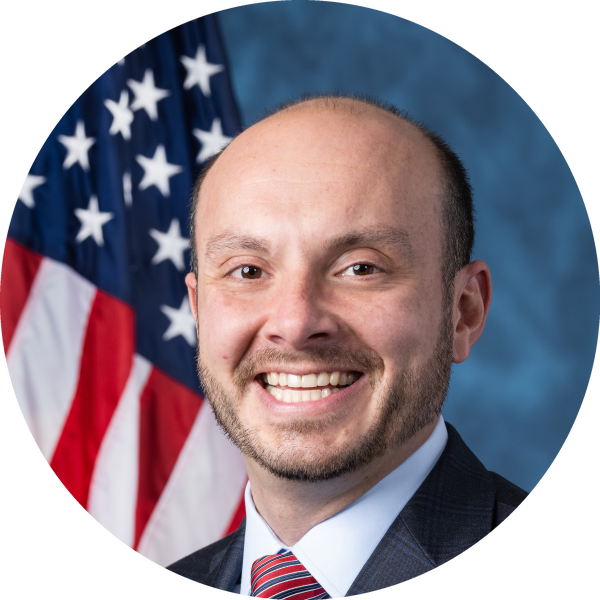

Mr. Speaker, last night the Committee on Rules met and granted a rule providing for consideration of one measure. The rule provides for consideration of H.R. 7744 under a closed rule. The rule provides 1 hour of general debate equally divided and controlled by the chair and ranking minority member on the Committee on Appropriations or their respective designees. Additionally, the rule provides for one motion to recommit. Mr.

H.R. 7744 also appeared in 2 more House floor references and 5 routine cosponsor filings.
HR7744 Legislative Journey
Committee Action
Mar 9, 2026
Received in the Senate and Read twice and referred to the Committee on Appropriations.
House: Passed 221-209
Mar 5, 2026
On passage Passed by the Yeas and Nays: 221 - 209 (Roll no. 87). (text: CR H2432-2444)
+12 more actions this day
House: Passed
Mar 4, 2026
Rule H. Res. 1095 passed House.
House: Committee Action
Mar 3, 2026
Rules Committee Resolution H. Res. 1095 Reported to House. Rule provides for consideration of H.R. 7744 with 1 hour of general debate. Motion to recommit allowed. Bill is closed to amendments.
House: Committee Action
Mar 2, 2026
Referred to the Committee on Appropriations, and in addition to the Committee on the Budget, for a period to be subsequently determined by the Speaker, in each case for consideration of such provisions as fall within the jurisdiction of the committee concerned.
About the Sponsor
Tom Cole
Republican, Oklahoma's 4th congressional district · 23 years in Congress
Committees: Appropriations
View full profile →
Committee Sponsors
Appropriations Committee
14D14R
|0 signed28 others0 of 28 committee members cosponsored at the time
No committee members have cosponsored this bill
Appropriations Committee
28D35R
|0 signed63 others0 of 63 committee members cosponsored at the time
No committee members have cosponsored this bill
Budget Committee
16D21R
|0 signed37 others0 of 37 committee members cosponsored at the time
No committee members have cosponsored this bill
What laws does H.R. 7744 change?
1 changes
Sections Amended
Section 515(b) of Public Law 108-334 (49 U.S.C. 44945 note)
striking ``report'' each place it appears (including in the subsection heading) and inserting ``briefing'' and by striking ``transmit to'' and inserting ``provide''
H.R. 7744 Quick Facts
Cosponsors
0
- Committee
- Appropriations
- Chamber
- House
- Policy
- Economics and Public Finance
- Introduced
- Mar 2, 2026
Passed the House, received in Senate
Mar 9, 2026
Official Sources
H.R. 7744 on Congress.gov
Official congressional page for H.R. 7744, with status, roll-call votes, text, and committee action.
H.R. 7744 Bill Text (GovInfo)
Official full text of the Department of Homeland Security Appropriations Act, 2026, as referred to the Senate.
DHS OIG — Detention Facility Oversight
DHS Inspector General reports on detention centers, the oversight the bill funds with an extra $20 million for added inspections.
DHS OIG — Audits, Inspections, and Evaluations
The Inspector General's published reviews, the office the bill tasks with checking no-bid contracts and tracking how appropriations are spent.
31 U.S.C. 1341 — Back Pay During a Lapse in Appropriations
The statute, amended in 2019, that guarantees back pay for federal employees affected by a funding lapse, the existing law this bill invokes for furloughed DHS workers.
USAspending.gov
Official federal spending database for tracking DHS grants and contracts, including the no-bid awards the bill requires DHS to disclose.
About Legisletter
Legisletter is the advocacy platform that tracks every bill from introduction to Public Law — and connects the constituents affected by a bill to the legislators who vote on it.
H.R. 7744 Common Questions
Does H.R. 7744 end the DHS shutdown?
Yes. The partial DHS shutdown began February 14, 2026, after the previous funding expired. H.R. 7744 funds the department through September 2026 and ends the shutdown.
Will furloughed DHS workers get back pay under H.R. 7744?
Yes. The bill authorizes back pay, under existing law, for federal employees affected by the partial DHS shutdown. It also approves the obligations DHS had to incur to keep essential operations running during the lapse.
Does H.R. 7744 ban a national ID card?
Yes. None of the money in the bill may be used to plan, test, pilot, develop, or implement a national identification card.
How much does H.R. 7744 give the Nonprofit Security Grant Program?
The bill provides $300 million for the Nonprofit Security Grant Program, which helps houses of worship, schools, and other at-risk nonprofits pay for security upgrades.
What DHS money does H.R. 7744 hold back until Congress gets answers?
It withholds $5 million from the Office of the Secretary until DHS responds to every budget-hearing question from House and Senate appropriators tied to its 2027 request, due before July 1.
How much does the DHS inspector general get for detention oversight?
The inspector general receives $257.6 million overall, including $20 million set aside specifically for added inspections and oversight of detention facilities.
Does H.R. 7744 require reporting on no-bid contracts?
Yes. DHS must report every grant and contract awarded without full and open competition in 2025 or 2026, and the inspector general has to review whether those awards followed the rules.
How did the House vote on H.R. 7744?
The House passed H.R. 7744 on March 5, 2026, by a near party-line vote of 221 to 209. It's now in the Senate Appropriations Committee.
Based on H.R. 7744 bill text
H.R. 7744 Bill Text
“Making appropriations for the Department of Homeland Security for the fiscal year ending September 30, 2026, and for other purposes.”
Source: U.S. Government Publishing Office
Economics and Public Finance Bills
9 related bills we're tracking
H.R. 7481
Department of Homeland Security Appropriations Act, 2026

Rosa DeLauroD-CT




+110
114 cosponsors
Referred to the Committee on Appropriations, and in addition to the Committee on the Budget, for a period to be subsequently determined by the Speaker, in each case for consideration of such provisions as fall within the jurisdiction of the committee concerned.
Feb 11, 2026
HouseEconomics and Public Finance
H.R. 5438
Incentivize Savings Act

Richard McCormickR-GA




+65
69 cosponsors
Ordered to be Reported (Amended) by the Yeas and Nays: 25 - 19.
Feb 4, 2026
HouseEconomics and Public Finance
H.R. 191
Inflation Reduction Act of 2025

Andrew OglesR-TN



+11
15 cosponsors
Referred to the Committee on Ways and Means, and in addition to the Committees on Energy and Commerce, Agriculture, Natural Resources, Financial Services, Science, Space, and Technology, Transportation and Infrastructure, and Oversight and Government Reform, for a period to be subsequently determined by the Speaker, in each case for consideration of such provisions as fall within the jurisdiction of the committee concerned.
Jan 3, 2025
HouseEconomics and Public Finance
H.R. 1
An act to provide for reconciliation pursuant to title II of H. Con. Res. 14.

Jodey ArringtonR-TX
0 cosponsors
Became Public Law No: 119-21.
Jul 4, 2025
HouseEconomics and Public Finance
H.R. 4016
Department of Defense Appropriations Act, 2026

Ken CalvertR-CA
0 cosponsors
Motion to proceed to consideration of measure made in Senate. (CR S8522)
Dec 8, 2025
HouseEconomics and Public Finance
H.R. 4553
Energy and Water Development and Related Agencies Appropriations Act, 2026

Charles FleischmannR-TN
0 cosponsors
Read the second time. Placed on Senate Legislative Calendar under General Orders. Calendar No. 156.
Sep 10, 2025
HouseEconomics and Public Finance
H.R. 5304
Departments of Labor, Health and Human Services, and Education, and Related Agencies Appropriations Act, 2026

Robert AderholtR-AL
0 cosponsors
Placed on the Union Calendar, Calendar No. 227.
Sep 11, 2025
HouseEconomics and Public Finance
H.R. 5371
Continuing Appropriations, Agriculture, Legislative Branch, Military Construction and Veterans Affairs, and Extensions Act, 2026
Tom ColeR-OK
0 cosponsors
Became Public Law No: 119-37.
Nov 12, 2025
HouseEconomics and Public Finance
H.R. 6569
Executive Action Cost Transparency Act
Ron EstesR-KS
0 cosponsors
Referred to the House Committee on the Budget.
Dec 10, 2025
HouseEconomics and Public Finance
Trending Right Now
Bills gaining momentum across Congress
H.R. 4382Surging+28
America’s Olympic and Paralympic Games Commemorative Coins Act
Brad ShermanD-CA



+304
308 cosponsors
+28 this monthReferred to the House Committee on Financial Services.
Jul 14, 2025
HouseFinance and Financial Sector
H.R. 3569Surging+22
Fit to Serve Act

Adam SmithD-WA




+184
188 cosponsors
+22 this monthReferred to the House Committee on Armed Services.
May 21, 2025
HouseArmed Forces and National Security
H.R. 6130Surging+14
ASAP Act

Vern BuchananR-FL


+226
230 cosponsors
+14 this monthOrdered to be Reported in the Nature of a Substitute by the Yeas and Nays: 40 - 0.
Sep 16, 2026
HouseHealth
Tracking Economics and Public Finance in Congress? Monitor bills, track cosponsor momentum, and launch advocacy campaigns — all from one advocacy platform.