H.R. 5892: Keep Main Street Open Act
Sponsor
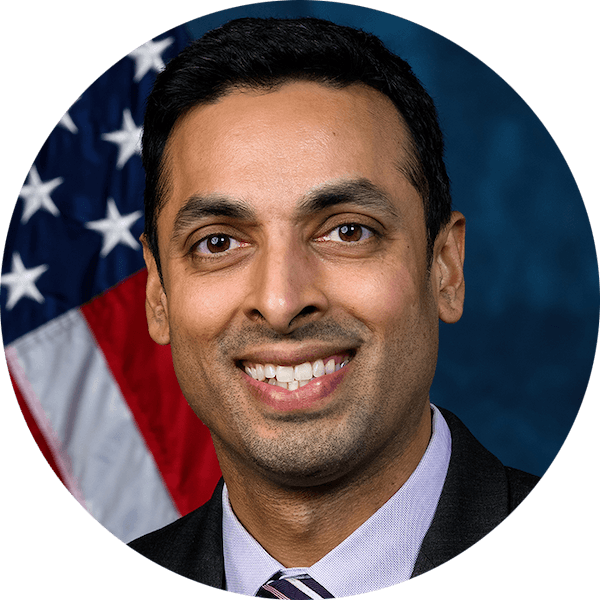
Suhas Subramanyam
Democrat · VA-10
When Washington shuts down, your business borrows at 1%
Why it matters
A government shutdown can drain a small business of customers, contracts, and cash in a matter of days. H.R. 5892 would require the Small Business Administration to lend you the money you lost during the shutdown — at no more than 1% interest, with up to a year to pay it back after funding returns.
H.R. 5892, the Keep Main Street Open Act, would order the SBA to run a loan program for eligible small businesses any time the government is in a shutdown. It's a short bill — one operative section — and it does one thing: turn a funding lapse into a guaranteed line of credit for the businesses caught in it.
The loan is built around your losses. The amount you can borrow equals the losses you estimate the shutdown caused — there's no fixed cap written into the bill. The interest rate can't go above 1%, and you'd have up to one year from the day the shutdown ends to pay it back.
The timing is generous on both ends. The bill counts a shutdown as starting the first day appropriations lapse, and it keeps running for 30 days after Congress restores funding. So the help doesn't stop the moment the government reopens — it covers the messy recovery month too.
Who qualifies leans on rules that already exist. An eligible applicant is anyone who fits the SBA's existing definition of an eligible recipient — the same standard the agency used for pandemic-era PPP loans — and the loan itself runs through the SBA's established 7(a) lending channel. The bill builds on the SBA's current machinery rather than inventing a new one.
What the bill leaves open matters too. It names no total dollar amount, sets no program-wide cap, and spells out no penalties, fees, or forgiveness. The core promise is simple: if Washington shuts down, the SBA has to lend affected businesses what they lost, cheaply, with a year to recover.
Bill Progress
Latest Action · Oct 31, 2025
Referred to the House Committee on Small Business.
H.R. 5892 Bill Summary
What H.R. 5892 actually does.
The SBA has to lend during every shutdown
The bill requires the Small Business Administration to run a loan program for eligible businesses whenever the government is shut down. It's a mandate, not an option — the agency would be on the hook to deliver the aid.
You borrow exactly what the shutdown cost you
The loan amount equals the losses you estimate the shutdown caused your business. The bill writes in no fixed dollar cap, so the size of the loan tracks the size of the damage.
Interest is capped at 1%
A covered loan can't carry an interest rate above 1% — far below typical small-business credit, making this a low-cost bridge rather than a profit center for lenders.
Up to a year to pay it back
Repayment can run as long as one year, and the clock doesn't start until the shutdown officially ends — giving businesses a full recovery window before the loan comes due.
Coverage runs 30 days past reopening
The bill counts a shutdown as beginning the first day appropriations lapse and continuing for 30 days after Congress restores funding, so help keeps flowing through the recovery month, not just the standoff.
Eligibility borrows the SBA's existing rules
Who qualifies is defined by the SBA's current eligible-recipient standard — the same one used for pandemic-era PPP loans — and the money runs through the agency's established 7(a) lending channel rather than a new system.
Who benefits from H.R. 5892?
Small businesses that already meet SBA eligibility
Firms that fit the SBA's existing eligible-recipient definition could borrow during a shutdown, with the loan sized to their estimated losses. The bill leans on a standard many small businesses already know from past SBA programs.
Businesses watching cash flow vanish overnight
Companies near federal facilities, on government contracts, or serving federal workers can lose revenue the moment a shutdown hits. They could borrow that lost income back at no more than 1% interest.
Firms still digging out after the government reopens
Because coverage runs 30 days past the end of a shutdown, a business can still get help for the disruption that lingers after Washington formally reopens — when customers and contracts are slow to return.
Owners who need breathing room to repay
With up to a year from the shutdown's end to pay back the loan, a recovering business isn't forced to repay the day operations resume — the repayment window is built for recovery, not immediate cash.
Who is affected by H.R. 5892?
The Small Business Administration
The agency would be legally required to stand up and run the shutdown loan program, process applications, and issue loans through its 7(a) framework every time a qualifying shutdown occurs.
Eligible small-business applicants
Businesses that qualify would need to estimate and document the losses the shutdown caused them, since that figure sets the size of the loan they can receive.
Businesses outside the SBA's eligibility definition
Firms that don't fit the existing eligible-recipient standard wouldn't qualify under the bill as written, even if a shutdown hits their revenue just as hard.
Lawmakers and budget writers
Because the bill names no total funding amount, Congress would face an open-ended cost if shutdown loan demand runs large — a gap critics are likely to flag as the bill moves.
HR5892 Legislative Journey
House: Committee Action
Oct 31, 2025
Referred to the House Committee on Small Business.
About the Sponsor
Suhas Subramanyam
Democrat, Virginia's 10th congressional district · 1 years in Congress
Committees: Ethics, Science, Space, and Technology, Oversight and Government Reform
View full profile →
Committee Sponsors
Small Business Committee
0 of 26 committee members cosponsored
No committee members have cosponsored this bill
12 Democrats across this committee haven't cosponsored yet. Mobilize their constituents
H.R. 5892 Quick Facts
- Committee
- Small Business
- Chamber
- House
- Policy
- Commerce
- Introduced
- Oct 31, 2025
Referred to the House Committee on Small Business.
Oct 31, 2025
Official Sources
Official bill page with text, status, sponsors, and actions for the Keep Main Street Open Act.
The bill defines a covered loan as a loan made under section 7(a) of the Small Business Act, so SBA's official 7(a) program page is directly relevant.
Official U.S. Code page for 15 U.S.C. 636, the statutory section cited in the bill for SBA 7(a) lending authority.
Section 7(a)(36) is the PPP provision referenced by the bill's eligible-applicant definition, making SBA's official PPP page useful background for eligibility language.
The bill triggers on a partial or full lapse in appropriations, so govinfo's official budget and appropriations collection provides primary source context.
GAO provides official appropriations-law resources relevant to understanding lapses in appropriations and shutdown mechanics referenced in the bill.
SBA's main loans portal provides official program context for the shutdown lending framework the bill would require the agency to administer.
H.R. 5892 Common Questions
How much could my business borrow under H.R. 5892 during a shutdown?
As much as the shutdown cost you. The loan amount equals the losses you estimate the shutdown caused your business — there's no fixed dollar cap written into the bill.
What's the interest rate on a shutdown loan under H.R. 5892?
It can't go above 1%. The bill caps the interest rate on these loans at one percent — well below typical small-business credit.
How long would I have to repay a shutdown loan?
Up to one year, and the clock doesn't start until the shutdown ends. So you'd have a full year after the government reopens before the loan comes due.
Can I still get a loan after the government reopens?
Yes. The bill counts the shutdown as continuing for 30 days after Congress restores funding, so coverage runs through the recovery month, not just the standoff itself.
Which businesses qualify for a shutdown loan under H.R. 5892?
Businesses that meet the SBA's existing eligible-recipient standard — the same definition the agency used for pandemic-era PPP loans. The bill leans on rules many small businesses already know.
Does H.R. 5892 force the SBA to make these loans, or is it optional?
It's mandatory. The bill says the SBA shall run the loan program for eligible businesses during a shutdown — the agency wouldn't have discretion to skip it.
Does H.R. 5892 cover partial government shutdowns too?
Yes. The program triggers on the first day of either a partial or full lapse in appropriations, so a partial shutdown counts.
Based on H.R. 5892 bill text
H.R. 5892 Bill Text
“To require the Administrator of the Small Business Administration to carry out a loan program for eligible applicants during the shutdown, and for other purposes.”
Source: U.S. Government Publishing Office
Get notified when H.R. 5892 moves
Committee votes, floor action, cosponsor changes — straight to your inbox.
Bill alerts + Legisletter's monthly briefing. Unsubscribe anytime.
Commerce Bills
9 related bills we're tracking
Therapeutic Fraud Prevention Act of 2025

Referred to the House Committee on Energy and Commerce.
May 7, 2025
Algorithmic Accountability Act of 2025




Referred to the House Committee on Energy and Commerce.
Sep 19, 2025
Protecting Circuit Boards and Substrates Act


Referred to the Committee on Ways and Means, and in addition to the Committees on Energy and Commerce, and Science, Space, and Technology, for a period to be subsequently determined by the Speaker, in each case for consideration of such provisions as fall within the jurisdiction of the committee concerned.
May 23, 2025
Children and Teens’ Online Privacy Protection Act


Held at the desk.
Mar 16, 2026
Competition and Antitrust Law Enforcement Reform Act of 2025



Read twice and referred to the Committee on the Judiciary.
Jan 16, 2025
NO FAKES Act of 2025


Read twice and referred to the Committee on the Judiciary.
Apr 9, 2025
Made in America Manufacturing Finance Act
Committee on Small Business and Entrepreneurship. Hearings held.
May 13, 2026
Antitrust Accountability and Transparency Act

Read twice and referred to the Committee on the Judiciary.
Mar 17, 2026
Algorithmic Accountability Act of 2025


Read twice and referred to the Committee on Commerce, Science, and Transportation.
Jun 25, 2025
Trending Right Now
Bills gaining momentum across Congress
America’s Olympic and Paralympic Games Commemorative Coins Act


Referred to the House Committee on Financial Services.
Jul 14, 2025
Fit to Serve Act

Referred to the House Committee on Armed Services.
May 21, 2025
ASAP Act


Ordered to be Reported in the Nature of a Substitute by the Yeas and Nays: 40 - 0.
Sep 16, 2026
Tracking Commerce in Congress? Monitor bills, track cosponsor momentum, and launch advocacy campaigns — all from one advocacy platform.