H.R. 4865: Advancing Research on Agricultural Soil Health Act of 2025
Sponsor

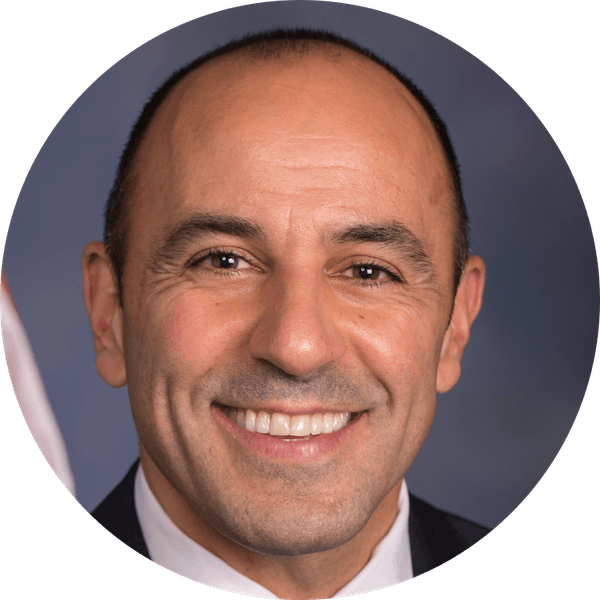
Eric Sorensen
Democrat · IL-17
Soil carbon payments need numbers you can trust
Why it matters
Congress would put $20 million a year behind a single goal: a standardized way to measure how much carbon is locked in American farm soil. That measurement is the missing piece carbon markets, conservation payments, and climate research all lean on, and right now there's no national standard for it.
The bill sets four pieces in motion. First, USDA has 270 days to write a single, standardized way to directly measure soil carbon, one that works anywhere, accounts for differences between testing labs, and supports voluntary reporting.
Second, it builds a Soil Carbon Inventory and Analysis Network that samples cropland, rangeland, pastureland, and wetlands every 5 years and publishes the trends. Your land can only be sampled if you say yes, and saying no can't cost you any other USDA benefit.
Third, it expands existing research grants to cover carbon-measurement tools and stretches on-farm conservation trials from 3 years to 5. Fourth, it orders a predictive model, built on real soil samples, that lets you estimate how a practice change shifts carbon, methane, and nitrous oxide.
The whole package is authorized at $20 million a year and runs through voluntary participation, with guidance offered in multiple languages and in both digital and paper formats.
Bill Progress
Latest Action · Aug 1, 2025
Referred to the House Committee on Agriculture.
H.R. 4865 Bill Summary
What H.R. 4865 actually does.
One standard way to measure soil carbon, in 270 days
USDA must develop a single standardized methodology to directly measure soil carbon within 270 days of enactment. It has to work at any location, measure to an appropriate soil depth, account for calibration differences between testing facilities and uncertainty between tools, and support voluntary reporting. The department must consult farmers, including socially disadvantaged producers, soil experts, nonprofits, and academic researchers while writing it.
Reporting guidance in multiple languages, digital and paper
USDA, through the Natural Resources Conservation Service, must give producers technical assistance and guidance for voluntarily measuring and reporting their soil carbon. That guidance has to be available in multiple languages and in both digital and analog formats, and it covers recipients of conservation innovation grants, the sustainable agriculture research program, the organic research initiative, and the Agriculture and Food Research Initiative.
On-farm trials run 5 years instead of 3
The bill extends on-farm conservation innovation trials from 3 years to 5 years and broadens what counts as a soil health management system to include practices that maintain or increase soil carbon and tools to measure, monitor, report, and verify greenhouse gas emissions and carbon sequestration.
A national soil carbon inventory every 5 years
A new Soil Carbon Inventory and Analysis Network would sample, monitor, and analyze soil carbon on eligible land, defined as public and private cropland, rangeland, pastureland, and wetlands. Every 5 years USDA must run the inventory and publish aggregated data, the methodology, and a report covering carbon trends, the effect of different management practices, weather variability, atmospheric-gas impacts, and a baseline benchmark.
A strategic plan to Congress within 1 year
Within 1 year of enactment, USDA must send Congress a strategic plan for the inventory network, spelling out how it will be run and the measurement schedule for the first 5-year cycle. The Secretary acts jointly through the Natural Resources Conservation Service and the Agricultural Research Service.
A predictive model, reviewed every year
USDA must build and maintain a modeling tool that predicts how land management changes atmospheric carbon, methane, nitrous oxide, and soil carbon sequestration. It has to be anchored in direct soil measurements, account for variables like soil type, crop, and weather, be user-friendly and available in multiple languages, be reviewed at least annually, and be updated within 1 year of any decision that an update is needed. Reports to Congress begin 2 years after enactment.
Who benefits from H.R. 4865?
Farmers and ranchers selling or claiming carbon benefits
Producers who want credible proof of the carbon in their soil would get a national measurement standard within 270 days and free technical assistance for voluntary reporting. With carbon markets and conservation payments increasingly tied to soil carbon, a trusted yardstick makes those claims easier to stand behind.
Socially disadvantaged farmers and ranchers
The bill specifically requires USDA to consult socially disadvantaged farmers and ranchers when it writes both the measurement standard and the predictive model. That gives these producers a direct voice in tools that can shape access to conservation and research dollars.
Land-grant universities and research centers
1862, 1890, and 1994 land-grant institutions, other universities with relevant expertise, and federal research centers could partner on the inventory network and the model. The bill also expands the Agriculture and Food Research Initiative to fund work on measuring and verifying soil carbon sequestration and emissions.
Agencies and policymakers tracking farm climate effects
A national inventory every 5 years plus annual model reporting starting 2 years after enactment would create a recurring evidence base. Published data, methodology, and analysis could help compare management practices, weather impacts, and atmospheric-gas effects over time.
Who is affected by H.R. 4865?
USDA leadership and research agencies
The Secretary of Agriculture, the Natural Resources Conservation Service, and the Agricultural Research Service would take on new deadlines and reporting duties: the 270-day standard, the 1-year inventory plan, 5-year sampling cycles, and annual model reviews.
Private landowners on sampled land
Cropland, rangeland, pastureland, or wetlands could be picked for soil sampling, but only with the owner's authorization. Participation stays voluntary, and USDA cannot make it a condition for receiving any other federal benefit.
Federal partner agencies
USDA must consult the National Institute of Food and Agriculture, the Forest Service, the Chief Data Officer, the Environmental Protection Agency, and the Department of Energy. That means more formal coordination on data standards, modeling, and inventory design.
Conservation and research grant recipients
Producers in conservation innovation grants, the sustainable agriculture research program, the organic research initiative, and the Agriculture and Food Research Initiative can use USDA's voluntary reporting guidance. They may also see longer demonstration timelines, since on-farm trials would run 5 years instead of 3.
Cost & Funding
Authorization
$20,000,000 authorized per fiscal year total
- $2,000,000 per fiscal year for the standardized measurement methodology and reporting guidance.
- $17,500,000 per fiscal year for the Soil Carbon Inventory and Analysis Network, the largest single line and the part that funds nationwide sampling.
- $500,000 per fiscal year for the predictive model.
- These are authorizations, not guaranteed spending; Congress still has to appropriate the money each year. The bill sets no separate dollar figure for the research-grant expansion or the trial changes.
HR4865 Legislative Journey
House: Committee Action
Aug 1, 2025
Referred to the House Committee on Agriculture.
About the Sponsor
Eric Sorensen
Democrat, Illinois's 17th congressional district · 3 years in Congress
Committees: Agriculture, Armed Services
View full profile →
Cosponsors (4)
This bill has 4 cosponsors: 2 Democrats, 2 Republicans, reflecting bipartisan support. Cosponsors represent 4 states: New York, Pennsylvania, Virginia, and 1 more.
Committee Sponsors
Agriculture Committee
0 of 53 committee members cosponsored
No committee members have cosponsored this bill
24 Democrats across this committee haven't cosponsored yet. Mobilize their constituents
H.R. 4865 Quick Facts




- Committee
- Agriculture
- Chamber
- House
- Policy
- Agriculture and Food
- Introduced
- Aug 1, 2025
Referred to the House Committee on Agriculture.
Aug 1, 2025
Official Sources
Official bill page with text, actions, sponsors, and status for the Advancing Research on Agricultural Soil Health Act of 2025.
Section 3 expands AFRI research authority to include measuring, monitoring, reporting, and verifying soil carbon sequestration and emissions.
The bill's voluntary soil carbon reporting guidance applies to recipients of the organic agriculture research and extension initiative under Section 2.
The Administrator of the Agricultural Research Service would jointly help carry out the Soil Carbon Inventory and Analysis Network under the bill.
The bill requires predictive tools and practical guidance for producers on land management and carbon outcomes, which aligns with USDA's official climate and agricultural decision-support resources.
Section 4 amends this statute to extend on-farm conservation innovation trials from 3 years to 5 and to broaden soil health management systems to cover carbon measurement and verification.
H.R. 4865 Common Questions
How much money does H.R. 4865 authorize each year?
Up to $20 million a year: $17.5 million for the national soil carbon inventory, $2 million for the measurement standard and guidance, and $500,000 for the predictive model. Congress still has to appropriate it.
When would USDA have to create a standard way to measure soil carbon?
Within 270 days of the bill becoming law. USDA would write one standardized method to directly measure soil carbon, after reviewing existing methods and consulting farmers, soil experts, and researchers.
How often would USDA measure soil carbon nationwide?
Every 5 years. The new Soil Carbon Inventory and Analysis Network would sample eligible land, then publish aggregated data, the methodology, and a report on carbon trends and what's driving them.
Can USDA sample my land for soil carbon without my permission?
No. USDA must get the owner's authorization before selecting a site or taking any measurement, and the whole program is voluntary. Saying no can't be used to deny you any other USDA benefit.
Does the bill protect a farmer's proprietary soil data?
Yes. Public data has to be aggregated and stripped of identifiable, proprietary, or personal information, individual producer data can't be sold, and the program must follow federal privacy laws.
What kinds of land would the soil carbon inventory cover?
Public and private cropland, rangeland, pastureland, and wetlands across the United States. USDA gives preference to sites that have been used for soil testing before.
Does the bill extend on-farm conservation trials from 3 years to 5?
Yes. It stretches on-farm conservation innovation trials from 3 years to 5 and broadens them to cover practices and tools that raise and verify soil carbon.
Would USDA guidance be available in languages other than English?
Yes. Reporting guidance has to come in multiple languages and in both digital and paper formats, covering Conservation Innovation Grants, SARE, the organic research initiative, and AFRI recipients.
Based on H.R. 4865 bill text
H.R. 4865 Bill Text
“To require the Secretary of Agriculture to conduct research relating to measurement, monitoring, reporting, and verification of soil carbon sequestration, and for other purposes.”
Source: U.S. Government Publishing Office
Get notified when H.R. 4865 moves
Committee votes, floor action, cosponsor changes — straight to your inbox.
Bill alerts + Legisletter's monthly briefing. Unsubscribe anytime.
Agriculture and Food Bills
9 related bills we're tracking
SAFE Act of 2025





Referred to the Subcommittee on Livestock, Dairy, and Poultry.
Mar 28, 2025
Restoring Food Security for American Families and Farmers Act of 2025





Referred to the Subcommittee on Nutrition and Foreign Agriculture.
Jan 13, 2026
EATS Act of 2025



Referred to the House Committee on Agriculture.
Jul 29, 2025
Hot Foods Act of 2025



Referred to the Subcommittee on Nutrition and Foreign Agriculture.
Apr 18, 2025
Whole Milk for Healthy Kids Act of 2025



Placed on the Union Calendar, Calendar No. 111.
Jun 5, 2025
Keep SNAP and WIC Funded Act of 2025


Referred to the House Committee on Appropriations.
Nov 7, 2025
WIC Benefits Protection Act





Referred to the House Committee on Education and Workforce.
Oct 10, 2025
Food Secure Strikers Act of 2025




Referred to the Subcommittee on Nutrition and Foreign Agriculture.
Apr 18, 2025
Improving Access to Nutrition Act of 2026


Referred to the Subcommittee on Nutrition and Foreign Agriculture.
Mar 20, 2026
Trending Right Now
Bills gaining momentum across Congress
America’s Olympic and Paralympic Games Commemorative Coins Act





Referred to the House Committee on Financial Services.
Jul 14, 2025
Fit to Serve Act




Referred to the House Committee on Armed Services.
May 21, 2025
ASAP Act




Ordered to be Reported in the Nature of a Substitute by the Yeas and Nays: 40 - 0.
Sep 16, 2026
Tracking Agriculture and Food in Congress? Monitor bills, track cosponsor momentum, and launch advocacy campaigns — all from one advocacy platform.