H.R. 4430: Expanding WKSI Eligibility Act
Sponsor

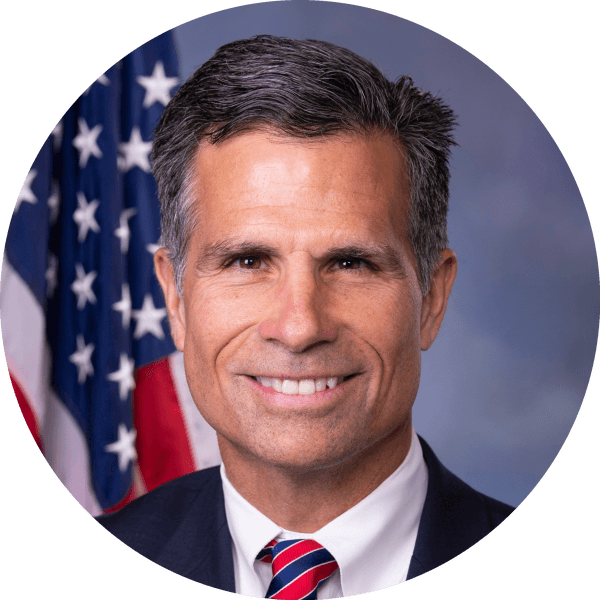
Bryan Steil
Republican · WI-1
Hundreds more companies get the SEC's fundraising fast lane
Why it matters
There's a fast-track at the SEC that lets a company raise money on Wall Street almost on demand — and right now it's reserved for firms with $700 million in public stock. H.R. 4430 lowers that bar to $400 million, opening the lane to hundreds of mid-sized companies that sit just outside it today.
A "well-known seasoned issuer," or WKSI, is a company the SEC trusts enough to fast-track. It can file one registration and then sell shares whenever it wants, without waiting for the agency to sign off each time. That speed is valuable — it lets a company raise capital the moment the market looks favorable.
The catch has always been size. To qualify today, a company needs at least $700 million worth of stock held by ordinary public investors. H.R. 4430 cuts that to $400 million.
That one change pulls a whole band of mid-sized companies into the fast lane — firms big enough to be established but too small to clear the old line. Everything else about qualifying stays the same: a company still has to be current on its SEC filings and meet the agency's other tests.
The bill also adds a transparency step. Each year the SEC would have to publish how many companies applied for a related eligibility determination and then withdrew. Supporters say lowering the threshold modernizes a rule that locked out smaller players; critics of looser registration rules generally warn that faster offerings mean less SEC review before new shares reach investors. The bill drew bipartisan backing, clearing the House Financial Services Committee 51-2.
Bill Progress
Latest Action · Dec 2, 2025
Passed the House, received in Senate
H.R. 4430 Bill Summary
What H.R. 4430 actually does.
The fast-lane threshold drops to $400 million
A company qualifies as a well-known seasoned issuer once the public holds $400 million of its stock, down from the current $700 million.
Voting and non-voting shares both count
The $400 million is measured across both voting and non-voting common stock held by outside investors — company insiders and affiliates don't count toward it.
Every other qualification rule stays in place
Companies still have to meet the SEC's existing WKSI requirements, including being current on their filings. Only the size threshold changes.
The SEC has to report withdrawn applications
Within 90 days after each year ends, the SEC must publish how many companies applied for a related eligibility determination and then pulled the application.
Who benefits from H.R. 4430?
Mid-sized public companies
Firms with $400 million to $700 million in public stock — the band that currently sits just below the cutoff. They'd gain the ability to raise money quickly without case-by-case SEC delays.
Corporate finance teams
Less paperwork and waiting each time their company goes to market means lower legal costs and the freedom to time an offering to good conditions.
Investors looking for new offerings
More companies able to issue shares on short notice could mean more chances to buy into growing mid-sized firms.
Who is affected by H.R. 4430?
The SEC
Faces more companies using the streamlined registration path, plus a new annual report to compile and publish on withdrawn applications.
Public investors
More of the companies they buy into could sell new shares with less SEC review beforehand. Supporters call that efficiency; critics of looser registration rules call it reduced oversight.
Companies still under $400 million
Smaller firms remain outside the fast lane until they grow into the new threshold.
What Congress Is Saying
H.R. 4430 has come up 8 times in the Congressional Record so far.
Mr. Speaker, I rise today in support of H.R. 4430, which expands the number of public companies that can qualify as a well-known seasoned issuer, or WKSI. This designation is a special status conferred on companies that frequently raise money by issuing securities from the public. Think of WKSI status like having frequent-flyer privileges. It allows companies that are well known to regulators and the public to raise money without needing permission. These companies are widely followed in the markets, so there are a lot of eyes, so to speak, watching what they are doing.

H.R. 4430 also appeared in 2 more House floor references and 1 routine cosponsor filing.
HR4430 Legislative Journey
Committee Action
Dec 2, 2025
Received in the Senate and Read twice and referred to the Committee on Banking, Housing, and Urban Affairs.
House: Vote Held
Dec 1, 2025
On motion to suspend the rules and pass the bill, as amended Agreed to by voice vote. (text: CR H4952)
House: Committee Action
Sep 8, 2025
Reported (Amended) by the Committee on Financial Services. H. Rept. 119-247.
House: Vote: 51-2
Jul 22, 2025
Ordered to be Reported (Amended) by the Yeas and Nays: 51 - 2.
House: Committee Action
Jul 16, 2025
Referred to the House Committee on Financial Services.
About the Sponsor
Bryan Steil
Republican, Wisconsin's 1st congressional district · 7 years in Congress
Committees: Joint Committee on Printing, Joint Committee of Congress on the Library, House Administration
View full profile →
Cosponsors (3)
This bill has 3 cosponsors: 2 Democrats, 1 Republican, reflecting bipartisan support. Cosponsors represent 3 states: Connecticut, Louisiana, Pennsylvania.
Committee Sponsors
Banking, Housing, and Urban Affairs Committee
0 of 24 committee members cosponsored
No committee members have cosponsored this bill
Financial Services Committee
3 of 53 committee members cosponsored


42 Republicans across these committees haven't cosponsored yet. Mobilize their constituents
H.R. 4430 Quick Facts


- Committee
- Banking, Housing, and Urban Affairs
- Chamber
- House
- Policy
- Finance and Financial Sector
- Introduced
- Jul 16, 2025
Passed the House, received in Senate
Dec 2, 2025
Official Sources
Official bill tracker with full text, cosponsors, actions, and committee referral status for the Expanding WKSI Eligibility Act. Passed the House by voice vote on Dec. 1, 2025 and referred to the Senate Banking Committee on Dec. 2, 2025.
Committee report accompanying HR 4430, reported favorably (as amended) on Sept. 8, 2025, after the Committee ordered reporting by a 51-2 vote on July 22, 2025.
The federal regulation defining 'well-known seasoned issuer' under SEC Rule 405, including the current $700 million public float threshold that HR 4430 would lower to $400 million.
Official SEC Form S-3 with General Instruction I.B.1. — the form used to calculate market value for WKSI eligibility. HR 4430 references this form's instructions to determine the $400 million threshold.
Committee press release confirming House passage of HR 4430, which 'expands the availability of WKSI status by updating the WKSI definition to apply to all companies with a public float of $400 million, rather than the current $700 million.'
SEC Division of Corporation Finance guidance on WKSI waiver applications — the process HR 4430 Section 2(b) requires the SEC to report on annually, tracking how many applications are withdrawn.
Full PDF of the House Financial Services Committee report on HR 4430, including legislative history, committee vote breakdown (51-2), and section-by-section analysis of the Expanding WKSI Eligibility Act.
H.R. 4430 Common Questions
What is a "well-known seasoned issuer"?
It's a company the SEC trusts enough to fast-track. A WKSI can register once and then sell new shares whenever it wants, without waiting for the agency to clear each offering — so it can raise money the moment market conditions look right.
What does H.R. 4430 actually change?
One number. Today a company needs $700 million of stock held by public investors to qualify as a well-known seasoned issuer. H.R. 4430 lowers that to $400 million, leaving every other qualification rule untouched.
Why does qualifying for WKSI status matter to a company?
Speed and cost. A WKSI can launch a stock offering almost on demand and faces fewer pre-offering restrictions, so it can raise capital fast and time it to favorable markets. Companies below the threshold have to go through slower, case-by-case SEC review.
Do non-voting shares count toward the $400 million?
Yes. The bill measures the threshold across both voting and non-voting common stock held by outside investors. Shares held by company insiders and affiliates don't count.
Does H.R. 4430 weaken investor protections?
The bill keeps all the SEC's other WKSI requirements in place and changes only the size threshold. Supporters say it modernizes an outdated rule; critics of looser registration rules generally warn that faster offerings mean less SEC review before new shares reach investors.
What new reporting does the SEC have to do?
Within 90 days after each calendar year, the SEC must publish how many companies applied for a related eligibility determination so they could qualify as a WKSI, and then withdrew the application — a yearly transparency snapshot.
Where does H.R. 4430 stand right now?
The House passed it by voice vote on December 1, 2025, and it's now in the Senate Banking Committee. An identical Senate bill, S. 3749, is in the same committee. It cleared the House Financial Services Committee on a 51-2 vote.
Based on H.R. 4430 bill text
H.R. 4430 Bill Text
“To lower the aggregate market value of voting and non-voting common equity necessary for an issuer to qualify as a well-known seasoned issuer.”
Source: U.S. Government Publishing Office
Get notified when H.R. 4430 moves
Committee votes, floor action, cosponsor changes — straight to your inbox.
Bill alerts + Legisletter's monthly briefing. Unsubscribe anytime.
Finance and Financial Sector Bills
9 related bills we're tracking
America’s Olympic and Paralympic Games Commemorative Coins Act





Referred to the House Committee on Financial Services.
Jul 14, 2025
761st Tank Battalion Congressional Gold Medal Act




Referred to the Committee on Financial Services, and in addition to the Committee on House Administration, for a period to be subsequently determined by the Speaker, in each case for consideration of such provisions as fall within the jurisdiction of the committee concerned.
Feb 26, 2025
Taxpayer Data Protection Act




Sponsor introductory remarks on measure. (CR H625-626)
Feb 11, 2025
Repealing Big Brother Overreach Act





Placed on the Union Calendar, Calendar No. 609.
Jun 18, 2026
Rosie the Riveter Commemorative Coin Act





Referred to the House Committee on Financial Services.
Jan 15, 2025
HELPER Act of 2025





Referred to the House Committee on Financial Services.
Mar 14, 2025
Anti-CBDC Surveillance State Act





Motion to reconsider laid on the table Agreed to without objection.
Jul 17, 2025
Protecting Privacy in Purchases Act




Received in the Senate and Read twice and referred to the Committee on Banking, Housing, and Urban Affairs.
Jul 15, 2026
Veterans Member Business Loan Act



Referred to the House Committee on Financial Services.
Jan 16, 2025
Trending Right Now
Bills gaining momentum across Congress
ASAP Act




Ordered to be Reported in the Nature of a Substitute by the Yeas and Nays: 40 - 0.
Sep 16, 2026
Federal Firearms Licensee Protection Act of 2025



Referred to the House Committee on the Judiciary.
Mar 3, 2025
Therapeutic Fraud Prevention Act of 2025





Referred to the House Committee on Energy and Commerce.
May 7, 2025
Tracking Finance and Financial Sector in Congress? Monitor bills, track cosponsor momentum, and launch advocacy campaigns — all from one advocacy platform.