H.R. 3029: To amend the Research and Development, Competition, and Innovation Act to support nucleic acid screening, and for other purposes.
Sponsor

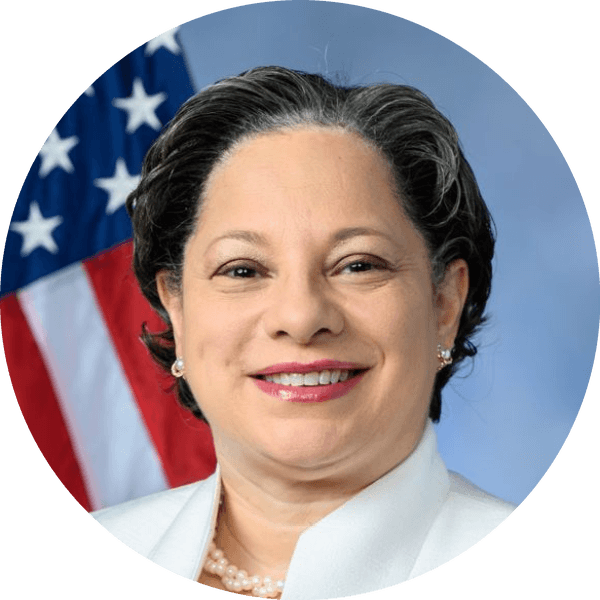
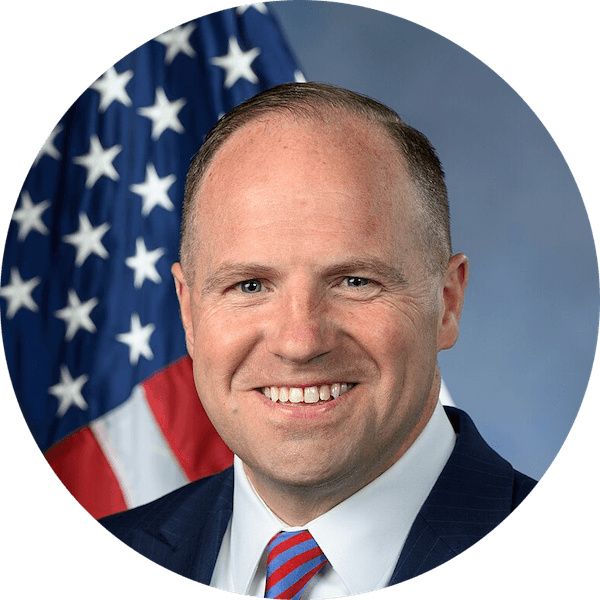
Andrea Salinas
Democrat · OR-6
Dangerous DNA orders should be caught before they ship
Why it matters
Anyone with a lab account can order a custom strand of DNA or RNA, and whether a vendor spots a dangerous sequence depends on the screening tool it happens to use. H.R. 3029 puts $25 million over five years behind federal testing and standards so those screens can be measured, compared, and trusted, with AI-assisted designs explicitly in scope.
Synthetic DNA and RNA are everyday research supplies. Vendors print custom sequences for vaccine work, diagnostics, and basic biology, and many run each order against lists of sequences tied to dangerous organisms before filling it.
H.R. 3029 would make the National Institute of Standards and Technology responsible for testing whether those screens actually catch what they are supposed to catch. NIST already sets measurement standards for everything from timekeeping to cybersecurity. This bill adds nucleic acid screening to that list.
The work covers five areas: testing screening accuracy and reliability, securing the databases of flagged sequences, practical guidance for running screens, conformity assessment so a tool can be checked against a standard, and methods for judging whether any of it is working.
The bill also adds risks tied to artificial intelligence to NIST's existing standards work on engineering biology and biomanufacturing. AI design tools can generate sequences that do not match anything on a known list, which is the gap a standards body would need to account for.
NIST would not write these rules alone. It must convene a consortium of vendors, universities, nonprofits, and customers to set shared priorities and research roadmaps, and report the group's findings to Congress within 18 months of its first meeting.
Nothing in the bill creates a penalty, a ban, or a mandate on vendors — it builds the yardstick, not the enforcement. The authorization is $5 million a year from fiscal 2027 through 2031.
Bill Progress
Latest Action · Jul 21, 2026
Passed the House, received in Senate
H.R. 3029 Bill Summary
What H.R. 3029 actually does.
Screening tools get tested against a real standard
NIST would run measurement research to improve the accuracy, efficacy, and reliability of screening for synthetic DNA and RNA orders, and develop conformity-assessment practices so a screening tool can be checked against a standard.
AI-designed sequences come into scope
The bill adds risks associated with artificial intelligence to NIST's standards work on engineering biology and biomanufacturing risk management.
Lists of dangerous sequences get secured
NIST would develop best practices for operational security, access controls, and management of the sequence-of-concern databases that screening depends on.
Vendors get implementation guidance
NIST would produce technical guidance on running screening so it is both effective and secure, plus methods to measure whether that guidance is working once adopted.
Industry, universities, and buyers shape the rules together
NIST must convene a consortium including industry, higher education, nonprofits, and customers to develop and periodically update consensus best practices for screening synthetic nucleic acid purchases, and to set research roadmaps.
Congress gets findings within 18 months
NIST must report the consortium's findings to the Senate Commerce Committee and the House Science Committee no later than 18 months after the consortium first meets.
Who benefits from H.R. 3029?
Companies that synthesize DNA and RNA
Vendors would be able to test their screening against a federal benchmark and point to that result, rather than each defending a homegrown approach.
Researchers who order synthetic sequences
If you run a university or biotech lab, common standards could mean fewer unexplained holds on legitimate orders and clearer expectations about what gets flagged and why.
Public health and biodefense agencies
Agencies watching for dangerous biological material would gain a measurable way to judge whether the commercial supply chain is catching risky orders.
Everyone downstream of a biosecurity failure
The bill's premise is that a synthesized pathogen sequence is easier to stop at the order form than after it ships. Better screening is a protection most people never see.
Who is affected by H.R. 3029?
NIST
NIST takes on the research, the consortium, and the report to Congress, funded at $5 million a year if appropriators provide the money.
Synthetic nucleic acid vendors
The bill imposes no requirements on vendors, but once NIST standards exist, customers, funders, or future legislation could expect vendors to meet them.
Universities, nonprofits, and customers in the consortium
Participants would spend time helping write consensus priorities and best practices for procurement screening.
House and Senate science committees
The Senate Commerce Committee and House Science Committee receive the consortium report and would decide whether stronger measures are needed.
Cost & Funding
Authorization
$5,000,000 per year for fiscal 2027 through 2031
- Five years at $5 million comes to $25 million total.
- The money comes out of amounts already authorized for NIST's scientific and technical research and services laboratory activities under the underlying law, so it is set aside within NIST's lab budget rather than added on top.
- An authorization is a ceiling, not a check. Appropriators still have to provide the funds each year.
- The bill creates no fees, fines, or grant programs.
What Congress Is Saying
H.R. 3029 has come up 9 times in the Congressional Record so far.
H.R. 3029 also appeared in 1 more House floor reference and 3 routine cosponsor filings.
HR3029 Legislative Journey
Committee Action
Jul 21, 2026
Received in the Senate and Read twice and referred to the Committee on Commerce, Science, and Transportation.
House: Vote Held
Jul 20, 2026
On motion to suspend the rules and pass the bill, as amended Agreed to by voice vote. (text: CR H4666)
House: Committee Action
Jul 16, 2026
Reported by the Committee on Science, Space, and Technology. H. Rept. 119-751.
House: Vote Held
Apr 29, 2025
Ordered to be Reported by Voice Vote.
House: Committee Action
Apr 28, 2025
Referred to the House Committee on Science, Space, and Technology.
About the Sponsor
Andrea Salinas
Democrat, Oregon's 6th congressional district · 3 years in Congress
Committees: Science, Space, and Technology, Agriculture
View full profile →
Cosponsors (3)
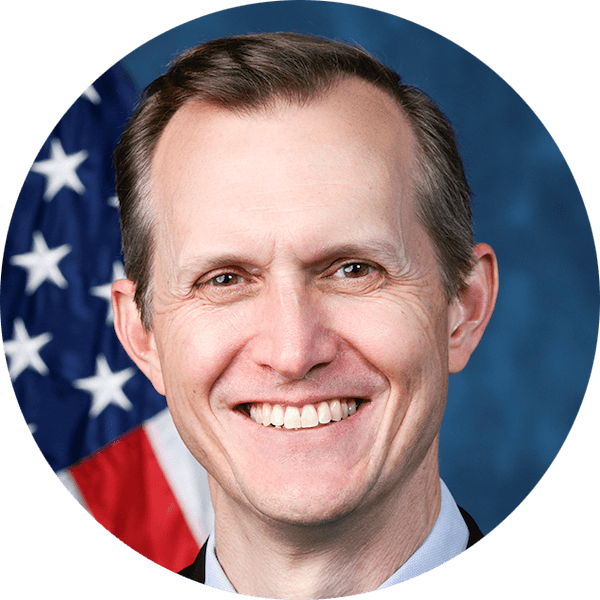
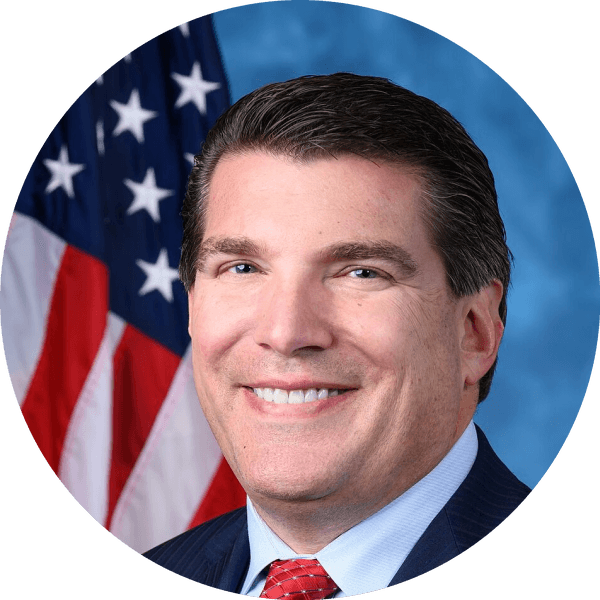
This bill has 3 cosponsors: 2 Democrats, 1 Republican, reflecting bipartisan support. Cosponsors represent 3 states: Delaware, Georgia, New York.
Committee Sponsors
Commerce, Science, and Transportation Committee
0 of 28 committee members cosponsored
No committee members have cosponsored this bill
Science, Space, and Technology Committee
3 of 40 committee members cosponsored


29 Democrats across these committees haven't cosponsored yet. Mobilize their constituents
H.R. 3029 Quick Facts


- Committee
- Commerce, Science, and Transportation
- Chamber
- House
- Policy
- Science, Technology, Communications
- Introduced
- Apr 28, 2025
Passed the House, received in Senate
Jul 21, 2026
Official Sources
Official bill page with the full text, House passage record, and Senate committee referral for H.R. 3029.
NIST project already building benchmark datasets for DNA synthesis screening tools and studying how AI-designed sequences can slip past them, the work this bill would expand and fund.
The current federal guidance on screening synthetic DNA and RNA orders, setting the voluntary baseline that NIST standards would help vendors measure against.
CBO scored an earlier version of the bill at $5 million a year, about $25 million total, assuming the money is appropriated.
The existing NIST engineering biology and biomanufacturing authority that H.R. 3029 amends to add nucleic acid screening and AI-related risks.
The NIST laboratory division that runs engineering biology measurement research and industry consortia.
Official text of the CHIPS and Science Act, which created the NIST engineering biology section this bill amends.
H.R. 3029 Common Questions
What does H.R. 3029 do?
It directs NIST, the federal standards lab, to research and set standards for screening synthetic DNA and RNA orders, so vendors can test whether their checks actually catch dangerous sequences.
What is DNA synthesis screening?
When a lab orders a custom DNA or RNA sequence, the vendor can compare it against lists of sequences linked to dangerous pathogens or toxins before making it. Screening is that check. H.R. 3029 focuses on making it accurate and consistent.
Has H.R. 3029 passed?
It passed the House by voice vote on July 20, 2026. It is now with the Senate Commerce, Science, and Transportation Committee and needs Senate passage and a signature to become law.
How much does H.R. 3029 cost?
It authorizes $5 million a year for fiscal 2027 through 2031, $25 million total, drawn from NIST's existing lab research authorization. Congress still has to appropriate the money each year.
What does artificial intelligence have to do with this bill?
AI tools can help design biological sequences. The bill adds AI-related risks to NIST's standards work on engineering biology, so screening guidance accounts for them. It does not regulate AI models themselves.
Would DNA vendors be required to screen orders?
Not under this bill. H.R. 3029 creates no mandate, penalty, or ban. It funds research, guidance, and standards that vendors and buyers could adopt.
What is a sequence-of-concern database?
It's the reference list screening software checks orders against — sequences tied to dangerous organisms or toxins. The bill asks NIST to set best practices for securing and controlling access to these lists.
Who helps NIST write the screening standards?
A consortium NIST must convene, including DNA synthesis companies, universities, nonprofits, and customers. NIST reports the group's findings to Congress within 18 months of its first meeting.
Based on H.R. 3029 bill text
H.R. 3029 Bill Text
“To amend the Research and Development, Competition, and Innovation Act to support nucleic acid screening, and for other purposes.”
Source: U.S. Government Publishing Office
Get notified when H.R. 3029 moves
Committee votes, floor action, cosponsor changes — straight to your inbox.
Bill alerts + Legisletter's monthly briefing. Unsubscribe anytime.
Science, Technology, Communications Bills
9 related bills we're tracking
AM Radio for Every Vehicle Act of 2025


Received in the Senate. Read twice. Placed on Senate Legislative Calendar under General Orders. Calendar No. 622.
Sep 16, 2026
Scientific Integrity Act


Referred to the House Committee on Science, Space, and Technology.
Feb 6, 2025
Kids Online Safety Act


Committee on Commerce, Science, and Transportation. Ordered to be reported with an amendment in the nature of a substitute favorably.
Aug 5, 2026
Sunshine Protection Act of 2025


Received in the Senate and Read twice and referred to the Committee on Commerce, Science, and Transportation.
Jul 15, 2026
GUARDRAILS Act



Referred to the Committee on Energy and Commerce, and in addition to the Committee on the Judiciary, for a period to be subsequently determined by the Speaker, in each case for consideration of such provisions as fall within the jurisdiction of the committee concerned.
Mar 20, 2026
Artificial Intelligence Civil Rights Act of 2025





Referred to the Committee on Energy and Commerce, and in addition to the Committee on Oversight and Government Reform, for a period to be subsequently determined by the Speaker, in each case for consideration of such provisions as fall within the jurisdiction of the committee concerned.
Dec 2, 2025
TAKE IT DOWN Act


Became Public Law No: 119-12.
May 19, 2025
States' Right to Regulate AI Act



Read twice and referred to the Committee on Commerce, Science, and Transportation.
Dec 17, 2025
ACERO Act


Received in the Senate and Read twice and referred to the Committee on Commerce, Science, and Transportation.
Feb 24, 2026
Trending Right Now
Bills gaining momentum across Congress
America’s Olympic and Paralympic Games Commemorative Coins Act



Referred to the House Committee on Financial Services.
Jul 14, 2025
Fit to Serve Act


Referred to the House Committee on Armed Services.
May 21, 2025
ASAP Act


Ordered to be Reported in the Nature of a Substitute by the Yeas and Nays: 40 - 0.
Sep 16, 2026
Tracking Science, Technology, Communications in Congress? Monitor bills, track cosponsor momentum, and launch advocacy campaigns — all from one advocacy platform.