H.R. 1694: AI Accountability Act
Sponsor

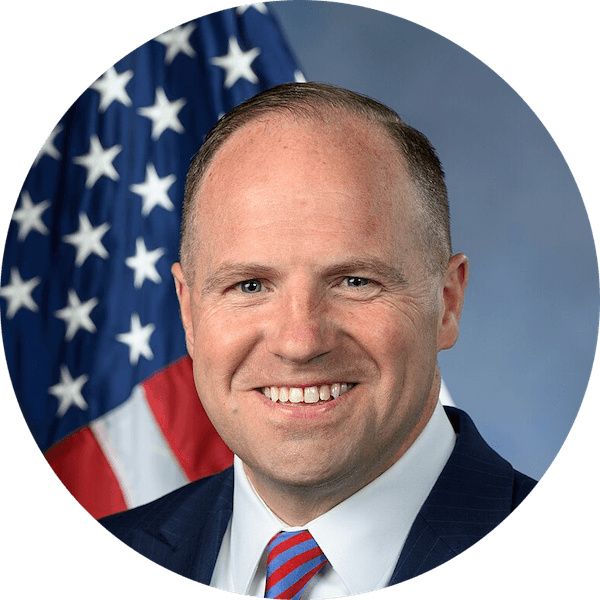
Josh Harder
Democrat · CA-9
Congress orders the first federal study of AI accountability
Why it matters
AI already curates what you see on social media and helps route the telecom networks your phone depends on, but the federal government has no shared standard for auditing those systems or explaining how they work. H.R. 1694 gives the Commerce Department's telecom agency 18 months to study how AI can be audited, certified, and held accountable, then report back to Congress.
H.R. 1694, the AI Accountability Act, is not a regulation. It does not fine companies, ban anything, or set compliance rules. It is a fact-finding assignment: Congress is telling the executive branch to study how AI should be checked before it writes any binding rules.
The job goes to the National Telecommunications and Information Administration, the Commerce Department's telecom agency. The agency has to study "accountability measures" for AI and report to Congress within 18 months. The bill defines an accountability measure as an audit, an assessment, or a certification meant to give assurance that a system is trustworthy. That definition steers the conversation toward concrete oversight tools rather than vague promises from the companies building the technology.
The study is broad. It has to look at how those measures are being built into communications networks, including telecom systems and social media platforms, plus electromagnetic spectrum sharing. It also has to weigh whether AI accountability can help close the digital divide, expand digital access in the U.S., and cut risks like cybersecurity threats. And it has to untangle the language itself: how the word "trustworthy" gets used in AI, and how it relates to terms like "responsible" and "human-centric." The bill's drafters clearly think the AI debate is full of loose words and want sharper ones before tougher rules get written.
A second piece of the bill is about transparency. It requires public meetings with industry, academics, and consumers to gather input on what information people should be able to see about the AI systems they interact with, are affected by, or study, and how that information should be shared. That feedback feeds a second report, also due within 18 months, sent to the House Energy and Commerce Committee and the Senate Commerce Committee. Boiled down, Congress is asking two questions before it moves further: how should AI be checked, and what should the public be allowed to know about it?
Bill Progress
Latest Action · Feb 27, 2025
Referred to the House Committee on Energy and Commerce.
H.R. 1694 Bill Summary
What H.R. 1694 actually does.
An 18-month federal study of how to check AI
The bill directs the Commerce Department's telecom agency (NTIA) to study accountability measures for AI systems and report the results to the House Energy and Commerce Committee and the Senate Commerce Committee within 18 months of the bill becoming law.
A working definition: audit, assessment, or certification
The bill defines an "accountability measure" as a mechanism — an audit, an assessment, or a certification — designed to provide assurance that a system is trustworthy. Those three tools anchor the study in concrete oversight rather than open-ended principles.
Scope covers social media, telecom, and spectrum
The study has to analyze how accountability measures are being incorporated into communications networks, specifically telecommunications networks and social media platforms, as well as electromagnetic spectrum sharing applications.
Looks at the digital divide and cybersecurity
The study must examine whether AI accountability measures can help close the digital divide and expand digital access in the U.S., and whether they can reduce risks tied to AI, including cybersecurity risks.
Public meetings on what you can know about AI
The bill requires public meetings with industry, academia, and consumers to gather feedback on what information should be available to people and businesses that interact with, are affected by, or study AI systems, and the best ways to make that information available.
A second transparency report, also in 18 months
Feedback from the public meetings feeds a second report, due within 18 months and sent to the same two committees, recommending what AI system information should be public and how it should be shared.
Who benefits from H.R. 1694?
Anyone whose life is shaped by AI systems
The bill's transparency track asks what information should be available to people who interact with or are affected by AI, with recommendations due to Congress within 18 months. If the meetings produce disclosure standards, ordinary users could eventually learn more about the systems making decisions about them.
Communities on the wrong side of the digital divide
The study has to weigh whether AI accountability measures can help close the digital divide and expand digital access in the U.S., putting underserved communities directly in the bill's policy focus.
Researchers and academics studying AI
The bill explicitly invites academia into the public meetings and asks what information should be available to people who study AI systems, which could improve access to data and system details for outside research.
Consumers of telecom and social media services
Because the study names telecommunications networks and social media platforms, consumers could benefit down the line if it leads to clearer accountability standards for the AI tools running those services.
Who is affected by H.R. 1694?
The NTIA and Commerce Department
The Assistant Secretary of Commerce for Communications and Information, who runs the NTIA, carries the workload: conducting the study, holding the public meetings, and delivering two reports within 18 months of enactment.
AI companies and platform operators
Companies building or deploying AI in telecom networks, social media platforms, or spectrum-sharing applications are not regulated by this bill, but their practices would be examined through the study and the transparency consultations.
Industry, academia, and consumer groups
These stakeholders are specifically named for the public meetings, so they are expected to weigh in on what AI information should be public and how it should be disclosed.
Two congressional committees
The House Energy and Commerce Committee and the Senate Commerce, Science, and Transportation Committee receive both 18-month reports, giving them the record they would need for any future AI legislation.
HR1694 Legislative Journey
House: Committee Action
Feb 27, 2025
Referred to the House Committee on Energy and Commerce.
About the Sponsor
Josh Harder
Democrat, California's 9th congressional district · 7 years in Congress
Committees: Appropriations
View full profile →
Cosponsors (1)
This bill has 1 cosponsor: 1 Democrat. Cosponsors represent 1 state: Illinois.
Committee Sponsors
Energy and Commerce Committee
1 of 54 committee members cosponsored

23 Democrats across this committee haven't cosponsored yet. Mobilize their constituents
H.R. 1694 Quick Facts
- Committee
- Energy and Commerce
- Chamber
- House
- Policy
- Science, Technology, Communications
- Introduced
- Feb 27, 2025
Referred to the House Committee on Energy and Commerce.
Feb 27, 2025
Official Sources
The official legislative record for the AI Accountability Act, including text, sponsors, and status.
NTIA's existing work on AI accountability — the agency this bill tasks with the new 18-month study.
NTIA's recommendations on AI audits, assessments, and disclosures — the same oversight tools the bill defines as accountability measures.
The federal framework that defines characteristics of trustworthy AI, the term the bill directs Commerce to study.
NTIA's spectrum role, relevant to the bill's focus on AI in electromagnetic spectrum sharing applications.
NTIA's digital inclusion programs, tied to the bill's question of whether AI accountability can help close the digital divide.
H.R. 1694 Common Questions
Does H.R. 1694 actually regulate AI companies?
Not yet. H.R. 1694 doesn't fine, ban, or set rules for anyone. It orders the Commerce Department to study how AI should be checked and report back to Congress within 18 months, which could lay the groundwork for rules later.
What counts as an "accountability measure" in the AI Accountability Act?
The bill defines it as an audit, an assessment, or a certification designed to give assurance that an AI system is trustworthy. Those three tools are the concrete oversight methods the study is built around.
When is the federal report on AI due?
Both reports — one on accountability measures, one on transparency — are due within 18 months of the bill becoming law. The clock only starts if H.R. 1694 is enacted, and right now it's still in committee.
Does H.R. 1694 cover social media and telecom networks?
Yes. The study has to examine how AI accountability measures are being built into communications networks, specifically telecommunications networks and social media platforms, plus electromagnetic spectrum sharing applications.
What's the difference between "trustworthy," "responsible," and "human-centric" AI?
The bill doesn't define them — it asks the study to. It directs Commerce to analyze how "trustworthy" is used in AI and how it relates to terms like "responsible" and "human-centric," reflecting a push to tighten loose language before any rules.
What could the public eventually learn about AI systems under this bill?
The bill's transparency track asks what information should be available to people and businesses that interact with, are affected by, or study AI systems. Commerce would gather public feedback and recommend disclosure standards to Congress.
Does H.R. 1694 address cybersecurity and the digital divide?
Yes. The study must weigh whether AI accountability measures can reduce risks like cybersecurity threats, and whether they can help close the digital divide and expand digital access in the U.S.
Who would run the AI study and gather public input?
The National Telecommunications and Information Administration — the Commerce Department's telecom agency — runs the study and holds public meetings with industry, academics, and consumers to collect feedback.
Based on H.R. 1694 bill text
H.R. 1694 Bill Text
“To direct the Assistant Secretary of Commerce for Communications and Information to conduct a study and hold public meetings with respect to artificial intelligence systems, and for other purposes.”
Source: U.S. Government Publishing Office
Get notified when H.R. 1694 moves
Committee votes, floor action, cosponsor changes — straight to your inbox.
Bill alerts + Legisletter's monthly briefing. Unsubscribe anytime.
Science, Technology, Communications Bills
9 related bills we're tracking
AM Radio for Every Vehicle Act of 2025


Received in the Senate. Read twice. Placed on Senate Legislative Calendar under General Orders. Calendar No. 622.
Sep 16, 2026
Scientific Integrity Act

Referred to the House Committee on Science, Space, and Technology.
Feb 6, 2025
Kids Online Safety Act


Committee on Commerce, Science, and Transportation. Ordered to be reported with an amendment in the nature of a substitute favorably.
Aug 5, 2026
Sunshine Protection Act of 2025


Received in the Senate and Read twice and referred to the Committee on Commerce, Science, and Transportation.
Jul 15, 2026
GUARDRAILS Act



Referred to the Committee on Energy and Commerce, and in addition to the Committee on the Judiciary, for a period to be subsequently determined by the Speaker, in each case for consideration of such provisions as fall within the jurisdiction of the committee concerned.
Mar 20, 2026
Artificial Intelligence Civil Rights Act of 2025


Referred to the Committee on Energy and Commerce, and in addition to the Committee on Oversight and Government Reform, for a period to be subsequently determined by the Speaker, in each case for consideration of such provisions as fall within the jurisdiction of the committee concerned.
Dec 2, 2025
TAKE IT DOWN Act


Became Public Law No: 119-12.
May 19, 2025
States' Right to Regulate AI Act



Read twice and referred to the Committee on Commerce, Science, and Transportation.
Dec 17, 2025
ACERO Act


Received in the Senate and Read twice and referred to the Committee on Commerce, Science, and Transportation.
Feb 24, 2026
Trending Right Now
Bills gaining momentum across Congress
North Platte Canteen Congressional Gold Medal Act



Referred to the House Committee on Financial Services.
Feb 21, 2025
Fit to Serve Act


Referred to the House Committee on Armed Services.
May 21, 2025
ASAP Act


Ordered to be Reported in the Nature of a Substitute by the Yeas and Nays: 40 - 0.
Sep 16, 2026
Tracking Science, Technology, Communications in Congress? Monitor bills, track cosponsor momentum, and launch advocacy campaigns — all from one advocacy platform.