H.R. 1629: Farmland Security Act of 2025
Sponsor

Marie Perez
Democrat · WA-3
Hide who owns the farm, lose the whole farm
Why it matters
Right now, a foreign investor caught hiding U.S. farmland ownership can be fined no more than 25% of that land's value. H.R. 1629 erases that cap entirely and lets USDA hit foreign-owned shell companies with a penalty worth 100% of the land they failed to disclose.
Foreign investors who buy or lease U.S. farmland already have to report it to the Department of Agriculture. The problem the bill targets is the penalty for not reporting: under current law, the fine can't exceed 25% of the land's value, no matter how deliberate the concealment.
H.R. 1629 removes that ceiling. For most violations, USDA would set the penalty itself with no hard cap. For a foreign-owned shell company, the bill goes further and sets the fine at 100% of the land's fair market value on the day the penalty is assessed.
The bill defines a shell company broadly: any corporation, partnership, trust, estate, or similar entity with no or only nominal operations. That language is meant to catch the paper companies that exist mainly to hold title and obscure who's behind them. There's one way out. If the company fixes a missing or defective filing within 60 days of USDA notifying it, the penalty doesn't apply.
The bill also turns oversight into a routine instead of a reaction. USDA would have to audit at least 10% of disclosure reports every year, can pull in other federal agencies to help, and must train state and county officials each year to spot farmland where a foreign owner never filed at all.
Finally, it demands data. USDA would owe Congress a first report within 180 days of enactment and one every year after, covering foreign leasing and its effect on family farms, rural towns, and the food supply; purchase trends among foreign-owned shell companies; and how much of U.S. agricultural production capacity sits in foreign hands. The bill authorizes $2 million a year from 2025 through 2030 to do all of it.
Bill Progress
Latest Action · Feb 26, 2025
Referred to the House Committee on Agriculture.
H.R. 1629 Bill Summary
What H.R. 1629 actually does.
The 25% penalty cap disappears
Current law bars USDA from fining a disclosure violator more than 25% of the land's fair market value. The bill strikes that limit, letting USDA set the penalty amount for most violations without a ceiling.
Shell companies face a 100% penalty
For a foreign-owned shell company that breaks the disclosure rules, the fine is set at 100% of the fair market value of its farmland interest, measured on the day the penalty is assessed.
Fix the filing in 60 days, owe nothing
A shell company avoids the penalty entirely if it corrects a defective filing or submits a missing one within 60 days of USDA notifying it of the problem.
Paper companies get a broad definition
The bill defines a shell company as any corporation, partnership, trust, estate, or similar entity with no or only nominal operations, language meant to catch entities that exist mainly to hold title.
USDA must audit 10% of filings every year
The Secretary of Agriculture must run an annual compliance audit of at least 10% of disclosure reports and may consult other federal agencies in doing so, replacing reactive enforcement with a yearly check.
Local officials get trained to spot gaps
USDA must provide annual training to state and county personnel so they can identify farmland where a foreign owner was required to file a disclosure report but never did.
Annual reports to Congress, funded through 2030
USDA owes Congress a first report within 180 days of enactment and one each year after on foreign leasing, shell-company purchase trends, and foreign ownership of production capacity. The bill authorizes $2 million a year from 2025 through 2030.
Who benefits from H.R. 1629?
Family farmers
Stronger penalties and routine audits are aimed at deterring hidden foreign control of nearby cropland, and the bill orders USDA to study how foreign leasing specifically affects family farms.
Rural communities
USDA would research how foreign agricultural leasing affects local economies and train state and county officials each year to flag land where a foreign owner never filed a required report.
USDA enforcement staff
The agency gets concrete tools: a removed penalty cap, mandatory audits of at least 10% of filings, authority to pull in other federal agencies, and $2 million a year through 2030 to fund the work.
Anyone tracking the food supply
The required annual reports would give Congress and producers harder data on how much U.S. agricultural production capacity sits in foreign hands, which barely exists in usable form today.
Who is affected by H.R. 1629?
Foreign owners of U.S. farmland
Anyone foreign holding or leasing U.S. agricultural land faces tighter scrutiny: annual audits of at least 10% of filings and local officials trained to catch land tied to missing reports.
Foreign-owned shell companies
These are the bill's main target. Break the filing rules and the fine is 100% of the land's value, unless the company corrects the problem within 60 days of USDA's notice.
State and county officials
They take on a new annual training requirement from USDA on how to identify farmland where a foreign owner was supposed to file a disclosure report and never did.
USDA itself
The agency inherits the work: yearly audits, yearly training, ongoing research, and a report to Congress every year, all funded by the bill's $2 million annual authorization.
Cost & Funding
Authorization
$2,000,000 for each fiscal year
- Authorized for fiscal years 2025 through 2030, or $12 million over the six-year window.
- Funds USDA's new audits, local-official training, research, and annual reporting to Congress.
- The penalty changes themselves carry no cost to taxpayers; any fines collected flow to the government.
HR1629 Legislative Journey
House: Committee Action
Feb 26, 2025
Referred to the House Committee on Agriculture.
About the Sponsor
Marie Perez
Democrat, Washington's 3rd congressional district · 3 years in Congress
Committees: Appropriations
View full profile →
Cosponsors (2)
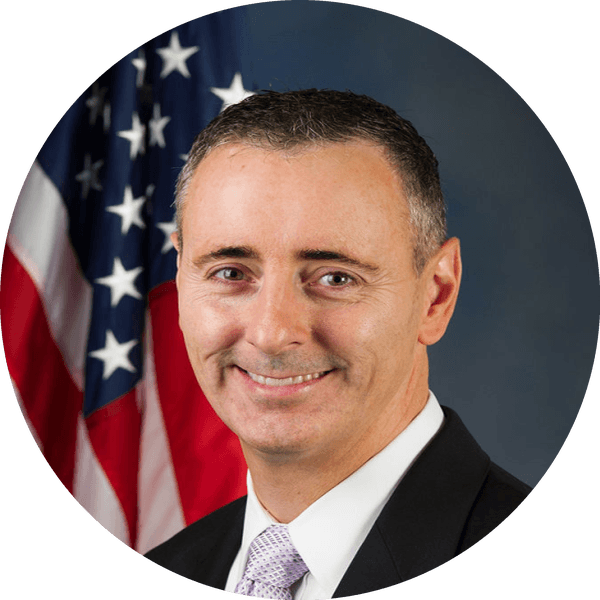
All 2 cosponsors are Republicans. Cosponsors represent 2 states: Michigan, Pennsylvania.
Committee Sponsors
Agriculture Committee
0 of 53 committee members cosponsored
No committee members have cosponsored this bill
24 Democrats across this committee haven't cosponsored yet. Mobilize their constituents
H.R. 1629 Quick Facts

- Committee
- Agriculture
- Chamber
- House
- Policy
- Agriculture and Food
- Introduced
- Feb 26, 2025
Referred to the House Committee on Agriculture.
Feb 26, 2025
Official Sources
Official congressional page for the Farmland Security Act of 2025, with bill text, actions, and status.
USDA’s AFIDA page is the core official program source for foreign ownership disclosure requirements that this bill strengthens.
Official U.S. Code location for the Agricultural Foreign Investment Disclosure Act provisions amended by the bill, 7 U.S.C. 3501 through 3508.
The Farm Service Agency administers USDA farmland reporting functions and is the most relevant agency home for implementation details.
Official USDA data source relevant to the bill’s required research on family farms, rural communities, and agricultural ownership patterns.
USDA’s research arm provides official analysis relevant to the bill’s mandated studies on domestic food supply and agricultural economic activity.
GovInfo provides official federal legislative and legal documents, useful for the enrolled text and related statutory materials for this bill.
H.R. 1629 Common Questions
How big is the penalty for hiding foreign ownership of U.S. farmland?
H.R. 1629 removes the current limit, which caps the fine at 25% of the land's value. For a foreign-owned shell company, it sets the penalty at 100% of the farmland's fair market value on the day it's assessed.
Can a shell company avoid the farmland penalty?
Yes. Under H.R. 1629, a shell company owes nothing if it fixes a defective filing or submits a missing one within 60 days after USDA notifies it of the problem.
What counts as a shell company under the Farmland Security Act?
The bill defines it as any corporation, partnership, trust, estate, or similar legal entity with no or only nominal operations, meaning a company that exists mostly on paper to hold the land.
How many foreign farmland filings would USDA have to audit?
H.R. 1629 requires USDA to audit at least 10% of the disclosure reports filed each year for completeness and accuracy, and lets it consult other federal agencies while doing so.
Does the bill help local officials catch unreported foreign farmland?
Yes. H.R. 1629 requires USDA to train state and county officials every year to identify farmland where a foreign owner was required to file a disclosure report but never did.
When would USDA report to Congress, and on what?
The first report is due within 180 days of enactment, then yearly. It must cover foreign farmland leasing and its effect on family farms and the food supply, shell-company purchase trends, and foreign ownership of production capacity.
How much would the Farmland Security Act cost?
The bill authorizes $2 million a year from 2025 through 2030, or $12 million total, to fund USDA's new audits, local-official training, research, and annual reports to Congress.
Who introduced H.R. 1629 and where does it stand?
Rep. Marie Perez (D-WA) introduced it in February 2025 with Reps. John Moolenaar (R-MI) and Brian Fitzpatrick (R-PA) as cosponsors. It was referred to the House Agriculture Committee.
Based on H.R. 1629 bill text
H.R. 1629 Bill Text
“To amend the Agricultural Foreign Investment Disclosure Act of 1978 to remove the limitation on the amount of a civil penalty, and for other purposes.”
Source: U.S. Government Publishing Office
Get notified when H.R. 1629 moves
Committee votes, floor action, cosponsor changes — straight to your inbox.
Bill alerts + Legisletter's monthly briefing. Unsubscribe anytime.
Agriculture and Food Bills
9 related bills we're tracking
SAFE Act of 2025


Referred to the Subcommittee on Livestock, Dairy, and Poultry.
Mar 28, 2025
Restoring Food Security for American Families and Farmers Act of 2025




Referred to the Subcommittee on Nutrition and Foreign Agriculture.
Jan 13, 2026
EATS Act of 2025

Referred to the House Committee on Agriculture.
Jul 29, 2025
Hot Foods Act of 2025


Referred to the Subcommittee on Nutrition and Foreign Agriculture.
Apr 18, 2025
Whole Milk for Healthy Kids Act of 2025
Placed on the Union Calendar, Calendar No. 111.
Jun 5, 2025
Keep SNAP and WIC Funded Act of 2025

Referred to the House Committee on Appropriations.
Nov 7, 2025
WIC Benefits Protection Act



Referred to the House Committee on Education and Workforce.
Oct 10, 2025
Food Secure Strikers Act of 2025




Referred to the Subcommittee on Nutrition and Foreign Agriculture.
Apr 18, 2025
Improving Access to Nutrition Act of 2026

Referred to the Subcommittee on Nutrition and Foreign Agriculture.
Mar 20, 2026
Trending Right Now
Bills gaining momentum across Congress
America’s Olympic and Paralympic Games Commemorative Coins Act



Referred to the House Committee on Financial Services.
Jul 14, 2025
Fit to Serve Act



Referred to the House Committee on Armed Services.
May 21, 2025
ASAP Act


Ordered to be Reported in the Nature of a Substitute by the Yeas and Nays: 40 - 0.
Sep 16, 2026
Tracking Agriculture and Food in Congress? Monitor bills, track cosponsor momentum, and launch advocacy campaigns — all from one advocacy platform.