H.J.Res. 59: Disapproving the rule submitted by the Bureau of Consumer Financial Protection relating to "Overdraft Lending: Very Large Financial Institutions".
Enacted as part of SJRES18: A joint resolution disapproving the rule submitted by the Bureau of Consumer Financial Protection relating to "Overdraft Lending: Very Large Financial Institutions".· May 9, 2025
Sponsor

J. Hill
Republican · AR-2
Big banks' overdraft fees lost their $5 ceiling
Why it matters
The CFPB estimated its overdraft rule would save households $1.5 billion to $5 billion a year — up to $225 for each household that pays overdraft fees. H.J.Res. 59 would cancel that rule for banks and credit unions with more than $10 billion in assets, leaving fees where each bank sets them.
In December 2024, the CFPB finalized a rule for banks and credit unions with more than $10 billion in assets. Those institutions would have had three choices on overdraft: charge a flat $5, charge a fee that only covers their actual costs, or treat overdraft as credit and give you the same disclosures you get on a credit card.
The rule was set to take effect on October 1, 2025. Smaller banks and credit unions were never covered.
H.J.Res. 59 would cancel that rule entirely, leaving overdraft fees at the largest banks to be set by the banks themselves. It uses the Congressional Review Act, a fast-track process that lets Congress veto a finished agency rule with a simple majority in each chamber.
The resolution is one sentence. It adds no fee limit, no disclosure requirement, and no refunds. It also carries a lasting effect: under the Congressional Review Act, the CFPB cannot issue a substantially similar rule again unless Congress authorizes it.
Sponsors, led by House Financial Services Chairman French Hill, argue the rule was government price-setting that would push banks to drop overdraft coverage and send customers toward costlier options. Consumer groups and the CFPB's defenders argue overdraft fees fall hardest on people living paycheck to paycheck, and that a $35 charge on a small shortfall functions as a high-cost loan.
Bill Progress
Latest Action · Mar 21, 2025
Placed on House floor schedule, Calendar No. 16.
H.J.Res. 59 Bill Summary
What H.J.Res. 59 actually does.
The $5 overdraft option disappears
The resolution disapproves the CFPB's "Overdraft Lending: Very Large Financial Institutions" rule, published December 30, 2024, and says it has no force or effect. That removes the $5 benchmark, the cost-based fee option, and the requirement to treat higher fees as credit.
Only customers of the largest institutions were in scope
The cancelled rule applied to banks and credit unions with more than $10 billion in assets. Customers of smaller community banks and credit unions were never covered by it.
Nothing replaces the rule
The resolution sets no fee cap, adds no new disclosures, and provides no refunds. Overdraft pricing at large banks returns to what each bank decides, within existing law.
The CFPB cannot try the same rule again
Under the Congressional Review Act, once a rule is disapproved the agency is barred from issuing a substantially similar one unless Congress passes a new law authorizing it.
Who benefits from H.J.Res. 59?
Banks and credit unions with over $10 billion in assets
They keep setting their own overdraft fees instead of choosing between a $5 charge, a cost-based fee, or full credit-card-style lending rules.
Customers who rely on overdraft coverage
Sponsors argue that without the rule, banks are less likely to cut back overdraft coverage for customers who use it to avoid declined payments or bounced bills.
Lawmakers seeking limits on CFPB rulemaking
The resolution blocks both this rule and any substantially similar future version, which supporters see as a check on the bureau's authority over pricing.
Who is affected by H.J.Res. 59?
People who pay overdraft fees at large banks
A $35 overdraft stays a $35 overdraft. Someone who overdraws eight times a year would pay about $280 in fees, versus about $40 under the rule's $5 option.
The CFPB
The bureau loses a finished rule and the ability to reissue a substantially similar one without new authority from Congress.
Community banks and smaller credit unions
Institutions under $10 billion in assets were outside the rule, so their overdraft practices do not change either way.
Consumer advocates
Groups that backed the rule would need Congress or state legislatures to set overdraft limits, since the CFPB route is closed for this approach.
HJRES59 Legislative Journey
House: Committee Action
Mar 21, 2025
Reported by the Committee on Financial Services. H. Rept. 119-26.
House: Vote: 30-19
Mar 5, 2025
Ordered to be Reported by the Yeas and Nays: 30 - 19.
House: Committee Action
Feb 13, 2025
Referred to the House Committee on Financial Services.
About the Sponsor
J. Hill
Republican, Arkansas's 2nd congressional district · 11 years in Congress
Committees: Financial Services, House Permanent Select Committee on Intelligence
View full profile →
Cosponsors at time of passage (17)
All 17 cosponsors are Republicans. Cosponsors represent 14 states: Florida, Georgia, Kentucky, and 11 more.
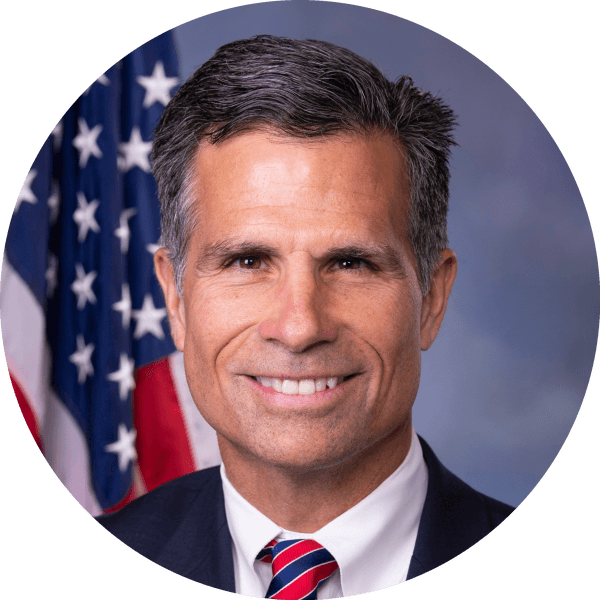
Daniel Meuser
Republican · PA

Andrew Ogles
Republican · TN

Ann Wagner
Republican · MO

Bill Huizenga
Republican · MI

William Timmons
Republican · SC

Tim Moore
Republican · NC

Mike Haridopolos
Republican · FL

Andy Barr
Republican · KY

Roger Williams
Republican · TX

Byron Donalds
Republican · FL

Maria Salazar
Republican · FL

Troy Downing
Republican · MT
Committee Sponsors
Financial Services Committee
14 of 53 committee members cosponsored at the time


H.J.Res. 59 Quick Facts
- Committee
- Financial Services
- Chamber
- House
- Policy
- Finance and Financial Sector
- Introduced
- Feb 13, 2025
Placed on House floor schedule, Calendar No. 16.
Mar 21, 2025
Official Sources
Official status page for H.J.Res. 59, with its text, sponsors, and committee actions.
The identical Senate resolution that passed both chambers and cancelled the overdraft rule.
The enacted law, signed May 9, 2025, that gave the overdraft rule no force or effect.
The CFPB page for the overdraft rule this resolution would cancel, with its October 1, 2025 effective date.
Full text of the final rule as published December 30, 2024, the exact citation the resolution disapproves.
The House Financial Services Committee report filed when it reported the resolution on March 21, 2025.
The statute behind the fast-track process, including the bar on reissuing a substantially similar rule.
Congressional Research Service analysis of how Congress cancelled the overdraft rule and what it means for future CFPB action.
About Legisletter
Legisletter is the advocacy platform that tracks every bill from introduction to Public Law — and connects the constituents affected by a bill to the legislators who vote on it.
H.J.Res. 59 Common Questions
What does H.J.Res. 59 do?
It cancels the CFPB's overdraft rule for banks and credit unions with more than $10 billion in assets. That rule would have pushed overdraft fees at those institutions toward $5, or required banks to treat pricier overdraft as a loan.
What was the CFPB $5 overdraft fee rule?
Finalized in December 2024, it gave large banks three options: charge $5 per overdraft, charge only what overdraft costs them, or treat it as credit with credit-card-style disclosures. It was set to take effect October 1, 2025.
Was the overdraft rule actually repealed?
Yes, through the Senate's matching resolution. S.J.Res. 18 passed both chambers and was signed into law on May 9, 2025. H.J.Res. 59, the House version, was reported by committee but is no longer needed to cancel the rule.
Does my bank or credit union fall under the overdraft rule?
Only if it has more than $10 billion in assets — roughly the largest national and regional banks and a handful of big credit unions. Smaller community banks and credit unions were never covered.
How much would the overdraft rule have saved consumers?
The CFPB estimated $1.5 billion to $5 billion a year, or up to $225 for each household that pays overdraft fees. Banks disputed those figures and argued many customers would lose access to overdraft coverage instead.
Can the CFPB write a new overdraft rule after this?
Not one substantially similar to the cancelled rule. Under the Congressional Review Act, a disapproved rule can't be reissued in the same form unless Congress passes a new law allowing it.
Will I get refunds for overdraft fees I already paid?
No. Neither the rule nor the resolution involved refunds for past fees. The resolution only cancels the rule, and it adds no fee limits or disclosures of its own.
Why do supporters want to cancel the overdraft rule?
Sponsors, led by Rep. French Hill (R-AR), argue it amounted to government price-setting that could lead banks to drop overdraft coverage and push customers toward costlier short-term credit. Supporters of the rule argue large banks charge far more than overdraft costs them.
Based on H.J.Res. 59 bill text
H.J.Res. 59 Bill Text
“Disapproving the rule submitted by the Bureau of Consumer Financial Protection relating to “Overdraft Lending: Very Large Financial Institutions”.”
Source: U.S. Government Publishing Office
Finance and Financial Sector Bills
9 related bills we're tracking
America’s Olympic and Paralympic Games Commemorative Coins Act





Referred to the House Committee on Financial Services.
Jul 14, 2025
761st Tank Battalion Congressional Gold Medal Act




Referred to the Committee on Financial Services, and in addition to the Committee on House Administration, for a period to be subsequently determined by the Speaker, in each case for consideration of such provisions as fall within the jurisdiction of the committee concerned.
Feb 26, 2025
Taxpayer Data Protection Act





Sponsor introductory remarks on measure. (CR H625-626)
Feb 11, 2025
Repealing Big Brother Overreach Act





Placed on the Union Calendar, Calendar No. 609.
Jun 18, 2026
Rosie the Riveter Commemorative Coin Act





Referred to the House Committee on Financial Services.
Jan 15, 2025
HELPER Act of 2025





Referred to the House Committee on Financial Services.
Mar 14, 2025
Anti-CBDC Surveillance State Act



Motion to reconsider laid on the table Agreed to without objection.
Jul 17, 2025
Protecting Privacy in Purchases Act



Received in the Senate and Read twice and referred to the Committee on Banking, Housing, and Urban Affairs.
Jul 15, 2026
Veterans Member Business Loan Act



Referred to the House Committee on Financial Services.
Jan 16, 2025
Trending Right Now
Bills gaining momentum across Congress
Fit to Serve Act





Referred to the House Committee on Armed Services.
May 21, 2025
ASAP Act




Ordered to be Reported in the Nature of a Substitute by the Yeas and Nays: 40 - 0.
Sep 16, 2026
Therapeutic Fraud Prevention Act of 2025





Referred to the House Committee on Energy and Commerce.
May 7, 2025
Tracking Finance and Financial Sector in Congress? Monitor bills, track cosponsor momentum, and launch advocacy campaigns — all from one advocacy platform.