S. 93: Harmful Algal Bloom and Hypoxia Research and Control Amendments Act of 2025
Sponsor

Dan Sullivan
Republican · AK
Toxic algae doesn't stop at the coastline. Neither should Congress.
Why it matters
S. 93 passed the Senate by unanimous consent with 15 cosponsors from both parties, and authorizes $29.5 million a year — about $147.5 million through 2030 — to track, forecast, and respond to toxic algal blooms. The change that matters most: the federal program would cover freshwater lakes, rivers, and reservoirs on equal footing with coastal waters.
Federal harmful algal bloom law has been built around coastal waters and the Great Lakes. S. 93 would extend it to every kind of water where blooms happen — estuaries, inland lakes, rivers, and reservoirs — and to blooms that start in freshwater and drift out to sea.
The work gets split by water type. NOAA keeps the marine, coastal, and Great Lakes response and must build forecasts that account for hurricanes and storms churning up nutrients buried in sediment. EPA gets a new, dedicated role in freshwater research and forecasting, with instructions not to duplicate what NOAA already does.
The definition of a harmful algal bloom widens too. It now names cyanobacteria, diatoms, and seaweed like Sargassum, and counts harm to communities and subsistence food sources, not just ecosystems.
When a bloom gets bad enough to be declared an event of national significance, the bill spells out what officials should weigh: toxin levels in fish and shellfish, toxic aerosols in the air, reported illnesses and deaths, beach and fishery closures, lost tourism and real estate value, and whether it crosses state or national lines. Tribal leaders and the governors of D.C. and U.S. territories could request that declaration — today only states can — and the federal match requirement could be waived for communities with no reasonable way to pay it.
Beyond response, the bill creates a national observing network so local officials get near-real-time bloom data, a NOAA–EPA incubator that funds and catalogs new ways to kill or control blooms, and a requirement that the federal task force hand Congress an updated national action strategy at least every five years.
Bill Progress
Latest Action · Sep 11, 2025
Passed the Senate, received in House
S. 93 Bill Summary
What S. 93 actually does.
Inland lakes and rivers join the federal program
Federal bloom research and assessment would cover marine, estuarine, and freshwater systems, including blooms that begin in lakes or rivers and migrate to the coast.
EPA takes the lead on freshwater blooms
EPA would research the ecology and human health effects of freshwater blooms and run monitoring and forecasting for lakes, rivers, and reservoirs, coordinating with NOAA on the Great Lakes and estuaries.
Storm-aware bloom forecasts
NOAA must develop forecast models that account for how hurricanes and other weather events stir nutrients out of sediment and feed blooms.
Tribes and territories can ask for emergency status
Tribal leaders and the executive officials of D.C. and U.S. territories could request that a bloom be declared an event of national significance, alongside governors.
Cost-share can be waived for communities that can't pay
Federal officials could waive the local matching requirement when a recipient has no reasonable means to meet it, and could reimburse states, tribes, and local governments for assessing a major bloom's health and economic effects.
A national network for near-real-time bloom data
NOAA would link federal, state, regional, and local monitoring into a National Harmful Algal Bloom Observing Network, with freshwater, estuarine, and coastal data served through the Water Quality Portal.
An incubator for new bloom-control technology
NOAA and EPA would fund promising biological, chemical, and physical methods to control blooms and maintain a public database of their cost, permitting, effectiveness, and scalability.
$147.5 million over five years
S. 93 authorizes $19.5 million a year for NOAA, $8 million for EPA, and $2 million for national-significance event response, each year from fiscal 2026 through 2030.
Who benefits from S. 93?
People who live, swim, and drink water near inland lakes
Freshwater blooms get their own federal research, forecasting, and monitoring program at EPA, rather than sitting on the edge of a coastal-focused law.
Subsistence harvesters and tribal communities
If your family eats what it catches or gathers, the bill counts harm to those food sources when weighing federal help, expands toxin testing in rural and remote areas, and lets tribal leaders request an emergency declaration directly.
Commercial fishermen, shellfish growers, and tourism businesses
Fishery and beach closures, lost tourism, and real estate losses are all written into the factors that decide whether a bloom qualifies for national-significance support.
Small towns and island communities without a budget for a match
The cost-share waiver means a community's inability to pay its share no longer has to block federal assessment and response funding.
Gulf Coast residents dealing with storms and dead zones
Hurricane-aware forecasting and a named commitment to the annual Gulf of Mexico hypoxia mapping cruise target the region where storms and low-oxygen zones overlap.
Who is affected by S. 93?
EPA
Takes on a new statutory freshwater bloom mission with $8 million a year authorized, and must show its work is not duplicating existing programs.
NOAA and the Integrated Ocean Observing System
Must build the national observing network, develop storm-aware forecast models, and run the technology incubator using existing grant funds.
Agriculture and fertilizer industries
Nutrient runoff is a major driver of blooms, and these industries are named as groups the federal task force must consult when writing the national action strategy.
State, tribal, and local agencies
Gain access to reimbursements and near-real-time data, but will be expected to feed monitoring into shared federal data standards.
The Department of Energy
Joins the interagency federal task force on harmful algal blooms and hypoxia.
Cost & Funding
Authorization
$29.5 million a year for fiscal years 2026 through 2030 — about $147.5 million over five years
- NOAA: $19.5 million a year, about $97.5 million over five years — two-thirds of the total.
- EPA: $8 million a year, about $40 million over five years, for freshwater bloom research and forecasting.
- Event response: $2 million a year, about $10 million over five years, for national-significance events. This money stays available until spent rather than expiring each year.
- Spread across 50 states, the full $29.5 million works out to under $600,000 per state per year — a research and coordination budget, not a cleanup fund.
- These are authorization ceilings. Actual funding depends on what Congress appropriates each year, and NOAA or EPA may transfer funds to other agencies only when an appropriations law allows it.
S93 Legislative Journey
House: Action Taken
Sep 11, 2025
Held at the desk.
Passed 6547-6549
Sep 10, 2025
Passed Senate without amendment and an amendment to the Title by Unanimous Consent. (consideration: CR S6547-6549; text: CR S6547-6549)
+1 more action this day
Committee Action
Jul 1, 2025
Committee on Commerce, Science, and Transportation. Reported by Senator Cruz without amendment and an amendment to the title. With written report No. 119-34.
Passed Committee
Feb 5, 2025
Committee on Commerce, Science, and Transportation. Ordered to be reported without amendment favorably.
Committee Action
Jan 14, 2025
Read twice and referred to the Committee on Commerce, Science, and Transportation.
About the Sponsor
Dan Sullivan
Republican, AK · 11 years in Congress
Committees: Veterans' Affairs, Armed Services, Commerce, Science, and Transportation
View full profile →
Cosponsors (15)
This bill has 15 cosponsors: 7 Democrats, 7 Republicans, 1 Independent, reflecting bipartisan support. Cosponsors represent 12 states: Alaska, California, Delaware, and 9 more.

Tammy Baldwin
Democrat · WI

Susan Collins
Republican · ME
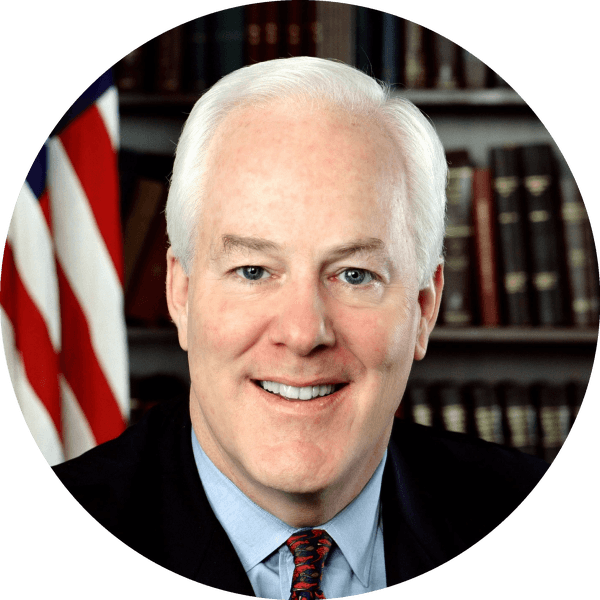
John Cornyn
Republican · TX

Jeff Merkley
Democrat · OR

Gary Peters
Democrat · MI

Sheldon Whitehouse
Democrat · RI

Lisa Murkowski
Republican · AK

Christopher Coons
Democrat · DE

Alex Padilla
Democrat · CA

Bill Cassidy
Republican · LA

Roger Wicker
Republican · MS
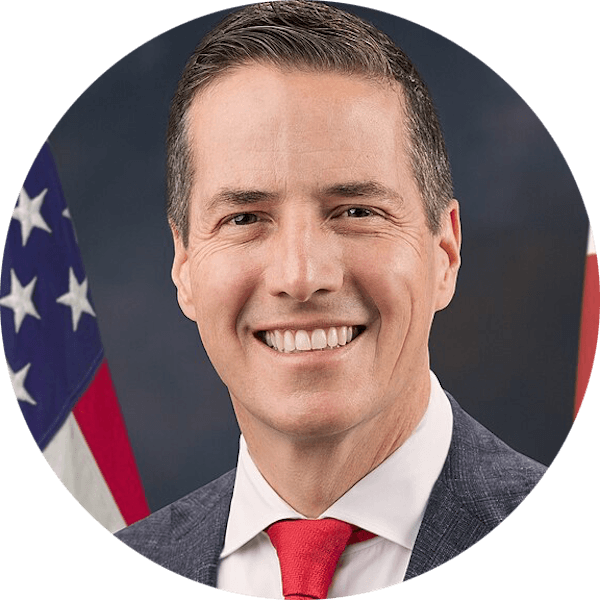
Bernie Moreno
Republican · OH
Committee Sponsors
Commerce, Science, and Transportation Committee
4 of 28 committee members cosponsored


13 Republicans across this committee haven't cosponsored yet. Mobilize their constituents
What laws does S. 93 change?
8 changes
Sections Amended
Section 2 of Coast Guard Authorization Act of 1998 (Public Law 105- 383; 112 Stat. 3412; 136 Stat. 1268)
striking the item relating to section 603 and inserting the following: ``Sec
Section 102 of Harmful Algal Bloom and Hypoxia Amendments Act of 2004 (33 U.S.C. 4001a)
striking ``In developing'' and all that follows through ``management
Section 603B of Harmful Algal Bloom and Hypoxia Research and Control Act of 1998 (33 U.S.C. 4003)
read as follows: ``SEC
Section 12304 of that Act (33 U.S.C. 3603).''. (2) Clerical amendment.--The table of contents in section 2 of the Coast Guard Authorization Act of 1998 (Public Law 105- 383; 112 Stat. 3412; 136 Stat. 1268)
striking the item relating to section 603B and inserting the following: ``Sec
Section 2 of Coast Guard Authorization Act of 1998 (Public Law 105- 383; 112 Stat. 3412; 136 Stat. 1268)
inserting after the item relating to section 603B the following: ``Sec
Section 606 of Harmful Algal Bloom and Hypoxia Research and Control Act of 1998 (33 U.S.C. 4005)
read as follows: ``SEC
S. 93 Quick Facts
- Committee
- Commerce, Science, and Transportation
- Chamber
- Senate
- Policy
- Environmental Protection
- Introduced
- Jan 14, 2025
Passed the Senate, received in House
Sep 11, 2025
Official Sources
Full text, cosponsors, and every action on S. 93, including its unanimous Senate passage.
The Congressional Budget Office estimate of what the bill’s $29.5 million a year in authorizations would cost.
The current law S. 93 amends, including the interagency task force it expands.
NOAA’s bloom research program, which keeps the marine, coastal, and Great Lakes role under the bill.
The regional forecasts S. 93 would extend with storm-aware models.
EPA’s bloom program, which gains a dedicated freshwater research and forecasting role under the bill.
The USGS–EPA data portal the bill names for storing and serving freshwater, estuarine, and coastal bloom monitoring data.
The NOAA observing system whose data standards the new National Harmful Algal Bloom Observing Network must follow.
S. 93 Common Questions
What is a harmful algal bloom?
A high concentration of algae, cyanobacteria (blue-green algae), or seaweed like Sargassum that makes toxins or otherwise harms water, wildlife, food sources, or people. S. 93 writes that broader definition into federal law, covering both saltwater and freshwater.
Does S. 93 cover blooms in lakes and rivers?
Yes. Federal bloom law has centered on coastal waters and the Great Lakes. S. 93 covers estuaries, inland lakes, rivers, and reservoirs too, and gives EPA a dedicated role in freshwater research and forecasting.
Has S. 93 passed?
It passed the Senate by unanimous consent on September 10, 2025, and is being held at the desk in the House. It needs a House vote and the President's signature to become law.
How much funding does S. 93 authorize?
$29.5 million a year from fiscal 2026 through 2030, about $147.5 million total: $19.5 million for NOAA, $8 million for EPA, and $2 million for major-event response. Congress still has to appropriate the money each year.
Who can request federal help for a severe algal bloom?
Today, governors can ask for a bloom to be declared an event of national significance. S. 93 lets tribal leaders and the executive officials of D.C. and U.S. territories make that request too.
Can a small town get help if it can't afford the local match?
Yes. Federal officials could waive the local cost-share when a community has no reasonable way to pay it, and could reimburse states, tribes, and local governments for assessing a bloom's health and economic effects.
Would S. 93 give the public real-time bloom data?
It creates a national observing network linking federal, state, and local monitoring so officials, tribes, and communities get near-real-time bloom data to decide when to close beaches, fisheries, or water intakes.
Does S. 93 fund new ways to get rid of algal blooms?
Yes. It sets up a NOAA–EPA incubator that funds promising biological, chemical, and physical control methods and keeps a database of each method's cost, permitting needs, and effectiveness.
Based on S. 93 bill text
S. 93 Bill Text
“To amend the Harmful Algal Bloom and Hypoxia Research and Control Act of 1998 to address harmful algal blooms, and for other purposes.”
Source: U.S. Government Publishing Office
Get notified when S. 93 moves
Committee votes, floor action, cosponsor changes — straight to your inbox.
Bill alerts + Legisletter's monthly briefing. Unsubscribe anytime.
Environmental Protection Bills
9 related bills we're tracking
Water Affordability, Transparency, Equity, and Reliability Act of 2025




Referred to the Subcommittee on Water Resources and Environment.
May 13, 2025
To amend the Clean Air Act with respect to the ethanol waiver for Reid Vapor Pressure under that Act, and for other purposes.




Received in the Senate and Read twice and referred to the Committee on Environment and Public Works.
May 14, 2026
Save Our Sequoias Act




Committee on Energy and Natural Resources. Hearings held.
Sep 16, 2026
ePermit Act

Received in the Senate and Read twice and referred to the Committee on Environment and Public Works.
Dec 10, 2025
Water Infrastructure Resilience and Sustainability Act



Referred to the Subcommittee on Water Resources and Environment.
Dec 1, 2025
Chesapeake Bay Watershed Advancement for Training, Education, Restoration, and Science (WATERS) Act





Received in the Senate and Read twice and referred to the Committee on Commerce, Science, and Transportation.
Sep 15, 2026
Mining Regulatory Clarity Act



Placed on Senate Legislative Calendar under General Orders. Calendar No. 334.
Feb 11, 2026
Data Center Water and Energy Transparency Act of 2026



Read twice and referred to the Committee on Energy and Natural Resources. (text: CR S1616-1617)
Mar 25, 2026
Mining Regulatory Clarity Act



Read twice. Placed on Senate Legislative Calendar under General Orders. Calendar No. 357.
Mar 17, 2026
Trending Right Now
Bills gaining momentum across Congress
North Platte Canteen Congressional Gold Medal Act


Referred to the House Committee on Financial Services.
Feb 21, 2025
ASAP Act




Ordered to be Reported in the Nature of a Substitute by the Yeas and Nays: 40 - 0.
Sep 16, 2026
Fit to Serve Act





Referred to the House Committee on Armed Services.
May 21, 2025
Tracking Environmental Protection in Congress? Monitor bills, track cosponsor momentum, and launch advocacy campaigns — all from one advocacy platform.