H.R. 5566: Water Infrastructure Resilience and Sustainability Act
Sponsor
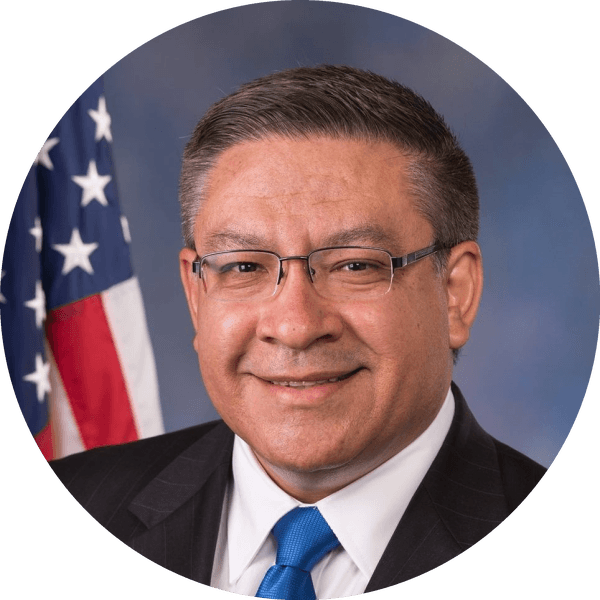
Salud Carbajal
Democrat · CA-24
Keep water systems ready for floods, droughts and hackers
Why it matters
Three federal grant programs worth a combined $100 million a year help water and sewer systems withstand floods, drought, extreme weather and cyberattacks. Their authorization runs only through fiscal year 2026. H.R. 5566 extends all three through 2031 at the same levels — about $500 million over five years.
H.R. 5566 is four sections long, and three of them do the same thing. Each finds the year "2026" in an existing water grant program and replaces it with "2031." There is no new program, no new eligibility rule and no new dollar figure. The bill keeps what exists running for five more years.
The three programs were given their current funding levels by the 2021 infrastructure law. A clean water program, at $25 million a year, helps municipalities and public agencies protect sewage treatment plants from natural hazards and cyber threats. A drinking water program, also $25 million a year, helps systems in the Safe Drinking Water Act's small and disadvantaged communities section prepare for natural hazards. The largest, at $50 million a year, serves drinking water systems in communities of 10,000 people or more, covering both natural hazards and cybersecurity.
If the bill passes, those same three funding levels stay authorized through fiscal year 2031, about $500 million in total. Grants pay for things like moving equipment out of flood zones, conserving water, adding desalination for existing communities, cutting energy use in treatment, and closing cybersecurity gaps.
One caution about what "authorized" means. An authorization tells appropriators how much Congress intends to spend; it does not send money on its own. Congress still has to fund these programs each year, and it can fund them for less than the authorized amount — or, in some cases, keep funding a program after its authorization lapses.
Bill Progress
Latest Action · Dec 1, 2025
Assigned to Subcommittee on Water Resources and Environment. for review
H.R. 5566 Bill Summary
What H.R. 5566 actually does.
Sewage treatment plants keep a path to resilience grants
Extends the Clean Water Infrastructure Resiliency and Sustainability Program's $25 million-a-year authorization from fiscal year 2026 through 2031. Municipalities and intermunicipal, interstate or state agencies can use grants to protect publicly owned treatment works from natural hazards or cybersecurity vulnerabilities, relocate at-risk equipment, or improve energy efficiency.
Smaller drinking water systems keep hazard grants
Extends the Drinking Water System Infrastructure Resilience and Sustainability Program through 2031 at $25 million a year. The program sits in the Safe Drinking Water Act's small and disadvantaged communities section and funds water conservation, relocating at-risk infrastructure, desalination for existing communities, source water protection and renewable energy use.
Mid-size and large water systems keep cyber and weather funding
Extends the Midsize and Large Drinking Water System Infrastructure Resilience and Sustainability Program through 2031 at $50 million a year, the largest of the three. It serves public water systems in communities of 10,000 or more and covers both natural hazards and extreme weather as well as cybersecurity vulnerabilities.
Nothing new, nothing removed
The bill does not change eligibility, grant rules, cost-share requirements or funding levels. It only moves the end year in each program from 2026 to 2031.
Who benefits from H.R. 5566?
Cities and towns running sewage treatment plants
Municipalities and public agencies that operate wastewater plants keep access to a $25 million-a-year grant program for flood-proofing, relocation, energy upgrades and cybersecurity fixes.
Small and disadvantaged communities' water systems
Systems eligible under the Safe Drinking Water Act's small and disadvantaged communities section keep a $25 million-a-year program for drought, flood and other natural hazard projects that are hard to pay for from a small rate base.
Water utilities serving 10,000 people or more
Mid-size and large drinking water systems keep a $50 million-a-year program covering both extreme weather and cybersecurity, the largest of the three.
People who pay water and sewer bills
Federal grants cover part of project costs that would otherwise fall on local ratepayers. Continued authorization keeps that option open for multi-year projects that stretch past 2026.
Who is affected by H.R. 5566?
The Environmental Protection Agency
EPA runs all three programs and would keep awarding grants under them through 2031, subject to annual appropriations.
Appropriations committees
Authorizing the programs does not fund them. Appropriators decide each year whether to put money behind the $100 million-a-year authorization, which competes with other EPA priorities.
Federal taxpayers
If Congress funds the programs at their full authorized levels, the cost is about $100 million a year, or roughly $500 million over fiscal years 2027 through 2031.
Utilities that apply for grants
Applicants must still document their natural hazard or cybersecurity risks and, under the clean water program, generally cover at least 25% of project costs, with lower shares allowed for certain communities.
Cost & Funding
Authorization
$100 million per year (about $500 million over fiscal years 2027-2031) by extending existing levels
- The bill text sets no new dollar amounts. It extends existing authorization levels in current law: $25 million a year for the clean water program, $25 million a year for the drinking water program and $50 million a year for the midsize and large systems program.
- Add them up: $25M + $25M + $50M = $100 million a year. Over five more fiscal years, 2027 through 2031, that is about $500 million.
- These are authorized ceilings, not appropriations. Actual spending depends on what Congress funds each year.
- Under the clean water program, a grant generally covers up to 75% of a project's cost, and up to 90% (or 100% at EPA's discretion) for certain communities.
HR5566 Legislative Journey
House: Committee Action
Dec 1, 2025
Referred to the Subcommittee on Water Resources and Environment.
House: Committee Action
Sep 26, 2025
Referred to the Committee on Energy and Commerce, and in addition to the Committee on Transportation and Infrastructure, for a period to be subsequently determined by the Speaker, in each case for consideration of such provisions as fall within the jurisdiction of the committee concerned.
About the Sponsor
Salud Carbajal
Democrat, California's 24th congressional district · 9 years in Congress
Committees: Armed Services, Transportation and Infrastructure, Agriculture
View full profile →
Cosponsors (10)
This bill has 10 cosponsors: 4 Democrats, 6 Republicans, reflecting bipartisan support. Cosponsors represent 9 states: Alabama, California, Colorado, and 6 more.

Committee Sponsors
Transportation and Infrastructure Committee
5 of 67 committee members cosponsored


Energy and Commerce Committee
2 of 54 committee members cosponsored


51 Democrats across these committees haven't cosponsored yet. Mobilize their constituents
What laws does H.R. 5566 change?
1 changes
Sections Amended
Section 1459A(l) of Safe Drinking Water Act (42 U.S.C. 300j- 19a(l))
striking ``2026'' each place it appears and inserting ``2031''
H.R. 5566 Quick Facts



- Committee
- Transportation and Infrastructure
- Chamber
- House
- Policy
- Environmental Protection
- Introduced
- Sep 26, 2025
Assigned to Subcommittee on Water Resources and Environment. for review
Dec 1, 2025
Official Sources
Official bill page with text, sponsors, cosponsors and committee actions for H.R. 5566.
EPA's page for the $50 million-a-year program for systems serving 10,000 or more people that Section 4 extends through 2031.
EPA's page for the small and disadvantaged communities resilience grants that Section 3 extends through 2031.
The statute Section 2 amends, including the $25 million-a-year authorization currently set to end in fiscal year 2026.
The statute Section 4 amends, setting the $50 million-a-year authorization and the split between midsize and large systems.
EPA's resources for water and wastewater utilities on cyber risk, the threat two of the three programs help fund.
EPA's overview of federal funding options utilities can use for resilience projects alongside these grants.
The Senate companion bill with the same name, introduced in 2026.
Who is lobbying on H.R. 5566?
5 organizations lobbying on this bill
COACHELLA VALLEY WATER DISTRICT | 6 |
AMERICAN RIVERS ACTION FUND | 3 |
LAS VIRGENES-TRIUNFO JOINT POWERS AUTHORITY | 2 |
ASSOCIATION OF METROPOLITAN WATER AGENCIES | 1 |
SALT LAKE CITY UT | 1 |
Showing 1-5 of 5 organizations
H.R. 5566 Common Questions
What does H.R. 5566 do?
It keeps three existing EPA water resilience grant programs authorized for five more years. Each one currently runs through fiscal year 2026; the bill changes that to 2031. It creates no new program and changes no eligibility rules.
How much money is involved in H.R. 5566?
The bill keeps current authorized levels: $25 million a year for clean water, $25 million for drinking water and $50 million for midsize and large systems. That is $100 million a year, about $500 million through 2031, if Congress funds it in full.
What happens if these water programs expire after 2026?
The authorized funding levels in law stop after fiscal year 2026. Congress can still choose to fund an expired program, but without an extension there is no standing target for appropriators, which makes multi-year utility planning harder.
What can water resilience grants pay for?
Projects that help systems survive floods, drought, extreme weather and cyber threats: relocating at-risk equipment, conserving water, source water protection, desalination for existing communities, energy efficiency and closing cybersecurity gaps.
Does H.R. 5566 fund cybersecurity for water utilities?
Yes, through two of the three programs. The clean water program covers cybersecurity at sewage treatment plants, and the midsize and large drinking water program covers cybersecurity for systems serving 10,000 people or more.
Which water systems qualify for these grants?
It depends on the program. Municipalities and public agencies qualify for the clean water grants. The midsize and large program is for systems serving 10,000 or more people. The smaller drinking water program sits in the law's small and disadvantaged communities section.
Does H.R. 5566 have bipartisan support?
Yes. It was introduced by Rep. Salud Carbajal (D-CA) and has 10 cosponsors, six Republicans and four Democrats, including Reps. David Valadao (R-CA) and Brian Mast (R-FL).
Where is H.R. 5566 in Congress?
It is in committee. The bill was referred to both Energy and Commerce and Transportation and Infrastructure, and in December 2025 to the Water Resources and Environment Subcommittee. A Senate bill with the same name, S. 3590, was introduced in 2026.
Based on H.R. 5566 bill text
Full Bill Text
Get notified when H.R. 5566 moves
Committee votes, floor action, cosponsor changes — straight to your inbox.
Bill alerts + Legisletter's monthly briefing. Unsubscribe anytime.
Environmental Protection Bills
9 related bills we're tracking
Water Affordability, Transparency, Equity, and Reliability Act of 2025




Referred to the Subcommittee on Water Resources and Environment.
May 13, 2025
To amend the Clean Air Act with respect to the ethanol waiver for Reid Vapor Pressure under that Act, and for other purposes.




Received in the Senate and Read twice and referred to the Committee on Environment and Public Works.
May 14, 2026
Save Our Sequoias Act




Committee on Energy and Natural Resources. Hearings held.
Sep 16, 2026
Harmful Algal Bloom and Hypoxia Research and Control Amendments Act of 2025





Held at the desk.
Sep 11, 2025
ePermit Act


Received in the Senate and Read twice and referred to the Committee on Environment and Public Works.
Dec 10, 2025
Chesapeake Bay Watershed Advancement for Training, Education, Restoration, and Science (WATERS) Act





Received in the Senate and Read twice and referred to the Committee on Commerce, Science, and Transportation.
Sep 15, 2026
Mining Regulatory Clarity Act




Placed on Senate Legislative Calendar under General Orders. Calendar No. 334.
Feb 11, 2026
Data Center Water and Energy Transparency Act of 2026



Read twice and referred to the Committee on Energy and Natural Resources. (text: CR S1616-1617)
Mar 25, 2026
Mining Regulatory Clarity Act



Read twice. Placed on Senate Legislative Calendar under General Orders. Calendar No. 357.
Mar 17, 2026
Trending Right Now
Bills gaining momentum across Congress
North Platte Canteen Congressional Gold Medal Act


Referred to the House Committee on Financial Services.
Feb 21, 2025
ASAP Act


Ordered to be Reported in the Nature of a Substitute by the Yeas and Nays: 40 - 0.
Sep 16, 2026
Fit to Serve Act




Referred to the House Committee on Armed Services.
May 21, 2025
Tracking Environmental Protection in Congress? Monitor bills, track cosponsor momentum, and launch advocacy campaigns — all from one advocacy platform.