H.R. 4503: ePermit Act
Sponsor

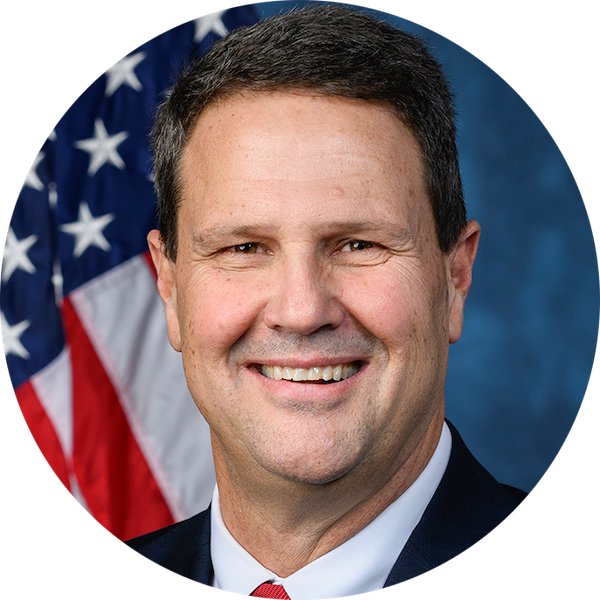
Dusty Johnson
Republican · SD
Congress wants every federal permit tracked online
Why it matters
Big projects — power lines, bridges, broadband, pipelines — can wait years for federal sign-off, often with no public way to see where a review is stuck. H.R. 4503 would pull the whole process into one cloud portal by December 2027, with AI helping sort public comments.
The ePermit Act takes aim at one of the oldest complaints about federal environmental reviews: they are slow, scattered across agencies, and almost impossible to follow from the outside. Instead of changing the environmental standards themselves, the bill changes how agencies collect, share, and display the information behind a review.
The core move is technical but simple. The Council on Environmental Quality would have 60 days to publish government-wide data standards — a shared digital vocabulary covering things like projects, environmental documents, public comments, maps, and milestones. Once agencies speak the same data language, information can move between them automatically instead of being re-keyed by hand each time a new office picks up the file.
From there, the bill builds toward a single online home for the whole process. Agencies would get guidance within 120 days, run a pilot of shared services within a year, and stand up a unified, cloud-based authorization portal by December 1, 2027. The portal is meant to let applicants submit documents in one place, let communities see notices and comment opportunities, and give Congress a live window into how fast agencies are actually moving.
The bill also leans into automation. It directs agencies to build tools that screen applications for completeness, flag when a streamlined approval might apply, and use artificial intelligence to help categorize and respond to public comments. To answer the obvious worries, the text requires screening criteria and decision models to be public, bars automated screening from being used to unlawfully restrict activities on federal lands, and gives Congress access to the AI fine-tuning and prompt settings behind the system.
Supporters frame this as a process fix that could shorten delays and make timelines more predictable for builders and utilities. Critics are likely to press on the automation pieces — whether AI sorting comments could quietly downgrade public input, and whether faster digital reviews stay as careful as slower paper ones. The bill says nothing in it expands review requirements beyond existing law, so the fight is less about new rules and more about how the old ones get run day to day.
Bill Progress
Latest Action · Dec 10, 2025
Passed the House, received in Senate
H.R. 4503 Bill Summary
What H.R. 4503 actually does.
A shared data language for every agency
The Council on Environmental Quality would publish government-wide data standards within 60 days, so agencies use compatible formats and categories and can exchange review information automatically instead of re-entering it.
One cloud portal by December 2027
Agencies would pilot shared services within a year and build a unified, cloud-based authorization portal — a single place to submit documents, track status, and follow public comment opportunities.
Live progress data for the public and Congress
The portal would display project timelines, comment counts, and which agencies are behind on adopting the standards, giving Congress direct access to performance data for oversight.
Automated screening, with a federal-lands limit
Agencies could use automated tools to check applications for completeness and flag when a categorical exclusion might apply. The bill says that screening cannot be used to unlawfully restrict activities on federal lands.
AI-assisted handling of public comments
The bill directs agencies to build tools that use artificial intelligence to compile, categorize, and help respond to public comments, and to analyze past decisions to speed future reviews.
Transparency requirements on the automation
Screening criteria and decision models must be publicly available, and Congress gets access to the AI fine-tuning procedures and prompt settings behind the system, excluding vendors' general pretraining materials.
Who benefits from H.R. 4503?
Project sponsors and permit applicants
Anyone trying to get a federal authorization — utilities, builders, transportation agencies — could submit in one portal, track status, and skip the duplicated paperwork that piles up when several agencies review the same project.
Communities near proposed projects
People living next to a planned project could see notices, public meetings, and comment opportunities in one place, and follow where a review stands rather than waiting in the dark.
Federal permitting agencies
Agencies would share systems and data, automate routine steps, and get better project-management tools — though they also carry the work of building all of it.
Energy and infrastructure developers
Industries that live or die by federal approval timelines — power, broadband, transmission, transportation — could get more predictable schedules to plan around.
Who is affected by H.R. 4503?
Federal agencies that run environmental reviews
Each agency would have to compare its existing systems against the new standards within 90 days, report the gaps, and begin implementing within 180 days — then report progress to CEQ twice a year.
Members of the public who file comments
Public comments would increasingly be sorted and summarized with AI assistance. The bill requires screening criteria to be public, but how AI weighs and groups comments will shape what decision-makers see.
Environmental and conservation groups
These groups may welcome the added transparency while pressing on whether AI-assisted screening and comment analysis keep reviews as rigorous and public input as meaningful.
State, local, and tribal partners
Partners working on multi-agency projects would interact with more standardized federal systems and data-sharing, which could smooth coordination but requires adapting to new formats.
What Congress Is Saying
H.R. 4503 has come up 11 times in the Congressional Record so far.
Mr. Speaker, I rise today in support of H.R. 4503, the ePermit Act, which will establish a governmentwide technology strategy to improve Federal permitting processes and timelines. I thank my colleagues, Representatives Johnson and Peters, for their strong bipartisan work on this legislation. Today's digital landscape for Federal permitting is out of date, consisting of diverse and isolated systems spread across different Federal agencies. Generally, these systems are not interoperable or sufficiently accessible for project sponsors or the general public.
H.R. 4503 also appeared in 3 routine cosponsor filings.
HR4503 Legislative Journey
Committee Action
Dec 10, 2025
Received in the Senate and Read twice and referred to the Committee on Environment and Public Works.
House: Vote: 5088-5091
Dec 9, 2025
On motion to suspend the rules and pass the bill, as amended Agreed to by voice vote. (text: CR H5088-5091)
House: Committee Action
Dec 4, 2025
Reported (Amended) by the Committee on Natural Resources. H. Rept. 119-392.
House: Passed Committee
Nov 20, 2025
Ordered to be Reported in the Nature of a Substitute by Unanimous Consent.
+1 more action this day
House: Committee Action
Sep 10, 2025
Committee Hearings Held
House: Committee Action
Jul 17, 2025
Referred to the House Committee on Natural Resources.
About the Sponsor
Dusty Johnson
Republican, South Dakota · 7 years in Congress
Committees: Transportation and Infrastructure, Agriculture, House Select Committee on the Strategic Competition Between the United States and the Chinese Communist Party
View full profile →
Cosponsors (11)
This bill has 11 cosponsors: 6 Democrats, 5 Republicans, reflecting bipartisan support. Cosponsors represent 6 states: California, Colorado, Kansas, and 3 more.





Committee Sponsors
Environment and Public Works Committee
0 of 18 committee members cosponsored
No committee members have cosponsored this bill
Natural Resources Committee
5 of 45 committee members cosponsored


31 Republicans across these committees haven't cosponsored yet. Mobilize their constituents
H.R. 4503 Quick Facts





- Committee
- Environment and Public Works
- Chamber
- House
- Policy
- Environmental Protection
- Introduced
- Jul 17, 2025
Passed the House, received in Senate
Dec 10, 2025
Official Sources
The official bill page tracking H.R. 4503's text, actions, cosponsors, and Senate status.
CEQ is the agency the bill directs to set government-wide data standards and build the unified permitting portal.
The Permitting Council, which CEQ must consult under the bill, already runs a federal dashboard for tracking infrastructure reviews.
The bill requires the cloud-based authorization portal to comply with FedRAMP's security standards.
The CIO Council is named as a required consulting partner as agencies build compatible data systems.
The bill's portal would publish usage statistics drawn from this government-wide web analytics program.
Plain-language explainer of the environmental review law the bill digitizes without changing its standards.
Who is lobbying on H.R. 4503?
6 organizations lobbying on this bill
EDISON ELECTRIC INSTITUTE | 2 |
WESTERN URBAN WATER COALITION | 2 |
EDISON ELECTRIC INSTITUTE | 2 |
THE BUSINESS ROUNDTABLE, INC. | 2 |
NATIONAL WATER RESOURCES ASSOCIATION | 1 |
ENVIRONMENTAL POLICY INNOVATION CENTER | 1 |
Showing 1-6 of 6 organizations
H.R. 4503 Common Questions
What does the ePermit Act actually do?
H.R. 4503 moves federal environmental reviews online. It sets common data standards so agencies can share permit information automatically, and builds a single cloud portal where sponsors submit documents and the public can track a project's status.
When would the online federal permit portal go live?
A pilot of shared services and the portal is due within one year of enactment, and the full unified, cloud-based system must be in place by December 1, 2027 — to the maximum extent practicable.
Would the ePermit Act weaken NEPA or add new environmental rules?
No. The bill says nothing in it lets CEQ or agencies impose review processes or requirements beyond NEPA or other existing law. It changes how reviews are run digitally, not the environmental standards themselves.
Can agencies use AI to handle public comments?
Yes. The bill directs agencies to build tools that use AI to compile, categorize, and help respond to public comments, and to analyze past decisions to speed future reviews.
Can automated screening be used to block activities on federal land?
No. The bill lets agencies use automated tools to screen applications, but it states that screening cannot be used to unlawfully restrict any activities on federal lands.
What keeps the AI from being a black box?
The bill requires screening criteria and decision models to be public, and gives Congress direct access to the AI fine-tuning procedures and prompt settings used in the system — excluding vendors' general pretraining materials.
What privacy and cybersecurity rules would the portal follow?
The portal must comply with the Privacy Act, the federal information-security law known as FISMA, the FedRAMP cloud-authorization program, and CISA requirements where projects involve stricter security needs.
Has H.R. 4503 passed, and where does it stand now?
The House passed it by voice vote in December 2025. It has been received in the Senate and referred to the Committee on Environment and Public Works, where it now awaits action.
Based on H.R. 4503 bill text
H.R. 4503 Bill Text
“To improve environmental reviews and authorizations through the use of interactive, digital, and cloud-based platforms, and for other purposes.”
Source: U.S. Government Publishing Office
Get notified when H.R. 4503 moves
Committee votes, floor action, cosponsor changes — straight to your inbox.
Bill alerts + Legisletter's monthly briefing. Unsubscribe anytime.
Environmental Protection Bills
9 related bills we're tracking
Water Affordability, Transparency, Equity, and Reliability Act of 2025





Referred to the Subcommittee on Water Resources and Environment.
May 13, 2025
To amend the Clean Air Act with respect to the ethanol waiver for Reid Vapor Pressure under that Act, and for other purposes.




Received in the Senate and Read twice and referred to the Committee on Environment and Public Works.
May 14, 2026
Save Our Sequoias Act




Committee on Energy and Natural Resources. Hearings held.
Sep 16, 2026
Harmful Algal Bloom and Hypoxia Research and Control Amendments Act of 2025





Held at the desk.
Sep 11, 2025
Water Infrastructure Resilience and Sustainability Act





Referred to the Subcommittee on Water Resources and Environment.
Dec 1, 2025
Chesapeake Bay Watershed Advancement for Training, Education, Restoration, and Science (WATERS) Act





Received in the Senate and Read twice and referred to the Committee on Commerce, Science, and Transportation.
Sep 15, 2026
Mining Regulatory Clarity Act





Placed on Senate Legislative Calendar under General Orders. Calendar No. 334.
Feb 11, 2026
Data Center Water and Energy Transparency Act of 2026



Read twice and referred to the Committee on Energy and Natural Resources. (text: CR S1616-1617)
Mar 25, 2026
Mining Regulatory Clarity Act



Read twice. Placed on Senate Legislative Calendar under General Orders. Calendar No. 357.
Mar 17, 2026
Trending Right Now
Bills gaining momentum across Congress
North Platte Canteen Congressional Gold Medal Act




Referred to the House Committee on Financial Services.
Feb 21, 2025
Fit to Serve Act





Referred to the House Committee on Armed Services.
May 21, 2025
ASAP Act




Ordered to be Reported in the Nature of a Substitute by the Yeas and Nays: 40 - 0.
Sep 16, 2026
Tracking Environmental Protection in Congress? Monitor bills, track cosponsor momentum, and launch advocacy campaigns — all from one advocacy platform.