H.R. 5388: American Artificial Intelligence Leadership and Uniformity Act
Sponsor
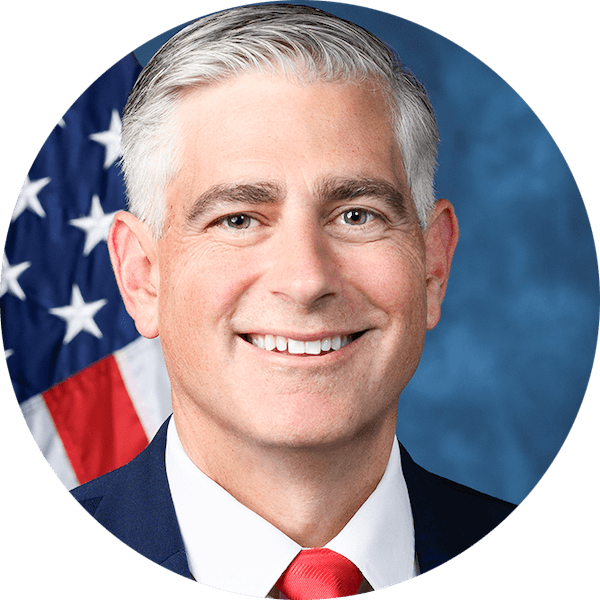
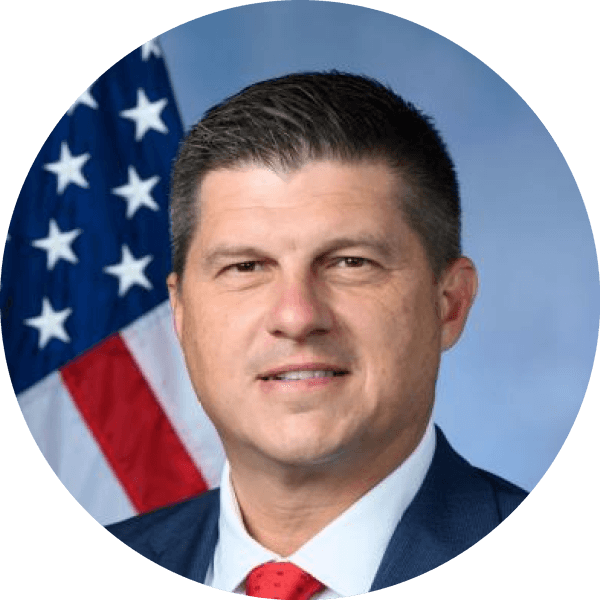
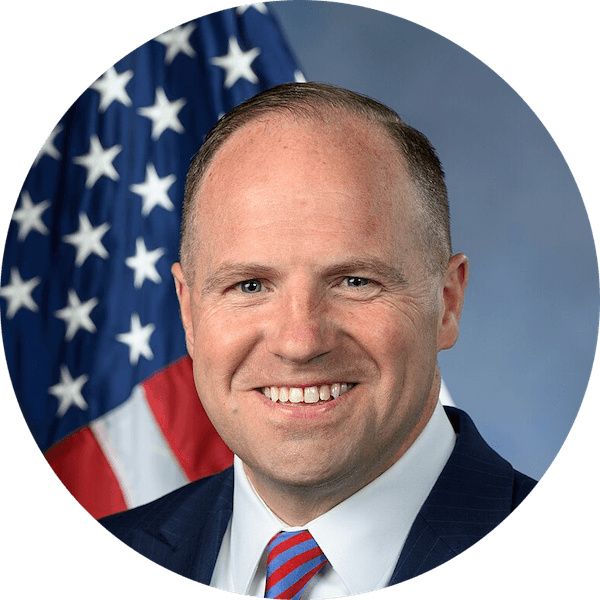
Michael Baumgartner
Republican · WA-5
Congress wants to freeze state AI laws for five years
Why it matters
If your state or city has passed rules on AI in hiring, deepfakes, or automated decisions, this bill would block enforcement of many of them for five years and shift the fight to Washington. It also orders the White House to deliver a national AI plan within 30 days of the bill becoming law.
H.R. 5388, the American Artificial Intelligence Leadership and Uniformity Act, does two things at once: it puts the federal government on a fast clock to produce a national AI strategy, and it stops states from writing their own AI rulebooks while that happens.
The federal piece comes first. Within 30 days of the bill becoming law, the White House would have to send Congress a National Artificial Intelligence Action Plan, then update it every year. Thirty days is a sprint for a government-wide tech strategy, and the speed is the point: the sponsor wants one national approach instead of fifty different ones.
The preemption piece is where the real fight is. For five years starting the day the bill is signed, no state or local government could enforce a law that limits, restricts, or regulates AI models, AI systems, or automated decision systems engaged in interstate commerce. The bill defines those terms broadly. An "automated decision system," for example, covers any computational process that spits out a score, classification, or recommendation to influence or replace a human decision. That sweeps in a lot of the algorithmic tools states have recently tried to regulate.
The freeze isn't total. States could still enforce generally applicable criminal laws and any rule carrying a criminal penalty. They could charge reasonable, cost-based fees as long as AI gets treated the same as comparable non-AI systems. They could set rules for their own government purchases, and they could pass laws that clear the way for AI rather than restrict it.
On the federal side, the bill tells the executive branch to review actions taken under two AI executive orders, one issued under Biden in October 2023 and one issued under Trump in January 2025, and to suspend, revise, or rescind anything that clashes with the bill's direction. At the same time, it says agencies get no new power to impose design, performance, data-handling, or liability requirements on AI beyond what current law already allows.
Bill Progress
Latest Action · Dec 19, 2025
Assigned to Subcommittee on Oversight and Investigations. for review
H.R. 5388 Bill Summary
What H.R. 5388 actually does.
Five-year freeze on state and local AI laws
For five years starting on the date of enactment, states and local governments could not enforce laws that limit, restrict, or regulate AI models, AI systems, or automated decision systems engaged in interstate commerce. The bill frames this as a temporary moratorium to prevent a state-by-state patchwork.
National AI plan due in 30 days
The bill requires the White House to submit a National Artificial Intelligence Action Plan to Congress within 30 days of enactment, led by the President's science and technology adviser, the special adviser for AI, and the national security adviser, working with OMB and other agencies.
Annual updates after the first plan
Starting one year after the initial plan, the White House must send Congress yearly updates covering implementation, revisions, measurable goals, timelines, agency roles, and progress metrics.
Broad definitions decide what gets frozen
The bill defines AI terms expansively. An 'artificial intelligence system' includes any data system, hardware, tool, or utility operating even partly on AI, and an 'automated decision system' covers any process that issues a score, classification, or recommendation to influence or replace a human decision. The broader the definition, the more state laws fall under the freeze.
Carveouts states keep
States can still enforce generally applicable criminal laws and rules carrying criminal penalties, charge reasonable cost-based fees when AI is treated like comparable non-AI systems, and set requirements for their own government use of AI. They can also pass laws that remove barriers to AI rather than restrict it.
Review of two AI executive orders
The bill directs the executive branch to review actions taken under Executive Order 14110, issued in October 2023, and Executive Order 14179, issued in January 2025, and to suspend, revise, or rescind anything inconsistent with the bill's policy.
Who benefits from H.R. 5388?
AI developers and model companies
A five-year freeze on most state and local AI rules means one national playing field instead of complying with different mandates in fifty states and countless cities. For companies shipping AI products across state lines, that removes a major compliance headache.
Small businesses adopting AI
The bill argues small firms get hit hardest by fragmented AI rules. The required national plan must include steps to cut compliance burdens on small businesses and expand their access to AI tools, computing power, and technical help.
Federal agencies wanting one playbook
The bill centralizes AI strategy in the White House, with OMB and other agencies on shared timelines and metrics. For agencies, that means a single coordinated roadmap instead of scattered, overlapping efforts.
Who is affected by H.R. 5388?
State legislatures and governors
For five years, states could not enforce most AI-specific laws on systems engaged in interstate commerce, except in carveout areas like criminal law and their own procurement. States that have recently passed AI rules on hiring, deepfakes, or automated decisions would see enforcement frozen.
City and county governments
Local governments are covered too. A city ordinance regulating AI surveillance or algorithmic tools in covered areas could not be enforced during the five-year moratorium.
People subject to automated decisions
The bill reaches tools that score, classify, or rank you in hiring, lending, insurance, and more. While the freeze is in place, many state-level efforts to regulate those systems would be paused, with the federal government setting the pace instead.
Federal regulators
Agencies are told to revisit earlier AI actions tied to the 2023 and 2025 executive orders. They are also told the act gives them no new authority to impose design, performance, data-handling, documentation, or liability requirements on AI beyond existing law.
HR5388 Legislative Journey
House: Committee Action
Dec 19, 2025
Referred to the Subcommittee on Oversight and Investigations.
House: Committee Action
Sep 17, 2025
Referred to the Subcommittee on Cybersecurity and Infrastructure Protection.
House: Committee Action
Sep 16, 2025
Referred to the Committee on Science, Space, and Technology, and in addition to the Committees on Foreign Affairs, Armed Services, Homeland Security, Oversight and Government Reform, the Judiciary, Energy and Commerce, Small Business, Education and Workforce, Financial Services, Veterans' Affairs, and Transportation and Infrastructure, for a period to be subsequently determined by the Speaker, in each case for consideration of such provisions as fall within the jurisdiction of the committee concerned.
About the Sponsor
Michael Baumgartner
Republican, Washington's 5th congressional district · 1 years in Congress
Committees: Education and Workforce, the Judiciary, Foreign Affairs
View full profile →
Committee Sponsors
Veterans' Affairs Committee
0 of 25 committee members cosponsored
No committee members have cosponsored this bill
Homeland Security Committee
0 of 33 committee members cosponsored
No committee members have cosponsored this bill
Transportation and Infrastructure Committee
0 of 67 committee members cosponsored
No committee members have cosponsored this bill
Financial Services Committee
0 of 53 committee members cosponsored
No committee members have cosponsored this bill
Education and Workforce Committee
0 of 37 committee members cosponsored
No committee members have cosponsored this bill
Small Business Committee
0 of 26 committee members cosponsored
No committee members have cosponsored this bill
Energy and Commerce Committee
0 of 54 committee members cosponsored
No committee members have cosponsored this bill
Judiciary Committee
0 of 44 committee members cosponsored
No committee members have cosponsored this bill
Oversight and Government Reform Committee
0 of 47 committee members cosponsored
No committee members have cosponsored this bill
Armed Services Committee
0 of 57 committee members cosponsored
No committee members have cosponsored this bill
Foreign Affairs Committee
0 of 53 committee members cosponsored
No committee members have cosponsored this bill
Science, Space, and Technology Committee
0 of 40 committee members cosponsored
No committee members have cosponsored this bill
174 Republicans across these committees haven't cosponsored yet. Mobilize their constituents
H.R. 5388 Quick Facts
- Committee
- Veterans' Affairs
- Chamber
- House
- Policy
- Government Operations and Politics
- Introduced
- Sep 16, 2025
Assigned to Subcommittee on Oversight and Investigations. for review
Dec 19, 2025
Official Sources
The official bill page with full text, actions, and committee referrals for the American Artificial Intelligence Leadership and Uniformity Act.
The bill's findings and required action plan anchor federal AI governance to NIST's nationally recognized AI Risk Management Framework.
The bill borrows its definition of 'artificial intelligence' from the National AI Initiative Act of 2020, codified at 15 U.S.C. 9401.
One of two AI executive orders the bill directs agencies to review, suspend, revise, or rescind for conflicts with its policy.
The second AI executive order under review, which itself ordered a national AI Action Plan the bill builds on.
H.R. 5388 Common Questions
Does H.R. 5388 stop states from regulating AI?
For the most part, yes, and for five years. States and local governments couldn't enforce most laws that limit or regulate AI models, AI systems, or automated decision systems engaged in interstate commerce while the moratorium is in effect.
What AI laws could states still enforce under H.R. 5388?
States keep their generally applicable criminal laws and any rule carrying a criminal penalty. They can also charge reasonable, cost-based fees when AI is treated like comparable non-AI systems, and pass laws that make AI deployment easier rather than restrict it.
Does the AI freeze in H.R. 5388 cover cities and counties too?
Yes. The five-year moratorium applies to states and their political subdivisions, so local governments couldn't enforce covered AI rules either.
How fast would the White House have to produce a national AI plan?
Within 30 days of the bill becoming law. The White House would then have to send Congress yearly updates starting one year after the first plan.
What counts as an automated decision system in H.R. 5388?
Any computational process using machine learning, statistical modeling, data analytics, or AI that issues a score, classification, or recommendation to influence or replace a human decision. That covers a lot of hiring, lending, and ranking tools.
Which executive orders would H.R. 5388 put under review?
Two AI executive orders: Executive Order 14110, issued under Biden in October 2023, and Executive Order 14179, issued under Trump in January 2025. Agencies would suspend, revise, or rescind anything that conflicts with the bill.
Does H.R. 5388 give federal agencies new power over AI?
No. The bill says nothing in it lets agencies impose new design, performance, data-handling, documentation, or liability requirements on AI beyond what current law already allows.
Who introduced H.R. 5388 and where does it stand?
Representative Michael Baumgartner (R-WA) introduced it in September 2025. It has no cosponsors yet and was referred to committee, most recently to a subcommittee on oversight in December 2025.
Based on H.R. 5388 bill text
H.R. 5388 Bill Text
“To provide a national framework to sustain American leadership in artificial intelligence, to require an actionable Federal plan aligned to that policy, and to establish a temporary moratorium preempting certain State laws that restrict artificial intelligence models and systems engaged in interstate commerce.”
Source: U.S. Government Publishing Office
Get notified when H.R. 5388 moves
Committee votes, floor action, cosponsor changes — straight to your inbox.
Bill alerts + Legisletter's monthly briefing. Unsubscribe anytime.
Government Operations and Politics Bills
9 related bills we're tracking
Protect Our Letter Carriers Act of 2025

Referred to the Committee on the Judiciary, and in addition to the Committee on Oversight and Government Reform, for a period to be subsequently determined by the Speaker, in each case for consideration of such provisions as fall within the jurisdiction of the committee concerned.
Feb 6, 2025
John R. Lewis Voting Rights Advancement Act of 2025

Referred to the House Committee on the Judiciary.
Mar 5, 2025
Washington, D.C. Admission Act


Referred to the Committee on Oversight and Government Reform, and in addition to the Committees on Rules, Armed Services, the Judiciary, and Energy and Commerce, for a period to be subsequently determined by the Speaker, in each case for consideration of such provisions as fall within the jurisdiction of the committee concerned.
Jan 3, 2025
Rights for the TSA Workforce Act




Referred to the Subcommittee on Transportation and Maritime Security.
Mar 11, 2025
DISCLOSE Act of 2026


Referred to the Committee on House Administration, and in addition to the Committees on Ways and Means, and the Judiciary, for a period to be subsequently determined by the Speaker, in each case for consideration of such provisions as fall within the jurisdiction of the committee concerned.
Mar 4, 2026
Federal Retirement Fairness Act



ASSUMING FIRST SPONSORSHIP - Ms. Randall asked unanimous consent that she may hereafter be considered as the first sponsor of H.R. 1522, a bill originally introduced by Representative Connolly, for the purpose of adding cosponsors and requesting reprintings pursuant to clause 7 of rule XII. Agreed to without objection.
Jul 22, 2025
FIND Act


Referred to the House Committee on Oversight and Government Reform.
Jan 3, 2025
Fair Pay for Federal Contractors Act of 2025

Referred to the Committee on Appropriations, and in addition to the Committee on Oversight and Government Reform, for a period to be subsequently determined by the Speaker, in each case for consideration of such provisions as fall within the jurisdiction of the committee concerned.
Sep 30, 2025
Saving the Civil Service Act
ASSUMING FIRST SPONSORSHIP - Mr. Walkinshaw asked unanimous consent that he may hereafter be considered as the first sponsor of H.R. 492, a bill originally introduced by Representative Connolly, for the purpose of adding cosponsors and requesting reprintings pursuant to clause 7 of rule XII. Agreed to without objection.
Sep 16, 2025
Trending Right Now
Bills gaining momentum across Congress
North Platte Canteen Congressional Gold Medal Act


Referred to the House Committee on Financial Services.
Feb 21, 2025
Fit to Serve Act



Referred to the House Committee on Armed Services.
May 21, 2025
ASAP Act


Ordered to be Reported in the Nature of a Substitute by the Yeas and Nays: 40 - 0.
Sep 16, 2026
Tracking Government Operations and Politics in Congress? Monitor bills, track cosponsor momentum, and launch advocacy campaigns — all from one advocacy platform.