H.R. 3000: Caring for Seniors Act
Sponsor

Brian Fitzpatrick
Republican · PA-1
$1,000 a month to keep seniors in assisted living
Why it matters
The bill's findings cite 70% of Americans over 65 who will need long-term care in their lifetime, and 47 million seniors who can't afford it. H.R. 3000 would send qualifying low-income residents age 70 and older $1,000 a month to live in an assisted living facility instead of a costlier nursing home.
H.R. 3000, the Caring for Seniors Act, starts from a demographic squeeze. The bill's findings cite 10,000 Americans turning 65 every day and say that in 2034, for the first time, there will be more people over 65 than under 18. By 2050, the bill estimates the number of seniors needing paid long-term care will triple to 27 million.
The money is the catch. The bill's findings cite 47 million Americans age 60 and older who don't have the resources to cover the care they may need, and note that assisted living runs about half the cost of a nursing home.
The bill answers in two ways. First, it creates a Senior Care Cost Reduction Program that pays eligible seniors $1,000 a month to live in a state-approved assisted living facility. The amount rises with inflation starting a year after the program launches. To qualify, you'd have to be at least 70, be chronically ill or eligible for your state's Medicaid long-term care, earn less than your facility's monthly fees and no more than 60% of your state's median income, and hold no more than $19,000 in resources if single or $25,000 if married.
Second, it directs the Department of Labor, Job Corps, and HHS to build or expand training grants for direct care workers, including certification for assisted living staff. The bill's findings cite roughly 400,000 jobs lost in senior living between 2020 and 2022, against more than 20 million jobs the sector is projected to need by 2040.
To pay for it, the bill draws on leftover COVID-19 relief money recovered from the Public Health and Social Services Emergency Fund rather than a new appropriation.
Bill Progress
Latest Action · Apr 24, 2025
Referred to Education and Workforce, and in addition to the Committee on Energy and Commerce, for a period to be subsequently determined by the Speaker, in each case for consideration of such provisions as fall within the jurisdiction of the committee concerned. for review
H.R. 3000 Bill Summary
What H.R. 3000 actually does.
$1,000 a month to live in assisted living
The bill creates a Senior Care Cost Reduction Program that pays eligible seniors $1,000 a month to reside in a state-approved assisted living facility. Starting one year in, the amount rises each year with inflation, tracked by the consumer price index and rounded to the nearest dollar.
You have to be 70 to qualify
To receive the monthly payment, you'd have to be at least 70, live in or be admitted to a state-approved assisted living facility, and be either chronically ill or eligible for your state's Medicaid long-term care services.
Income and asset limits target the poorest seniors
The program is aimed at low-income seniors: your monthly income has to be less than your facility's approved fees, your annual income no more than 60% of your state's median income as set by HUD, and your countable resources no more than $19,000 if single or $25,000 if married.
A training push after 400,000 care jobs vanished
The bill directs the Department of Labor, the Office of Job Corps, and HHS through the Health Resources and Services Administration to create or expand grant programs that train direct care workers. The bill's findings cite roughly 400,000 jobs lost in senior living between 2020 and 2022.
Grants must cover assisted living staff certification
Any workforce grant has to include support for core certification and training for assisted living direct care staff — a sector the bill's findings say will need more than 20 million workers by 2040.
A wide definition of what counts as assisted living
The bill defines an assisted living facility broadly: any licensed, registered, certified, listed, or state-regulated residence or community that provides housing plus supportive services on a continuing basis to elderly people or people with a mental health, developmental, or physical disability who aren't related to the owner.
Who benefits from H.R. 3000?
Low-income seniors 70 and older in assisted living
If you're at least 70, chronically ill or on Medicaid long-term care, and your income and savings fall under the limits, you could get $1,000 a month toward your assisted living costs. The bill's findings cite 47 million seniors who can't afford the care they'll need.
Direct care workers and people entering the field
New and expanded training grants through the Department of Labor, Job Corps, and HRSA would cover certification for assisted living staff — in a field the bill's findings say lost roughly 400,000 jobs between 2020 and 2022 and will need more than 20 million workers by 2040.
State Medicaid programs and federal health budgets
If more seniors stay in assisted living rather than higher-cost settings, public programs could blunt part of the projected surge. The bill's findings cite Medicaid long-term care spending rising from about $135.8 billion in 2020 to $466 billion by 2050.
Veterans weighing assisted living over a nursing home
The bill's findings cite VA testimony that the department would save $69,101 per veteran per year if veterans who need long-term care could choose assisted living instead of a nursing home.
Who is affected by H.R. 3000?
Adults under 70 who need long-term care
They don't qualify for the monthly payment, which the bill sets at age 70 and older, even though the workforce and training changes could still reach the services they use.
Assisted living facilities
Facilities could see more residents able to pay thanks to the $1,000 monthly benefit, but they'd also face the new training expectations for staff and fall under the bill's broad federal definition of an assisted living facility.
Family caregivers and households paying for elder care
Families supporting a relative 70 or older whose income falls below facility fees and whose savings are under $19,000 single or $25,000 married could get some relief from the monthly payment.
The federal agencies that would run the training
The Department of Labor, the Office of Job Corps, and HHS through HRSA would have to stand up or expand grant programs for direct care workers and make sure assisted living staff certification is part of them.
HR3000 Legislative Journey
House: Committee Action
Apr 24, 2025
Referred to the Committee on Education and Workforce, and in addition to the Committee on Energy and Commerce, for a period to be subsequently determined by the Speaker, in each case for consideration of such provisions as fall within the jurisdiction of the committee concerned.
About the Sponsor
Brian Fitzpatrick
Republican, Pennsylvania's 1st congressional district · 9 years in Congress
Committees: House Permanent Select Committee on Intelligence, Ways and Means
View full profile →
Cosponsors (1)
This bill has 1 cosponsor: 1 Democrat. Cosponsors represent 1 state: Massachusetts.
Committee Sponsors
Energy and Commerce Committee
1 of 54 committee members cosponsored

Education and Workforce Committee
0 of 37 committee members cosponsored
No committee members have cosponsored this bill
48 Republicans across these committees haven't cosponsored yet. Mobilize their constituents
H.R. 3000 Quick Facts

- Committee
- Energy and Commerce
- Chamber
- House
- Policy
- Health
- Introduced
- Apr 24, 2025
Referred to Education and Workforce, and in addition to the Committee on Energy and Commerce, for a period to be subsequently determined by the Speaker, in each case for consideration of such provisions as fall within the jurisdiction of the committee concerned. for review
Apr 24, 2025
Official Sources
Official Congress.gov page for the Caring for Seniors Act, useful for the bill text, status, sponsors, and actions.
Section 4 amends the Older Americans Act, so this ACL page is relevant background on the law that would house the new Senior Care Cost Reduction Program.
The bill assigns the Senior Care Cost Reduction Program to the Assistant Secretary acting through the Administration, which is the Administration on Aging within ACL.
The bill amends Part A of title III of the Older Americans Act beginning at 42 U.S.C. 3021, making this U.S. Code page directly relevant to the program structure.
The bill uses the tax-code definition of a chronically ill individual in section 7702B(c)(2) to determine eligibility.
Section 3 expands education and training programs for the direct care workforce, the federal effort this ACL page coordinates.
The bill names the Office of Job Corps as a participant in expanding direct care workforce education and training programs.
The bill uses State median income as determined by HUD to set an income-eligibility threshold for assistance.
H.R. 3000 Common Questions
How much would seniors get each month under H.R. 3000?
Eligible seniors would get $1,000 a month to help pay for assisted living. Starting a year after the program launches, that amount rises each year with inflation.
Who qualifies for the $1,000 assisted living benefit?
You'd have to be at least 70, live in a state-approved assisted living facility, be chronically ill or eligible for your state's Medicaid long-term care, and meet the income and asset limits in H.R. 3000.
What are the income and asset limits for the program?
Your monthly income has to be below your facility's approved fees, your annual income no more than 60% of your state's median income as set by HUD, and your countable resources no more than $19,000 if single or $25,000 if married.
Why does H.R. 3000 push assisted living over a nursing home?
Cost. The bill's findings cite assisted living running about half the price of a nursing home, and VA testimony that the department would save $69,101 per veteran per year if veterans could choose assisted living instead.
Does the $1,000 payment keep up with inflation?
Yes. Starting one year after the program begins, the payment rises each year by the change in the consumer price index for urban consumers, rounded to the nearest dollar.
Who would train the new direct care workers?
The Department of Labor's Employment and Training Administration, the Office of Job Corps, and HHS through HRSA would create or expand training grants, including certification for assisted living staff.
How would H.R. 3000 be paid for?
Without a new appropriation. The bill taps COVID-19 relief money already recovered or returned to the Public Health and Social Services Emergency Fund under Public Laws 116-136, 116-139, and 116-260.
Does H.R. 3000 have bipartisan support?
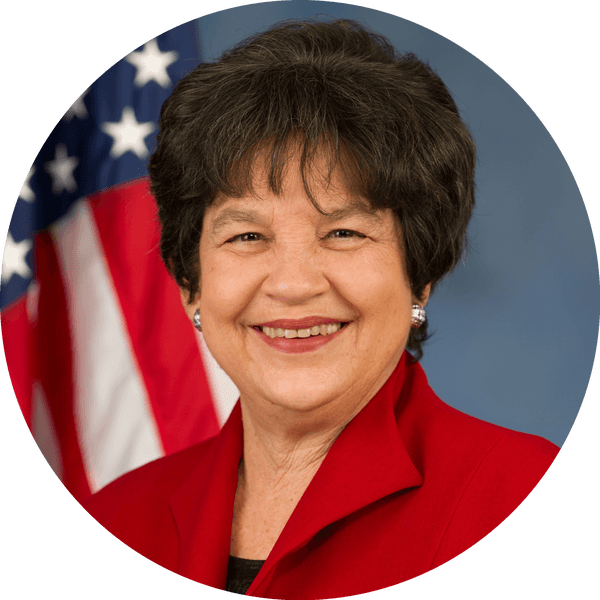
It's sponsored by Republican Brian Fitzpatrick of Pennsylvania with one Democratic cosponsor, Lori Trahan of Massachusetts. The bill is parked in two House committees and hasn't had a hearing.
Based on H.R. 3000 bill text
H.R. 3000 Bill Text
“To address the worsening long-term care workforce crisis and increase access to and affordability of long-term care.”
Source: U.S. Government Publishing Office
Get notified when H.R. 3000 moves
Committee votes, floor action, cosponsor changes — straight to your inbox.
Bill alerts + Legisletter's monthly briefing. Unsubscribe anytime.
Health Bills
9 related bills we're tracking
Nancy Gardner Sewell Medicare Multi-Cancer Early Detection Screening Coverage Act





Reported (Amended) by the Committee on Ways and Means. H. Rept. 119-333, Part I.
Oct 3, 2025
Mikaela Naylon Give Kids a Chance Act





Received in the Senate.
Dec 2, 2025
Improving Seniors’ Timely Access to Care Act of 2025




Ordered to be Reported in the Nature of a Substitute by the Yeas and Nays: 42 - 0.
Jul 15, 2026
CONNECT for Health Act of 2025





Referred to the Committee on Energy and Commerce, and in addition to the Committee on Ways and Means, for a period to be subsequently determined by the Speaker, in each case for consideration of such provisions as fall within the jurisdiction of the committee concerned.
Jun 26, 2025
ASAP Act




Ordered to be Reported in the Nature of a Substitute by the Yeas and Nays: 40 - 0.
Sep 16, 2026
Momnibus Act




Referred to the Subcommittee on Health.
Apr 20, 2026
Ensuring Lasting Smiles Act



Referred to the Committee on Energy and Commerce, and in addition to the Committees on Education and Workforce, and Ways and Means, for a period to be subsequently determined by the Speaker, in each case for consideration of such provisions as fall within the jurisdiction of the committee concerned.
May 8, 2025
Right to Contraception Act




Referred to the House Committee on Energy and Commerce.
Feb 5, 2025
Women’s Health Protection Act of 2025



Referred to the Committee on Energy and Commerce, and in addition to the Committee on the Judiciary, for a period to be subsequently determined by the Speaker, in each case for consideration of such provisions as fall within the jurisdiction of the committee concerned.
Jun 24, 2025
Trending Right Now
Bills gaining momentum across Congress
America’s Olympic and Paralympic Games Commemorative Coins Act





Referred to the House Committee on Financial Services.
Jul 14, 2025
Fit to Serve Act




Referred to the House Committee on Armed Services.
May 21, 2025
Therapeutic Fraud Prevention Act of 2025





Referred to the House Committee on Energy and Commerce.
May 7, 2025
Tracking Health in Congress? Monitor bills, track cosponsor momentum, and launch advocacy campaigns — all from one advocacy platform.