Mr. Speaker, H.R. 1368, the DOE and NASA Interagency Research Act is a smart piece of legislation that will ensure that we stay competitive in the global race to return humans to the Moon and then send crewed missions on to Mars. Without key partnerships like this, we would be unable to take the crucial steps in energy production and propulsion technologies necessary to extend our reach beyond Earth. I thank Representative Begich and Representative Whitesides for their leadership in moving this bill forward. Mr.
H.R. 1368: DOE and NASA Interagency Research Coordination Act
Introduced Feb 14, 20253 cosponsors
Sponsor

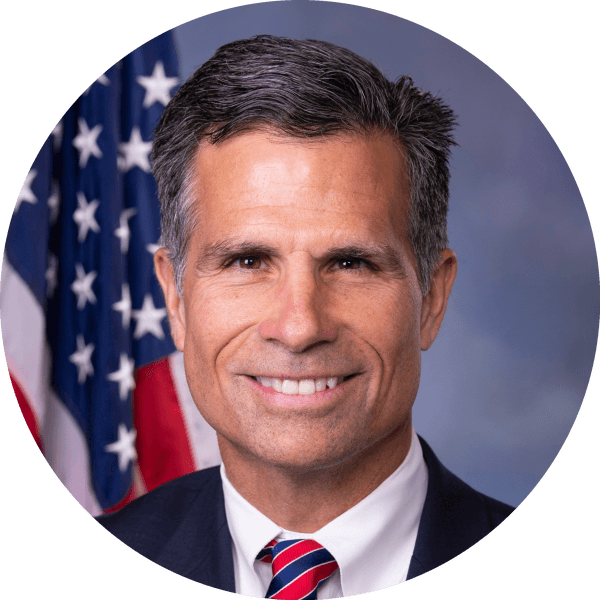
Nicholas Begich
Republican · AK
Nuclear rockets and dark matter: DOE and NASA join forces
4 min readLast updated June 9, 2026
Why it matters
Building a nuclear-powered rocket engine or hunting for dark matter takes both NASA's missions and the Department of Energy's national labs — but until now the two agencies have collaborated case by case, with no standing legal authority. H.R. 1368 makes the partnership official, letting them pool facilities, data, and staff and hand out joint research awards. It cleared the House on a voice vote and is now in the Senate.
H.R. 1368, the DOE and NASA Interagency Research Coordination Act, doesn't spend money or launch anything. It hands the Department of Energy and NASA the legal authority to operate as one research effort instead of two.
The two agencies would sign formal agreements — and could either pay each other for services and facilities or share them at no charge — to run joint projects. The bill names the targets: nuclear thermal and electric propulsion, radioisotope power systems, dark matter and dark energy, quantum computing, machine learning on huge datasets, radiation health effects, and technology to beam space-collected solar power down to Earth.
Funding for specific projects would go out as competitive awards, chosen by merit review. National laboratories, universities, nonprofits, and other federal agencies could all compete.
Within two years, DOE and NASA would have to report back to three congressional committees on what the partnership produced and whether it should continue.
Bill Progress
IntroducedFeb 14
Committee
Pass HouseMar 24
Pass Senate
Signed
Law
Latest Action · Mar 25, 2025
1/3
Passed the House, received in Senate
H.R. 1368 Bill Summary
What H.R. 1368 actually does.
1
DOE and NASA get standing authority to collaborate
The bill lets the Secretary of Energy and the NASA Administrator carry out cross-cutting research and development together, and requires them to set the partnership up through memoranda of understanding or other formal interagency agreements.
2
Agencies can pay each other or share for free
The bill allows both reimbursable agreements, where one agency pays the other for services, facilities, or support, and non-reimbursable ones, where they share at no charge — giving DOE and NASA flexibility in how they structure joint work.
3
Nuclear propulsion and dark matter make the list
The bill names specific focus areas: nuclear thermal and electric propulsion, radioisotope power systems, advanced nuclear fuels, machine learning and large-scale data analytics, astrophysics and cosmology including dark energy and dark matter, radiation health effects, and beaming space-collected solar energy to Earth.
4
Joint funding goes out by merit review
Any competitive awards under the bill must be selected through merit-review-based processes. Eligible applicants include federal agencies, the National Laboratories, institutions of higher education, nonprofit institutions, and other appropriate entities.
5
Congress gets a report in two years
Within two years of enactment, DOE and NASA must report to three committees — the House Science, Space, and Technology Committee, the Senate Energy and Natural Resources Committee, and the Senate Commerce, Science, and Transportation Committee — on results and whether to continue.
6
Existing security and quantum rules still apply
The bill requires joint activities to follow existing federal research-security rules from the CHIPS and Science Act, along with the laws that already govern DOE's physics, earth science, and quantum research programs.
Who benefits from H.R. 1368?
NASA mission and technology programs
NASA gains clearer access to DOE's research infrastructure and capabilities, which could help on propulsion, radioisotope power systems, radiation health research, and high-performance computing.
Department of Energy National Laboratories
The National Laboratories are named as eligible applicants for merit-reviewed awards and are positioned to supply facilities, nuclear expertise, quantum research capacity, and large-scale modeling for joint projects.
Universities and nonprofit research institutions
Institutions of higher education and nonprofit institutions are named as eligible applicants, so they can compete for joint research projects in areas like machine learning, dark energy, environmental science, and quantum networks.
Clean energy and space-power researchers
The bill specifically covers ground- and space-based technology for transmitting space-collected solar energy to Earth, and directs the two-year report to address future work on clean energy technologies such as marine energy.
Who is affected by H.R. 1368?
Department of Energy leadership
The Secretary of Energy is responsible for coordinating with NASA, entering into reimbursable and non-reimbursable agreements, and supporting NASA's access to DOE infrastructure where practicable.
NASA leadership
The NASA Administrator must jointly manage cross-cutting research with DOE and help produce the required report to three congressional committees within two years of enactment.
Competing research applicants
Federal agencies, the National Laboratories, universities, nonprofits, and other entities are affected because any awards under the bill must run through merit-review processes rather than informal selection.
Congressional oversight committees
Three committees — the House Science, Space, and Technology Committee, the Senate Energy and Natural Resources Committee, and the Senate Commerce, Science, and Transportation Committee — would review the implementation report within two years.
On the Record
What Congress Is Saying
H.R. 1368 has come up 5 times in the Congressional Record so far.
Mr. Speaker, I rise in support of the DOE and NASA Interagency Research Coordination Act, H.R. 1368. The gentleman from Alaska (Mr. Begich) and the gentleman from California (Mr. Whitesides), the vice ranking member of the Committee on Science, Space, and Technology, introduced this bill. It is another great bipartisan bill. These Members of Congress from the Western part of this Nation fully understand and appreciate what it means to have coordinated interagency activities on behalf of our competitive abilities.


Mr. Speaker, I rise in support of H.R. 1368, the DOE and NASA Interagency Research Coordination Act. The Department of Energy and NASA have an extensive history of collaboration, which has enhanced both our understanding of the universe and our ability to explore well beyond our planet. The Voyager spacecrafts, which were launched more than 40 years ago and are now flying far beyond our own solar system in interstellar space, continue to operate with DOE's groundbreaking propulsion systems.
H.R. 1368 also appeared in 2 routine cosponsor filings.
HR1368 Legislative Journey
Committee Action
Mar 25, 2025
Received in the Senate and Read twice and referred to the Committee on Commerce, Science, and Transportation.
House: Vote: 1207-1208
Mar 24, 2025
On motion to suspend the rules and pass the bill Agreed to by voice vote. (text: CR H1207-1208)
House: Committee Action
Feb 14, 2025
Referred to the House Committee on Science, Space, and Technology.
About the Sponsor
Nicholas Begich
Republican, Alaska · 1 years in Congress
Committees: Science, Space, and Technology, Natural Resources, Transportation and Infrastructure
View full profile →
Cosponsors (3)
No new cosponsors in 415 days — momentum stalled
This bill has 3 cosponsors: 2 Democrats, 1 Republican, reflecting bipartisan support. Cosponsors represent 3 states: California, Utah, Virginia.
2Democrats1Republican·3 statesBipartisan
Committee Sponsors
Commerce, Science, and Transportation Committee
13D15R
|0 signed28 not yet0 of 28 committee members cosponsored
No committee members have cosponsored this bill
Science, Space, and Technology Committee
18D22R
|2 signed38 not yet2 of 40 committee members cosponsored


36 Republicans across these committees haven't cosponsored yet. Mobilize their constituents
H.R. 1368 Quick Facts
Cosponsors
3



- Committee
- Commerce, Science, and Transportation
- Chamber
- House
- Policy
- Science, Technology, Communications
- Introduced
- Feb 14, 2025
Passed the House, received in Senate
Mar 25, 2025
Official Sources
H.R. 1368 on Congress.gov
Official Congress.gov page for the DOE and NASA Interagency Research Coordination Act, including status, text, and actions.
Department of Energy Office of Science
DOE Office of Science oversees many of the research areas named in the bill, including high energy physics, astrophysics, earth sciences, and quantum information science.
NASA Space Technology Mission Directorate
NASA's Space Technology Mission Directorate is directly relevant to the bill's focus on propulsion, power systems, and cross-cutting R&D collaboration with DOE.
DOE National Quantum Information Science Research Centers
Official DOE page on quantum information science research centers, relevant to the bill's coverage of quantum computing and quantum network infrastructure.
NASA Science Mission Directorate
NASA's science directorate covers astrophysics, cosmology, and earth science topics specifically listed in the bill, including dark matter and dark energy research.
DOE National Laboratories
Official DOE overview of the National Laboratories, which the bill expressly names as eligible applicants for collaborative merit-reviewed awards.
National Quantum Initiative Act at Congress.gov
The bill explicitly cross-references sections 403 and 404 of the National Quantum Initiative Act for quantum computing and network infrastructure work.
CHIPS and Science Act of 2022 at Congress.gov
This is the enacted legislative vehicle for Public Law 117-167, which the bill cites for federal research security requirements.
H.R. 1368 Common Questions
What does H.R. 1368 actually do?
It gives the Department of Energy and NASA formal legal authority to run joint research — pooling labs, data, and staff — and to hand out competitive research awards. It passed the House and is now in the Senate.
Does H.R. 1368 spend any money?
No. The bill creates authority, not funding. It lets DOE and NASA pay each other or share facilities for free, but sets no dollar amount — specific projects would rely on existing budgets or future appropriations.
What research can DOE and NASA work on together under H.R. 1368?
The bill lists nuclear thermal and electric propulsion, radioisotope power, dark matter and dark energy, quantum computing, machine learning, radiation health effects, and beaming space-collected solar power down to Earth.
Who can apply for DOE-NASA research awards?
Federal agencies, the National Laboratories, universities, and nonprofit institutions can all compete. H.R. 1368 requires every competitive award to be selected through merit review.
Has H.R. 1368 passed?
It passed the House by voice vote on March 24, 2025, with no recorded opposition. It's now with the Senate Commerce, Science, and Transportation Committee.
When do DOE and NASA report to Congress?
Within two years of the bill becoming law. DOE and NASA must tell three congressional committees what the partnership achieved and whether it should continue.
Why do DOE and NASA need a law to work together?
The two agencies already collaborate case by case, but without standing authority. H.R. 1368 makes the partnership permanent and structured: formal agreements, shared infrastructure, and merit-reviewed joint awards.
Can DOE and NASA pay each other for joint work?
Yes. H.R. 1368 lets the agencies use reimbursable agreements, where one pays the other for services or facilities, or non-reimbursable ones, where they share at no charge.
Based on H.R. 1368 bill text
H.R. 1368 Bill Text
“To provide for Department of Energy and National Aeronautics and Space Administration research and development coordination, and for other purposes.”
Source: U.S. Government Publishing Office
Bill Alerts
Get notified when H.R. 1368 moves
Committee votes, floor action, cosponsor changes — straight to your inbox.
Bill alerts + Legisletter's monthly briefing. Unsubscribe anytime.
Science, Technology, Communications Bills
9 related bills we're tracking
H.R. 979
AM Radio for Every Vehicle Act of 2025

Gus BilirakisR-FL



+313
317 cosponsors
Received in the Senate. Read twice. Placed on Senate Legislative Calendar under General Orders. Calendar No. 622.
Sep 16, 2026
HouseScience, Technology, Communications
H.R. 1106
Scientific Integrity Act

Paul TonkoD-NY




+135
139 cosponsors
Referred to the House Committee on Science, Space, and Technology.
Feb 6, 2025
HouseScience, Technology, Communications
S. 1748
Kids Online Safety Act

Marsha BlackburnR-TN




+72
76 cosponsors
Committee on Commerce, Science, and Transportation. Ordered to be reported with an amendment in the nature of a substitute favorably.
Aug 5, 2026
SenateScience, Technology, Communications
H.R. 139
Sunshine Protection Act of 2025

Vern BuchananR-FL




+31
35 cosponsors
Received in the Senate and Read twice and referred to the Committee on Commerce, Science, and Transportation.
Jul 15, 2026
HouseScience, Technology, Communications
H.R. 8031
GUARDRAILS Act
Donald BeyerD-VA




+31
35 cosponsors
Referred to the Committee on Energy and Commerce, and in addition to the Committee on the Judiciary, for a period to be subsequently determined by the Speaker, in each case for consideration of such provisions as fall within the jurisdiction of the committee concerned.
Mar 20, 2026
HouseScience, Technology, Communications
H.R. 6356
Artificial Intelligence Civil Rights Act of 2025

Yvette ClarkeD-NY




+25
29 cosponsors
Referred to the Committee on Energy and Commerce, and in addition to the Committee on Oversight and Government Reform, for a period to be subsequently determined by the Speaker, in each case for consideration of such provisions as fall within the jurisdiction of the committee concerned.
Dec 2, 2025
HouseScience, Technology, Communications
S. 146
TAKE IT DOWN Act

Ted CruzR-TX


+17
21 cosponsors
Became Public Law No: 119-12.
May 19, 2025
SenateScience, Technology, Communications
S. 3557
States' Right to Regulate AI Act

Edward MarkeyD-MA




+6
10 cosponsors
Read twice and referred to the Committee on Commerce, Science, and Transportation.
Dec 17, 2025
SenateScience, Technology, Communications
H.R. 390
ACERO Act

Vince FongR-CA


+3
7 cosponsors
Received in the Senate and Read twice and referred to the Committee on Commerce, Science, and Transportation.
Feb 24, 2026
HouseScience, Technology, Communications
Trending Right Now
Bills gaining momentum across Congress
H.R. 4382Surging+28
America’s Olympic and Paralympic Games Commemorative Coins Act

Brad ShermanD-CA




+304
308 cosponsors
+28 this monthReferred to the House Committee on Financial Services.
Jul 14, 2025
HouseFinance and Financial Sector
H.R. 3569Surging+22
Fit to Serve Act

Adam SmithD-WA



+184
188 cosponsors
+22 this monthReferred to the House Committee on Armed Services.
May 21, 2025
HouseArmed Forces and National Security
H.R. 6130Surging+14
ASAP Act
Vern BuchananR-FL



+226
230 cosponsors
+14 this monthOrdered to be Reported in the Nature of a Substitute by the Yeas and Nays: 40 - 0.
Sep 16, 2026
HouseHealth
Tracking Science, Technology, Communications in Congress? Monitor bills, track cosponsor momentum, and launch advocacy campaigns — all from one advocacy platform.