Mr. Speaker, H.R. 681, again, provides equal leasing authority to the Mashpee Wampanoag Tribe and the Wampanoag Tribe of Gay Head, aligning them with the other Tribes that have already received 99-year leasing authority from Congress. Mr. Speaker, I support H.R. 681, and I yield back the balance of my time. {time} 1620
H.R. 681: To amend the Act of August 9, 1955 (commonly known as the “Long-Term Leasing Act”), to authorize leases of up to 99 years for land in the Mashpee Wampanoag Tribe Reservation and land held in trust for the Wampanoag Tribe of Gay Head (Aquinnah), and for other purposes
Introduced Jan 23, 20250 cosponsors
Sponsor

William Keating
Democrat · MA-9
Two Wampanoag tribes want the 99-year leases others already have
4 min readLast updated June 23, 2026
Why it matters
A 25-year cap on land leases has made it hard for two Massachusetts tribes to court the developers and lenders who finance housing and business projects. H.R. 681 would let the Mashpee Wampanoag Tribe and the Wampanoag Tribe of Gay Head (Aquinnah) sign leases for up to 99 years, the same authority dozens of other tribes already hold. It passed the House by voice vote in March and now sits in the Senate.
For these two Massachusetts tribes, the ceiling on a land lease is 25 years. H.R. 681 would raise it to 99.
The federal Long-Term Leasing Act generally caps leases on tribal trust land at 25 years, sometimes with a single renewal. But the law also carries a long roster of named tribes and reservations cleared to go all the way to 99. This bill adds two more names to that roster: the Mashpee Wampanoag Tribe Reservation and land held in trust for the Wampanoag Tribe of Gay Head (Aquinnah).
The length is the whole point, and it comes down to financing. Lenders, developers, and business tenants want long terms before they commit serious money. A 25-year lease can be hard to bankroll; a 99-year one can make the numbers work. Supporters argue these two tribes should have the same leasing tool other tribes already use.
The bill does not sell tribal land or transfer ownership. It changes the maximum lease length and nothing else. There is no new spending in the text, no grant program, no appropriation.
The real effect would show up later, if the tribes use the longer authority to negotiate leases that draw private investment into housing, community facilities, renewable energy, or commercial projects on land they already hold.
Bill Progress
IntroducedJan 23
Committee
Pass HouseMar 3
Pass Senate
Signed
Law
Latest Action · Sep 14, 2026
Passed the House, received in Senate
H.R. 681 Bill Summary
What H.R. 681 actually does.
1
Lease terms jump from 25 years to 99
The two named tribes could enter land leases lasting up to 99 years. Under current law, tribal trust land is generally capped at 25-year terms unless a tribe is specifically named in the statute.
2
Two Wampanoag tribes join the long-lease list
The bill adds the Mashpee Wampanoag Tribe Reservation and land held in trust for the Wampanoag Tribe of Gay Head (Aquinnah) to the existing list of tribes already allowed to sign 99-year leases.
3
Longer leases make big projects financeable
Lenders and developers typically want long terms before funding housing, utilities, or commercial sites. A 99-year lease gives the tribes a stronger hand in negotiating deals that take decades to pay off.
4
Land stays in tribal hands
The change affects lease length only. It does not authorize the sale of tribal land or alter who owns it.
5
No new federal spending
The bill adds two names to an existing law. It creates no grant program and appropriates no money; its effect is legal authority, not dollars.
Who benefits from H.R. 681?
Mashpee Wampanoag Tribe
A federally recognized tribe on Cape Cod that has fought for years over the status of its land. Longer lease authority gives it a concrete tool to pursue housing and economic development on its reservation.
Wampanoag Tribe of Gay Head (Aquinnah)
Based on Martha's Vineyard, the tribe could offer 99-year leases on its trust land, improving its ability to land housing, infrastructure, and commercial partnerships.
Tribal members and residents
If the tribes use the authority, members could see new jobs, housing, services, and added tribal revenue from projects that long leases make possible.
Lenders, tenants, and developers
Outside partners often prefer long lease terms because they reduce uncertainty and make financing easier for expensive, long-lived projects.
Who is affected by H.R. 681?
Interior Department lease administrators
Federal officials who review and approve leases on tribal trust land would apply the new 99-year authority to these two tribes.
Towns near the tribal land
Communities on Cape Cod and Martha's Vineyard could see changes if the tribes move forward with new housing, business, or infrastructure projects.
Businesses eyeing tribal land
Companies considering a presence on these lands would have the option of much longer agreements, which can reshape how they plan and negotiate.
Other tribes still capped at 25 years
The bill underscores that long-lease authority is granted tribe by tribe, which could prompt other tribes to seek the same treatment from Congress.
On the Record
What Congress Is Saying
H.R. 681 has come up 11 times in the Congressional Record so far.
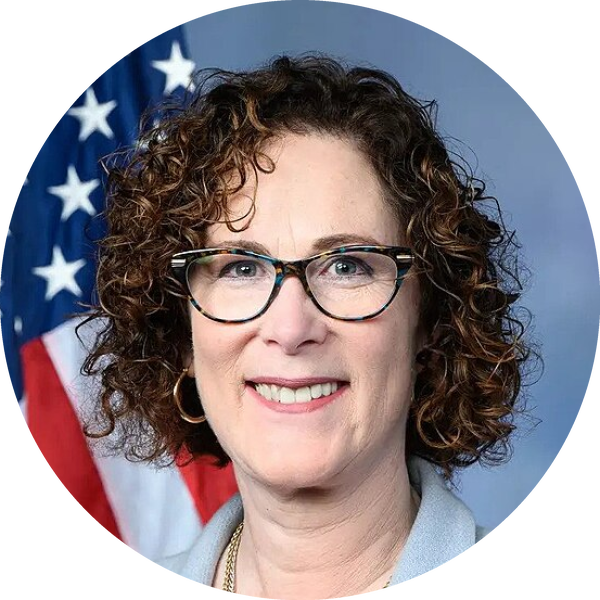
Mr. Speaker, I rise in strong support of Mr. Keating's bill to amend the Long-Term Leasing Act for the Mashpee Wampanoag Tribe and the Wampanoag Tribe of Gay Head (Aquinnah). Under the Long-Term Leasing Act, Tribes are generally limited to lease terms of 25 years with an option to renew for an additional 25 years. This restriction, as we mentioned earlier, often has hindered economic development in Indian Country where growth is essential to providing services and opportunities for Tribal citizens.

H.R. 681 also appeared in 2 routine cosponsor filings.
HR681 Legislative Journey
Committee Action
Sep 14, 2026
Committee on Indian Affairs. Reported by Senator Armstrong for Senator Murkowski without amendment. With written report No. 119-136.
Passed Committee
May 20, 2026
Committee on Indian Affairs. Ordered to be reported without amendment favorably.
Committee Action
Mar 4, 2026
Received in the Senate and Read twice and referred to the Committee on Indian Affairs.
House: Vote Held
Mar 3, 2026
On motion to suspend the rules and pass the bill, as amended Agreed to by voice vote. (text: CR H2358)
House: Committee Action
Jan 14, 2026
Reported by the Committee on Natural Resources. H. Rept. 119-449.
House: Passed Committee
Nov 20, 2025
Ordered to be Reported by Unanimous Consent.
+2 more actions this day
House: Committee Action
Sep 9, 2025
Subcommittee Hearings Held
House: Committee Action
Sep 4, 2025
Referred to the Subcommittee on Indian and Insular Affairs.
House: Committee Action
Jan 23, 2025
Referred to the House Committee on Natural Resources.
About the Sponsor
William Keating
Democrat, Massachusetts's 9th congressional district · 15 years in Congress
Committees: Foreign Affairs, Armed Services
View full profile →
Committee Sponsors
Indian Affairs Committee
5D6R
|0 signed11 not yet0 of 11 committee members cosponsored
No committee members have cosponsored this bill
Natural Resources Committee
20D25R
|0 signed45 not yet0 of 45 committee members cosponsored
No committee members have cosponsored this bill
25 Democrats across these committees haven't cosponsored yet. Mobilize their constituents
H.R. 681 Quick Facts
Cosponsors
0
- Committee
- Indian Affairs
- Chamber
- House
- Policy
- Native Americans
- Introduced
- Jan 23, 2025
Passed the House, received in Senate
Sep 14, 2026
Official Sources
H.R. 681 on Congress.gov
The official record of H.R. 681, with its text, sponsors, and full legislative history through the House and into the Senate.
25 U.S.C. 415 — Long-Term Leasing Act
The statute H.R. 681 amends; its named list of tribes allowed 99-year leases is exactly what the bill adds the two Wampanoag tribes to.
BIA Business Leases on Tribal Trust Land
How the Bureau of Indian Affairs reviews and approves leases on tribal trust land, the process these longer leases would run through.
HEARTH Act Leasing — Bureau of Indian Affairs
The streamlined tribal leasing framework under the same 1955 Act, showing how tribes negotiate long-term leases for housing and development.
Wampanoag Tribe of Gay Head (Aquinnah)
Official government site of one of the two tribes named in H.R. 681, based on Martha's Vineyard.
U.S. Senate Committee on Indian Affairs
The committee now holding H.R. 681 after the House passed it; its action determines whether the bill advances.
H.R. 681 Common Questions
How long can these tribes lease their land now, and what would change?
Right now their leases are generally capped at 25 years. H.R. 681 would raise the limit to 99 years for the Mashpee Wampanoag Tribe and the Wampanoag Tribe of Gay Head (Aquinnah).
Why does a 99-year lease matter for development?
Lenders and developers usually want long terms before funding housing or commercial projects. A 25-year lease can be hard to finance; a 99-year one gives the tribes a stronger position to attract investment.
Does H.R. 681 sell or give away Wampanoag tribal land?
No. The bill changes lease length only. It does not sell tribal land or transfer ownership; the tribes keep their land and simply gain the option to lease it for longer.
Which tribes does H.R. 681 cover?
Two Massachusetts tribes: the Mashpee Wampanoag Tribe, on Cape Cod, and the Wampanoag Tribe of Gay Head (Aquinnah), on Martha's Vineyard.
Do other tribes already have 99-year lease authority?
Yes. The Long-Term Leasing Act carries a long list of named tribes and reservations allowed to sign 99-year leases. H.R. 681 simply adds these two Wampanoag tribes to that list.
Does H.R. 681 cost taxpayers anything?
No. There is no new spending, grant program, or appropriation in the bill. Its only effect is expanding the leasing authority for the two named tribes.
Has H.R. 681 passed yet?
Not fully. It passed the House by voice vote in March 2026 and was referred to the Senate Committee on Indian Affairs. It still needs Senate action before it can become law.
Based on H.R. 681 bill text
H.R. 681 Bill Text
“To amend the Act of August 9, 1955 (commonly known as the “Long-Term Leasing Act”), to authorize leases of up to 99 years for land in the Mashpee Wampanoag Tribe Reservation and land held in trust for the Wampanoag Tribe of Gay Head (Aquinnah), and for other purposes.”
Source: U.S. Government Publishing Office
Bill Alerts
Get notified when H.R. 681 moves
Committee votes, floor action, cosponsor changes — straight to your inbox.
Bill alerts + Legisletter's monthly briefing. Unsubscribe anytime.
Native Americans Bills
9 related bills we're tracking
H.R. 2130
Tribal Trust Land Homeownership Act of 2025

Dusty JohnsonR-SD




+3
7 cosponsors
Placed on the Union Calendar, Calendar No. 439.
Feb 23, 2026
HouseNative Americans
H.R. 5488
Special Diabetes Program for Indians Reauthorization Act of 2025

Raul RuizD-CA




+2
6 cosponsors
Referred to the House Committee on Energy and Commerce.
Sep 18, 2025
HouseNative Americans
H.R. 5910
To authorize leases of up to 99 years for land held in trust for federally recognized Indian Tribes.

Harriet HagemanR-WY



4 cosponsors
Received in the Senate and Read twice and referred to the Committee on Indian Affairs.
Mar 4, 2026
HouseNative Americans
H.R. 7396
Native American Entrepreneurial Opportunity Act
Sharice DavidsD-KS




4 cosponsors
Received in the Senate and Read twice and referred to the Committee on Small Business and Entrepreneurship.
Jun 24, 2026
HouseNative Americans
S. 723
Tribal Trust Land Homeownership Act of 2025

John ThuneR-SD



3 cosponsors
Became Public Law No: 119-88.
May 4, 2026
SenateNative Americans
H.R. 3903
Chugach Alaska Land Exchange Oil Spill Recovery Act of 2025

Nicholas BegichR-AK
1 cosponsor
Received in the Senate.
Mar 4, 2026
HouseNative Americans
H.R. 7269
Helping Our People Act of 2026

Emily RandallD-WA

1 cosponsor
Referred to the Subcommittee on Indian and Insular Affairs.
Sep 10, 2026
HouseNative Americans
S. 640
Technical Corrections to the Northwestern New Mexico Rural Water Projects Act, Taos Pueblo Indian Water Rights Settlement Act, and Aamodt Litigation Settlement Act

Ben LujánD-NM

1 cosponsor
Held at the desk.
Dec 15, 2025
SenateNative Americans
H.R. 2815
Cape Fox Land Entitlement Finalization Act of 2025
Nicholas BegichR-AK
0 cosponsors
Became Public Law No: 119-93.
May 19, 2026
HouseNative Americans
Trending Right Now
Bills gaining momentum across Congress
H.R. 1502Surging+36
North Platte Canteen Congressional Gold Medal Act

Adrian SmithR-NE




+255
259 cosponsors
+36 this monthReferred to the House Committee on Financial Services.
Feb 21, 2025
HouseArmed Forces and National Security
H.R. 3569Surging+19
Fit to Serve Act

Adam SmithD-WA




+184
188 cosponsors
+19 this monthReferred to the House Committee on Armed Services.
May 21, 2025
HouseArmed Forces and National Security
H.R. 6130Surging+12
ASAP Act

Vern BuchananR-FL




+227
231 cosponsors
+12 this monthOrdered to be Reported in the Nature of a Substitute by the Yeas and Nays: 40 - 0.
Sep 16, 2026
HouseHealth
Tracking Native Americans in Congress? Monitor bills, track cosponsor momentum, and launch advocacy campaigns — all from one advocacy platform.