H.R. 5488: Special Diabetes Program for Indians Reauthorization Act of 2025
Sponsor
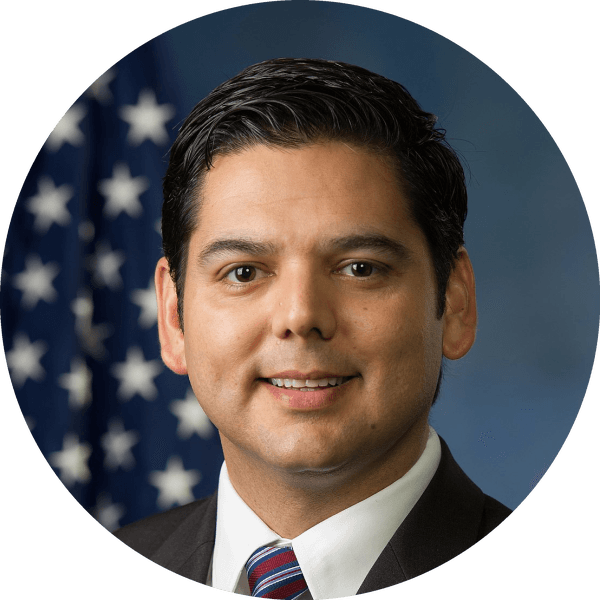
Raul Ruiz
Democrat · CA-25
Tribal diabetes program gets funded through 2030
Why it matters
H.R. 5488 keeps $160 million a year flowing to the Special Diabetes Program for Indians — roughly $800 million over five years — for a program that serves communities with some of the highest diabetes rates in the country. Instead of a short-term patch, it locks the money in through fiscal year 2030 so the clinics relying on it don't run into a funding cliff.
H.R. 5488 does one thing, and it does it cleanly: it keeps the Special Diabetes Program for Indians funded. The program pays for diabetes prevention, screening, and treatment across Indian Health Service facilities, tribal health programs, and urban Indian clinics.
The bill sets the funding at $160 million for each fiscal year from 2026 through 2030. Across all five years, that's up to $800 million if Congress appropriates the full authorized amount.
It also says the money stays available until it's spent. That's a meaningful difference from typical year-by-year funding that expires if it isn't used in time. Health programs can plan multi-year staffing and prevention efforts without losing dollars to the calendar.
The bill doesn't change who qualifies, add new rules, or create penalties. Its entire job is continuity, keeping a long-running program from hitting a wall when its current authorization runs out.
Bill Progress
Latest Action · Sep 18, 2025
Referred to the House Committee on Energy and Commerce.
H.R. 5488 Bill Summary
What H.R. 5488 actually does.
Five more years of funding, locked in
The bill extends the Special Diabetes Program for Indians through fiscal year 2030, replacing short-term uncertainty with a defined funding window.
$160 million every year
It sets a clear annual funding level of $160 million for each of fiscal years 2026, 2027, 2028, 2029, and 2030.
Up to $800 million in total
At $160 million a year across five years, the bill authorizes as much as $800 million if Congress provides the full amount each year.
Money doesn't expire at year's end
The funds remain available until expended, so dollars left over at the end of a fiscal year carry forward instead of being clawed back.
Who benefits from H.R. 5488?
American Indian and Alaska Native patients
People being screened, treated, or kept out of diabetes through programs that depend on this federal money would see that support continue without interruption through 2030.
Tribal and Indian Health Service clinics
Clinics and tribal health programs gain five years of predictable funding, plus the ability to carry dollars forward, which makes multi-year staffing and prevention planning possible.
Urban Indian health organizations
Urban Indian clinics that serve Native patients living off-reservation also draw on the program and would keep their share of the $160 million annual stream.
Families managing a chronic disease
Households relying on these clinics for prevention classes, supplies, and ongoing care avoid the disruption that comes when a program's funding lapses.
Who is affected by H.R. 5488?
Program administrators
The agencies and tribal organizations running the program would operate under a renewed $160 million annual authorization through 2030, with funds available until spent.
Appropriators
House and Senate appropriators set the actual dollars each year against this $160 million authorization, up to $800 million over the full five-year period.
Tribal governments
Tribal governments and health authorities planning diabetes services gain more certainty for partnerships and long-term programs that extend past a single budget cycle.
Cost & Funding
Authorization
$160,000,000 per fiscal year for fiscal years 2026 through 2030
- Funds the Special Diabetes Program for Indians
- Up to $800 million authorized over the full five years
- Money remains available until expended rather than expiring each fiscal year
- Authorization, not appropriation: Congress still sets the actual dollars each year
HR5488 Legislative Journey
House: Committee Action
Sep 18, 2025
Referred to the House Committee on Energy and Commerce.
About the Sponsor
Raul Ruiz
Democrat, California's 25th congressional district · 13 years in Congress
Committees: Energy and Commerce
View full profile →
Cosponsors (6)
This bill has 6 cosponsors: 4 Democrats, 2 Republicans, reflecting bipartisan support. Cosponsors represent 6 states: California, Colorado, Kansas, and 3 more.
Committee Sponsors
Energy and Commerce Committee
2 of 54 committee members cosponsored


23 Democrats across this committee haven't cosponsored yet. Mobilize their constituents
H.R. 5488 Quick Facts


- Committee
- Energy and Commerce
- Chamber
- House
- Policy
- Native Americans
- Introduced
- Sep 18, 2025
Referred to the House Committee on Energy and Commerce.
Sep 18, 2025
Official Sources
Official congressional page for the Special Diabetes Program for Indians Reauthorization Act of 2025.
Official Indian Health Service program page for the Special Diabetes Program for Indians that this bill reauthorizes.
Official U.S. Code page for 42 U.S.C. 254c-3, the statutory section amended by the bill.
Official IHS diabetes division page covering the federal office connected to SDPI implementation and tribal diabetes efforts.
Official IHS fact sheets documenting the program's funding history, reach across 301 community-directed grant programs, and health outcomes.
Official repository of the program's congressional reports, showing the results Congress weighs when reauthorizing this funding.
H.R. 5488 Common Questions
What does H.R. 5488 actually do?
It extends funding for the Special Diabetes Program for Indians, setting $160 million a year for fiscal years 2026 through 2030. It doesn't change who qualifies or how the program runs.
What does the Special Diabetes Program for Indians pay for?
It funds diabetes prevention, screening, and treatment at Indian Health Service facilities, tribal health programs, and urban Indian clinics serving American Indian and Alaska Native communities.
How much money is at stake over the full five years?
At $160 million a year for five years, H.R. 5488 authorizes up to $800 million through fiscal year 2030 if Congress provides the full amount each year.
Does the funding expire if it isn't used each year?
No. H.R. 5488 says the money remains available until expended, so dollars left at the end of a fiscal year carry forward instead of being clawed back.
Does H.R. 5488 change who is eligible or add new rules?
No. The bill only extends funding. It doesn't add eligibility requirements, penalties, or new program rules for the Special Diabetes Program for Indians.
Is H.R. 5488 bipartisan, and where does it stand?
It was introduced by Rep. Raul Ruiz with cosponsors from both parties, including Reps. Jay Obernolte and Tom Cole. As of now it sits in the House Energy and Commerce Committee.
Is $160 million an authorization or guaranteed spending?
It's an authorization, which sets a ceiling. Congress still has to appropriate the actual dollars each year, and it can fund less than the full $160 million.
Based on H.R. 5488 bill text
H.R. 5488 Bill Text
“To amend title III of the Public Health Service Act to extend funding for the Special Diabetes Program for Indians.”
Source: U.S. Government Publishing Office
Get notified when H.R. 5488 moves
Committee votes, floor action, cosponsor changes — straight to your inbox.
Bill alerts + Legisletter's monthly briefing. Unsubscribe anytime.
Native Americans Bills
9 related bills we're tracking
Tribal Trust Land Homeownership Act of 2025



Placed on the Union Calendar, Calendar No. 439.
Feb 23, 2026
To authorize leases of up to 99 years for land held in trust for federally recognized Indian Tribes.
Received in the Senate and Read twice and referred to the Committee on Indian Affairs.
Mar 4, 2026
Native American Entrepreneurial Opportunity Act

Received in the Senate and Read twice and referred to the Committee on Small Business and Entrepreneurship.
Jun 24, 2026
Tribal Trust Land Homeownership Act of 2025

Became Public Law No: 119-88.
May 4, 2026
Chugach Alaska Land Exchange Oil Spill Recovery Act of 2025

Received in the Senate.
Mar 4, 2026
Helping Our People Act of 2026

Referred to the Subcommittee on Indian and Insular Affairs.
Sep 10, 2026
Technical Corrections to the Northwestern New Mexico Rural Water Projects Act, Taos Pueblo Indian Water Rights Settlement Act, and Aamodt Litigation Settlement Act
Held at the desk.
Dec 15, 2025
Cape Fox Land Entitlement Finalization Act of 2025
Became Public Law No: 119-93.
May 19, 2026
Taos Pueblo Indian Water Rights Settlement Amendments Act of 2025
Referred to the House Committee on Natural Resources.
Nov 20, 2025
Trending Right Now
Bills gaining momentum across Congress
America’s Olympic and Paralympic Games Commemorative Coins Act



Referred to the House Committee on Financial Services.
Jul 14, 2025
Fit to Serve Act


Referred to the House Committee on Armed Services.
May 21, 2025
ASAP Act

Ordered to be Reported in the Nature of a Substitute by the Yeas and Nays: 40 - 0.
Sep 16, 2026
Tracking Native Americans in Congress? Monitor bills, track cosponsor momentum, and launch advocacy campaigns — all from one advocacy platform.