Mr. Speaker, I was absent for recorded votes due to a personal commitment. Had I been present, I would have voted as follows: YEA on Roll Call No. 71, H.R. 6329; YEA on Roll Call No. 72, S. 2503; NAY on Roll Call No. 73, Ordering the Previous Question on H. Res. 1075; NAY on Roll Call No. 74, H. Res. 1075; YEA on Roll Call No. 75, motion to recommit on H.R. 4626; and NAY on Roll Call No. 76, Passage of H.R. 4626.
H.R. 6329: Information Quality Assurance Act of 2025
Introduced Dec 1, 20251 cosponsors
Sponsor

Lisa McClain
Republican · MI-9
Agencies would have to show the facts behind their rules
4 min readLast updated June 16, 2026
Why it matters
Federal agencies write rules that shape your industry, your benefits, and your taxes — often without showing the evidence behind them. H.R. 6329 would require agencies to put the critical facts in the public record and let the public comment on them before a rule is final, starting with a one-year deadline for the White House budget office to set the new standard. It passed the House 362-1.
H.R. 6329, the Information Quality Assurance Act of 2025, sets a new standard for how the federal government uses and discloses the facts behind its rules. The first clock starts at the top: within one year of the bill becoming law, the White House budget office would have to rewrite the government-wide guidelines that tell agencies how to handle what the bill calls "influential information" — the kind of facts that have a clear and substantial impact on public policy or private-sector decisions.
Bill Progress
IntroducedDec 1
Committee
Pass HouseFeb 24
Pass Senate
Signed
Law
Latest Action · Feb 25, 2026
1/2
Passed the House, received in Senate
H.R. 6329 Bill Summary
What H.R. 6329 actually does.
1
OMB gets one year to rewrite the rulebook
The White House budget office would have one year after the bill becomes law to update the government-wide guidelines for handling influential information and post them publicly. Those guidelines set the standard every agency then has to follow.
2
Agencies get a second year to fall in line
One year after the budget office acts, each agency would have to update its own information-quality rules, publish them online, keep a correction process open for the public, and report complaints about the accuracy of the information it uses.
3
The facts behind a rule go in the public record
Agencies would have to place the critical factual material they relied on into the rulemaking docket, at the latest by the time the rule is issued, along with citations to other sources used to inform the rule or guidance.
4
You could comment on the evidence, not just the rule
For rules that go through standard notice-and-comment, agencies would have to give the public a chance to weigh in on the underlying factual material, and post any meaningful revisions to that material before the rule is finalized.
5
Withholding requires a written explanation
Agencies could still shield material protected by privacy law, copyright, patents, or other statutes, but they would have to explain in the record why it's withheld and describe what steps they took to widen access.
6
No new money for any of it
The bill authorizes no additional funds, so the budget office and every covered agency would have to meet the new deadlines and disclosure duties using existing staff and budgets.
Who benefits from H.R. 6329?
Anyone affected by a federal rule
When an agency regulates your industry, your health care, or your benefits, you'd be able to see the factual basis in the public docket — and, for most rules, comment on it before it's final.
Researchers, journalists, and watchdog groups
They'd gain source citations and, in most cases, the underlying data in open, reusable form, making it far easier to check an agency's work.
Businesses navigating major regulations
Companies making big decisions around federal rules would get clearer access to the evidence behind them — the bill specifically targets information that affects private-sector decisions.
People fighting inaccurate agency data
Every agency would have to keep an open process for flagging and correcting inaccurate influential information, and report the accuracy complaints it receives.
Who is affected by H.R. 6329?
The White House budget office (OMB)
OMB carries the first and heaviest lift: within a year, it would have to rewrite the government-wide guidelines and issue the public-disclosure guidance, then post the updated rules on its site.
Federal agency heads
Agency leaders would face the second deadline — revising their own guidelines, publishing them, running correction processes, and expanding their reporting on accuracy complaints.
Rulemaking and records staff
The people who build dockets would have to assemble critical factual material and citations, keep them updated as facts change, and document any material that's withheld.
Holders of protected information
Parties with privacy, copyright, or patent interests are affected, since agencies must weigh disclosure against those protections and, when material can't be released, point the public to who holds the rights.
On the Record
What Congress Is Saying
19 legislators have weighed in on H.R. 6329 — 9 Democrats, 10 Republicans.
Mr. Speaker, I rise in support of H.R. 6329, the Information Quality Assurance Act of 2025. Historically, thousands of Federal regulations have been imposed each year as an added burden on the American public. The Code of Federal Regulations, in which these rules are housed, spans 243 volumes that contain over 180,000 single-spaced pages. Agency guidance explaining these regulations to the public likely spans millions more pages. If we must have rules imposed by Federal regulatory agencies, we should, at the very least, ensure that regulatory agencies rely on the best available information.
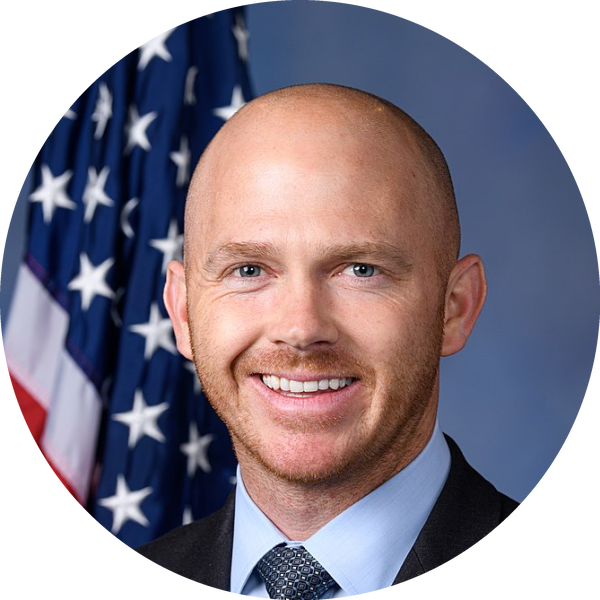
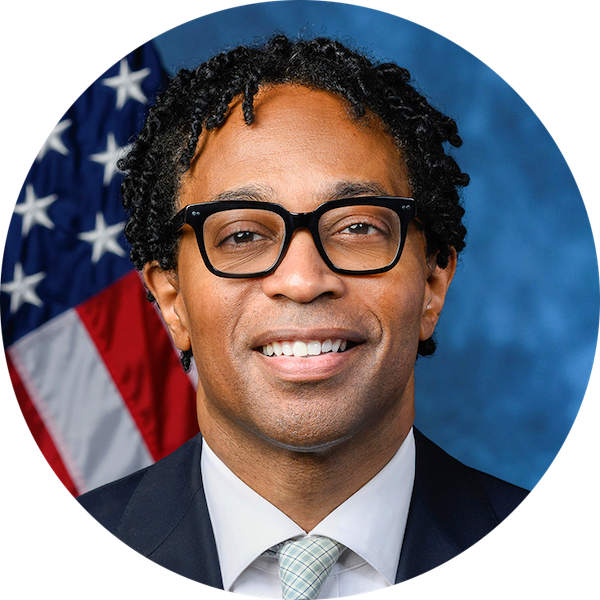
Mr. Speaker, I was absent from the floor and missed Roll Call Nos. 71 through 74. Had I been present, I would have voted YEA on Roll Call No. 71, H.R. 6329, YEA on Roll Call No. 72, S. 2503, NAY on Roll Call No. 73, the previous question on H. Res. 1075, and NAY on Roll Call No. 74, adoption of H. Res. 1075.
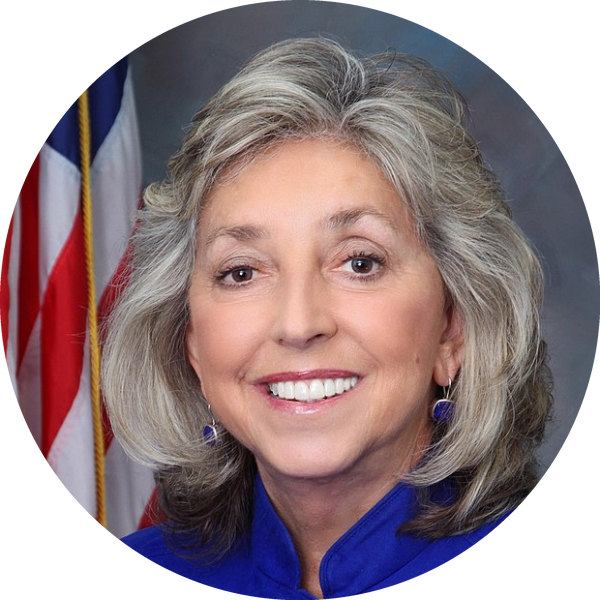
Mr. Speaker, I was necessarily absent and missed the following vote on the House floor. Had I been present, I would have voted YEA on Roll Call No. 71, H.R. 6329.
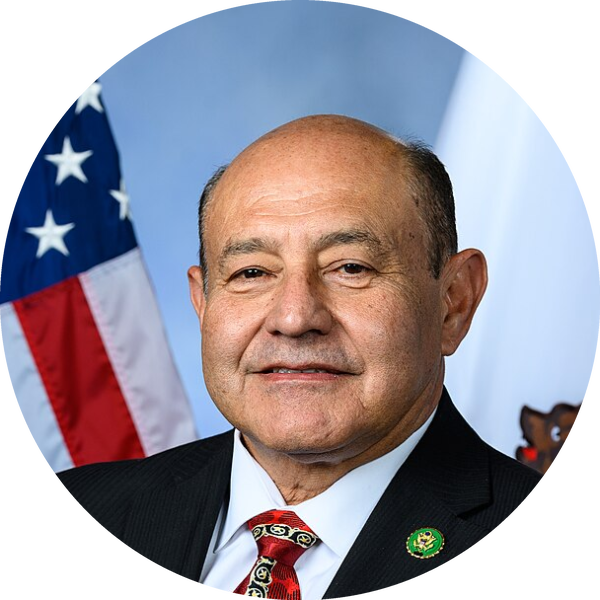
Mr. Speaker, I rise in support of H.R. 6329. This is about improving the quality and transparency of information Federal agencies use to make rules. The bill would require OMB to update their guidance to ensure agencies use high-quality, reliable information when creating new rules. That means the best scientific, technical, economic, or statistical information available. Agencies would also have to make public the models, methods, and information sources they use in rulemaking. Anyone in the public can then give feedback on the information agencies use.

H.R. 6329 also appeared in 1 in the Extensions of Remarks and 4 routine cosponsor filings.
HR6329 Legislative Journey
Committee Action
Feb 25, 2026
Received in the Senate and Read twice and referred to the Committee on Homeland Security and Governmental Affairs.
House: Vote: 362-1
Feb 24, 2026
On motion to suspend the rules and pass the bill Agreed to by the Yeas and Nays: (2/3 required): 362 - 1 (Roll no. 71).
House: Vote Held
Feb 23, 2026
At the conclusion of debate, the Yeas and Nays were demanded and ordered. Pursuant to the provisions of clause 8, rule XX, the Chair announced that further proceedings on the motion would be postponed.
House: Vote: 43-0
Dec 2, 2025
Ordered to be Reported (Amended) by the Yeas and Nays: 43 - 0.
House: Committee Action
Dec 1, 2025
Referred to the Committee on Oversight and Government Reform, and in addition to the Committee on the Judiciary, for a period to be subsequently determined by the Speaker, in each case for consideration of such provisions as fall within the jurisdiction of the committee concerned.
About the Sponsor
Lisa McClain
Republican, Michigan's 9th congressional district · 5 years in Congress
Committees: Education and Workforce, Financial Services
View full profile →
Cosponsors (1)
This bill has 1 cosponsor: 1 Democrat. Cosponsors represent 1 state: California.
1Democrat·1 state
Committee Sponsors
Homeland Security and Governmental Affairs Committee
7D8R
|0 signed15 not yet0 of 15 committee members cosponsored
No committee members have cosponsored this bill
Oversight and Government Reform Committee
21D26R
|1 signed46 not yet1 of 47 committee members cosponsored

Judiciary Committee
19D24R1I
|0 signed44 not yet0 of 44 committee members cosponsored
No committee members have cosponsored this bill
54 Republicans across these committees haven't cosponsored yet. Mobilize their constituents
H.R. 6329 Quick Facts
Cosponsors
1

- Committee
- Homeland Security and Governmental Affairs
- Chamber
- House
- Policy
- Government Operations and Politics
- Introduced
- Dec 1, 2025
Passed the House, received in Senate
Feb 25, 2026
Official Sources
H.R. 6329 on Congress.gov
Official bill page with text, actions, and status for the Information Quality Assurance Act of 2025.
Data.gov Open Government Data
The bill requires critical factual material to be made available as an open Government data asset when possible, and Data.gov is the federal open data portal.
CIPSEA and Foundations for Evidence-Based Policymaking Act of 2018
Official Congress.gov page for the 2018 evidence law specifically cited in the bill text as a consistency requirement for updated guidelines.
U.S. Code, Title 5, Section 553 (Rulemaking)
Official U.S. Code page for notice-and-comment rulemaking, which the bill references for public comment on critical factual material.
U.S. Code, Title 5, Section 552
Official U.S. Code page for FOIA, relevant because the bill says disclosure must be implemented consistently with FOIA.
U.S. Code, Title 5, Section 552a
Official U.S. Code page for the Privacy Act, which the bill names as a limit on public disclosure of factual material.
U.S. Code, Title 44, Section 3561
Official U.S. Code page for the statutory definition of evidence cross-referenced by the bill.
H.R. 6329 Common Questions
What would H.R. 6329 do?
It would require federal agencies to disclose the key facts behind their rules and guidance, put that material in the public record, and let people comment on it. It also forces agencies to keep their information-quality standards current and correct bad data.
Did H.R. 6329 pass the House?
Yes. The House passed it 362-1 on February 24, 2026. It's now in the Senate, referred to the Homeland Security and Governmental Affairs Committee. It still needs Senate passage and the president's signature to become law.
Would I be able to see the facts an agency used to write a rule?
Yes. Agencies would have to place the critical factual material they relied on into the rulemaking docket — at the latest, by the time the rule is issued — along with citations to other sources they used.
Could the public comment on the evidence, not just the rule itself?
For rules that go through standard notice-and-comment, yes. Agencies would have to let the public weigh in on the underlying factual material, and post any meaningful revisions to that material before the rule is finalized.
How long would agencies have to comply with H.R. 6329?
Two stacked one-year clocks. The White House budget office gets one year after enactment to rewrite the government-wide guidelines, then each agency gets another year to update its own rules and disclosure practices.
Can I get inaccurate agency information corrected under H.R. 6329?
Yes. Every agency would have to keep an administrative process open for the public to seek correction of influential information that doesn't meet the guidelines, and report the accuracy complaints it receives.
Does H.R. 6329 come with any new funding?
No. The bill authorizes no additional money. The budget office and every covered agency would have to meet the new deadlines and disclosure duties using their existing staff and budgets.
Can agencies still withhold some material from the public?
Yes, in limited cases — material protected by privacy law, copyright, patents, or another statute. But the agency has to explain in the record why it's withheld and describe what it did to widen access.
Based on H.R. 6329 bill text
H.R. 6329 Bill Text
“To ensure that Federal agencies rely on the best reasonably available scientific, technical, demographic, economic, and statistical information and evidence to develop, issue or inform the public of the nature and bases of Federal agency rules and guidance, and for other purposes.”
Source: U.S. Government Publishing Office
Bill Alerts
Get notified when H.R. 6329 moves
Committee votes, floor action, cosponsor changes — straight to your inbox.
Bill alerts + Legisletter's monthly briefing. Unsubscribe anytime.
Government Operations and Politics Bills
9 related bills we're tracking
H.R. 1065
Protect Our Letter Carriers Act of 2025
Brian FitzpatrickR-PA




+227
231 cosponsors
Referred to the Committee on the Judiciary, and in addition to the Committee on Oversight and Government Reform, for a period to be subsequently determined by the Speaker, in each case for consideration of such provisions as fall within the jurisdiction of the committee concerned.
Feb 6, 2025
HouseGovernment Operations and Politics
H.R. 14
John R. Lewis Voting Rights Advancement Act of 2025

Terri SewellD-AL


+217
221 cosponsors
+1 this monthReferred to the House Committee on the Judiciary.
Mar 5, 2025
HouseGovernment Operations and Politics
H.R. 51
Washington, D.C. Admission Act

Eleanor NortonD-DC

+205
209 cosponsors
+1 this monthReferred to the Committee on Oversight and Government Reform, and in addition to the Committees on Rules, Armed Services, the Judiciary, and Energy and Commerce, for a period to be subsequently determined by the Speaker, in each case for consideration of such provisions as fall within the jurisdiction of the committee concerned.
Jan 3, 2025
HouseGovernment Operations and Politics
H.R. 2086
Rights for the TSA Workforce Act

Bennie ThompsonD-MS




+186
190 cosponsors
Referred to the Subcommittee on Transportation and Maritime Security.
Mar 11, 2025
HouseGovernment Operations and Politics
H.R. 7802
DISCLOSE Act of 2026

Chris PappasD-NH


+185
189 cosponsors
+1 this monthReferred to the Committee on House Administration, and in addition to the Committees on Ways and Means, and the Judiciary, for a period to be subsequently determined by the Speaker, in each case for consideration of such provisions as fall within the jurisdiction of the committee concerned.
Mar 4, 2026
HouseGovernment Operations and Politics
H.R. 1522
Federal Retirement Fairness Act
Gerald ConnollyD-VA




+154
158 cosponsors
ASSUMING FIRST SPONSORSHIP - Ms. Randall asked unanimous consent that she may hereafter be considered as the first sponsor of H.R. 1522, a bill originally introduced by Representative Connolly, for the purpose of adding cosponsors and requesting reprintings pursuant to clause 7 of rule XII. Agreed to without objection.
Jul 22, 2025
HouseGovernment Operations and Politics
H.R. 45Gaining+5
FIND Act

Jack BergmanR-MI




+150
154 cosponsors
+5 this monthReferred to the House Committee on Oversight and Government Reform.
Jan 3, 2025
HouseGovernment Operations and Politics
H.R. 5657
Fair Pay for Federal Contractors Act of 2025

Ayanna PressleyD-MA

+134
138 cosponsors
Referred to the Committee on Appropriations, and in addition to the Committee on Oversight and Government Reform, for a period to be subsequently determined by the Speaker, in each case for consideration of such provisions as fall within the jurisdiction of the committee concerned.
Sep 30, 2025
HouseGovernment Operations and Politics
H.R. 492
Saving the Civil Service Act
Gerald ConnollyD-VA


+108
112 cosponsors
+3 this monthASSUMING FIRST SPONSORSHIP - Mr. Walkinshaw asked unanimous consent that he may hereafter be considered as the first sponsor of H.R. 492, a bill originally introduced by Representative Connolly, for the purpose of adding cosponsors and requesting reprintings pursuant to clause 7 of rule XII. Agreed to without objection.
Sep 16, 2025
HouseGovernment Operations and Politics
Trending Right Now
Bills gaining momentum across Congress
H.R. 4382Surging+28
America’s Olympic and Paralympic Games Commemorative Coins Act
Brad ShermanD-CA




+304
308 cosponsors
+28 this monthReferred to the House Committee on Financial Services.
Jul 14, 2025
HouseFinance and Financial Sector
H.R. 3569Surging+22
Fit to Serve Act

Adam SmithD-WA




+184
188 cosponsors
+22 this monthReferred to the House Committee on Armed Services.
May 21, 2025
HouseArmed Forces and National Security
H.R. 6130Surging+14
ASAP Act

Vern BuchananR-FL


+226
230 cosponsors
+14 this monthOrdered to be Reported in the Nature of a Substitute by the Yeas and Nays: 40 - 0.
Sep 16, 2026
HouseHealth
Tracking Government Operations and Politics in Congress? Monitor bills, track cosponsor momentum, and launch advocacy campaigns — all from one advocacy platform.