H.R. 1167: Keep China Out of Solar Energy Act of 2025
Sponsor
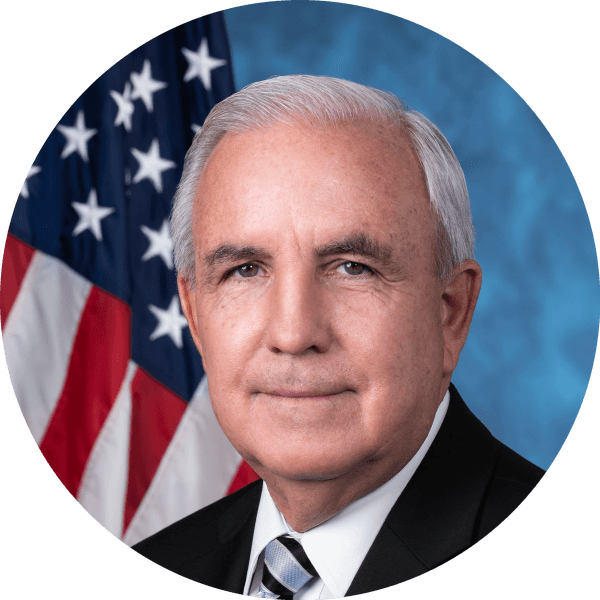
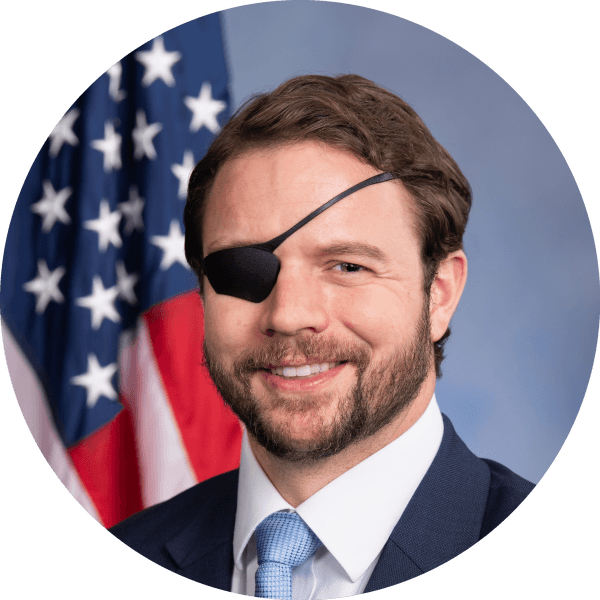
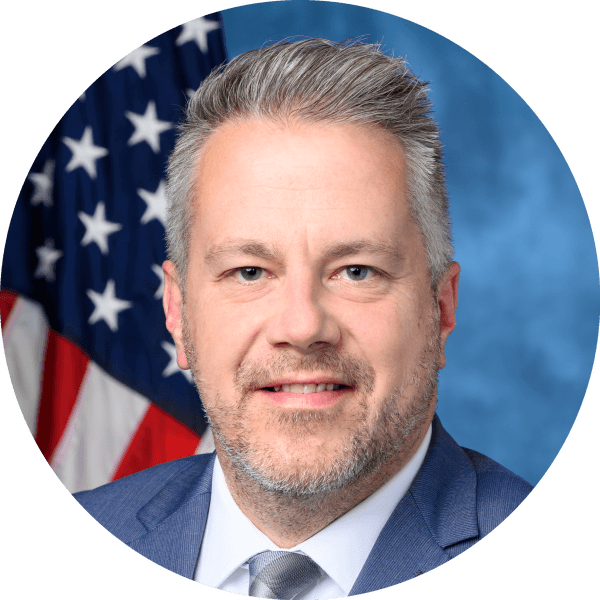
Carlos Gimenez
Republican · FL-28
No federal dollars for Chinese-made solar panels
Why it matters
China makes most of the world's solar panels, and right now nothing stops the federal government from buying them. H.R. 1167 would cut Chinese-linked manufacturers out of federal solar purchases entirely — through contracts, grants, and even government charge cards. Agencies could only buy from a banned supplier if both the State Department and Homeland Security sign off that there's no other option. The new purchasing rules would have to be in place within 180 days of the bill becoming law.
H.R. 1167, the Keep China Out of Solar Energy Act of 2025, isn't a spending bill or a solar incentive. It's a restriction on what the federal government is allowed to buy. The rule is simple: federal money can't be used to buy solar panels made or assembled by a Chinese-linked company.
That ban reaches further than direct federal purchases. It covers contracts, subcontracts, grants, and subgrants — so a city or company spending federal dollars is bound by it too. It also blocks federal employees from putting these panels on a government purchase card. The bill defines "solar panel" narrowly, as crystalline silicon photovoltaic cells and modules.
Who counts as Chinese-linked is the part that matters most. The bill covers any company based in China, or one the Secretary of Homeland Security determines is under the influence or control of the Chinese government or the Communist Party. So the real reach of the ban depends on Homeland Security's calls, not just on where a company is headquartered.
There's one way out, and it's narrow. An agency can buy from a banned supplier only if its head certifies that the company is the "only viable source" for the panels — and both the Secretary of State and the Secretary of Homeland Security have to jointly approve it.
The bill builds in oversight. Agencies have to tell the Office of Management and Budget about every waiver request, and OMB has to report those requests to five congressional committees every quarter. Within 275 days, the Comptroller General has to tell Congress how many panels agencies bought from Chinese-linked firms. And within a year, OMB has to commission an independent study of domestic solar manufacturing and the global supply chain.
Bill Progress
Latest Action · Feb 10, 2025
Referred to the House Committee on Oversight and Government Reform.
H.R. 1167 Bill Summary
What H.R. 1167 actually does.
Federal money can't buy Chinese-linked solar panels
Federal funds could not be used through a contract, subcontract, grant, or subgrant to buy solar panels manufactured or assembled by a covered entity, and government-issued purchase cards could not be used for the same purchases.
Six months to rewrite the purchasing rules
Within 180 days of enactment, the Office of Management and Budget, working with the General Services Administration, must develop the standards and guidelines that put the ban in place, and the Federal Acquisition Regulatory Council must amend the Federal Acquisition Regulation so it applies to federal contracts.
Homeland Security decides who's covered
A covered entity is any company based in China, or one the Secretary of Homeland Security determines is under the influence or control of the Chinese government or the Communist Party of China. The practical reach of the ban turns on those determinations.
Waivers only when there's no other source
An agency head can get a waiver only by certifying that a covered entity is the "only viable source" for the panels, and both the Secretary of State and the Secretary of Homeland Security must jointly approve the request.
Quarterly waiver reports to five committees
Agencies must notify OMB of every waiver request, and OMB must send a quarterly report to five committees: Senate Foreign Relations and Homeland Security and Governmental Affairs, and House Foreign Affairs, Homeland Security, and Oversight and Government Reform.
A 275-day audit and a one-year market study
Within 275 days, the Comptroller General must report to Congress on how many solar panels agencies bought from covered entities. Within one year, OMB must seek a contract with a federally funded research and development center to study domestic solar production, technology progress, and the global supply chain and workforce, then send that study to Congress within 30 days of receiving it.
Who benefits from H.R. 1167?
U.S. solar panel manufacturers
Domestic makers of crystalline silicon solar cells and modules would face less competition for federal business, since contracts, grants, and purchase-card buys from Chinese-linked suppliers would be off the table.
Congress and federal watchdogs
Lawmakers would get a steady stream of visibility — quarterly OMB reports on every waiver request and a Comptroller General audit within 275 days of how much federal solar buying traced back to covered entities.
Homeland Security and the State Department
The Secretary of Homeland Security would decide which firms count as covered, and both secretaries would hold a joint veto over any waiver — giving national security officials direct say over where federal solar dollars go.
Federally funded research centers
A federally funded research and development center would stand to win the contract for the required one-year study of domestic production, technology, and the global supply chain and workforce.
Who is affected by H.R. 1167?
Chinese-linked solar companies
Any company based in China, or determined by the Secretary of Homeland Security to be under the influence or control of the Chinese government or Communist Party, would be shut out of covered federal solar purchases.
Federal agencies buying solar equipment
Executive agencies would have to change their purchasing practices within the 180-day window and could buy from a covered entity only through a jointly approved waiver.
Federal contractors and grant recipients
Companies, cities, and organizations spending federal money through contracts, subcontracts, grants, or subgrants would also be barred from buying covered panels, so the compliance burden extends well beyond direct federal buyers.
Projects relying on low-cost imported panels
Federally funded projects that currently lean on cheaper or more available panels from Chinese-linked suppliers could face sourcing delays, especially if an agency can't prove a covered entity is the "only viable source" and win approval from both secretaries.
HR1167 Legislative Journey
House: Committee Action
Feb 10, 2025
Referred to the House Committee on Oversight and Government Reform.
About the Sponsor
Carlos Gimenez
Republican, Florida's 28th congressional district · 5 years in Congress
Committees: Homeland Security, House Select Committee on the Strategic Competition Between the United States and the Chinese Communist Party, Armed Services
View full profile →
Cosponsors (1)
This bill has 1 cosponsor: 1 Republican. Cosponsors represent 1 state: Florida.
Committee Sponsors
Oversight and Government Reform Committee
0 of 47 committee members cosponsored
No committee members have cosponsored this bill
26 Republicans across this committee haven't cosponsored yet. Mobilize their constituents
H.R. 1167 Quick Facts
- Committee
- Oversight and Government Reform
- Chamber
- House
- Policy
- Government Operations and Politics
- Introduced
- Feb 10, 2025
Referred to the House Committee on Oversight and Government Reform.
Feb 10, 2025
Official Sources
Official bill page with the text, status, sponsors, and related actions for the Keep China Out of Solar Energy Act of 2025.
The bill requires the Federal Acquisition Regulatory Council to amend the FAR within 180 days to implement the procurement ban.
The bill separately prohibits use of Government-issued purchase cards for covered solar panel purchases, making the federal charge card program relevant.
OMB is tasked with developing standards and guidelines, receiving waiver notifications, and sending quarterly reports and the market study to Congress.
The bill directs the Comptroller General to report to Congress within 275 days on federal procurement of solar panels from covered entities.
Section 6 of the bill incorporates the statutory definition of 'executive agency' from 41 U.S.C. 133.
The Energy Department's assessment of the global solar PV supply chain and U.S. manufacturing maps directly onto the bill's required one-year study of domestic production and supply chains.
The office that funds and tracks domestic solar manufacturing, the subject area of the bill's required market study on technology progress and the supply chain.
H.R. 1167 Common Questions
What does H.R. 1167 actually ban?
It bars federal money from buying solar panels made or assembled by a Chinese-linked company. The ban covers contracts, grants, subgrants, and even government purchase cards.
How soon would the ban take effect?
Within 180 days of becoming law, OMB and GSA would have to issue the purchasing standards, and the Federal Acquisition Regulation would have to be amended to enforce the ban on federal contracts.
Which companies count as Chinese-linked under the bill?
Any company based in China, or one the Secretary of Homeland Security determines is under the influence or control of the Chinese government or the Communist Party of China.
Could an agency still buy banned panels if there's no other supplier?
Only with a waiver. The agency head has to certify the company is the "only viable source," and both the Secretary of State and the Secretary of Homeland Security have to jointly approve it.
What kind of solar panels does H.R. 1167 cover?
The bill defines "solar panel" narrowly, as crystalline silicon photovoltaic cells and modules — the standard panels used in most installations.
Would Congress get to see how much the government bought from China?
Yes. The Comptroller General would have to report to Congress within 275 days on how many panels agencies bought from covered entities, and OMB would send quarterly reports on every waiver request.
Has H.R. 1167 passed?
No. It was introduced in February 2025 and referred to the House Oversight and Government Reform Committee, where it remains with a single cosponsor. It has not had a hearing or a vote.
Based on H.R. 1167 bill text
H.R. 1167 Bill Text
“To prohibit the procurement of solar panels manufactured or assembled in the People’s Republic of China.”
Source: U.S. Government Publishing Office
Get notified when H.R. 1167 moves
Committee votes, floor action, cosponsor changes — straight to your inbox.
Bill alerts + Legisletter's monthly briefing. Unsubscribe anytime.
Government Operations and Politics Bills
9 related bills we're tracking
Protect Our Letter Carriers Act of 2025

Referred to the Committee on the Judiciary, and in addition to the Committee on Oversight and Government Reform, for a period to be subsequently determined by the Speaker, in each case for consideration of such provisions as fall within the jurisdiction of the committee concerned.
Feb 6, 2025
John R. Lewis Voting Rights Advancement Act of 2025


Referred to the House Committee on the Judiciary.
Mar 5, 2025
Washington, D.C. Admission Act


Referred to the Committee on Oversight and Government Reform, and in addition to the Committees on Rules, Armed Services, the Judiciary, and Energy and Commerce, for a period to be subsequently determined by the Speaker, in each case for consideration of such provisions as fall within the jurisdiction of the committee concerned.
Jan 3, 2025
Rights for the TSA Workforce Act

Referred to the Subcommittee on Transportation and Maritime Security.
Mar 11, 2025
DISCLOSE Act of 2026

Referred to the Committee on House Administration, and in addition to the Committees on Ways and Means, and the Judiciary, for a period to be subsequently determined by the Speaker, in each case for consideration of such provisions as fall within the jurisdiction of the committee concerned.
Mar 4, 2026
Federal Retirement Fairness Act


ASSUMING FIRST SPONSORSHIP - Ms. Randall asked unanimous consent that she may hereafter be considered as the first sponsor of H.R. 1522, a bill originally introduced by Representative Connolly, for the purpose of adding cosponsors and requesting reprintings pursuant to clause 7 of rule XII. Agreed to without objection.
Jul 22, 2025
FIND Act
Referred to the House Committee on Oversight and Government Reform.
Jan 3, 2025
Fair Pay for Federal Contractors Act of 2025
Referred to the Committee on Appropriations, and in addition to the Committee on Oversight and Government Reform, for a period to be subsequently determined by the Speaker, in each case for consideration of such provisions as fall within the jurisdiction of the committee concerned.
Sep 30, 2025
Saving the Civil Service Act
ASSUMING FIRST SPONSORSHIP - Mr. Walkinshaw asked unanimous consent that he may hereafter be considered as the first sponsor of H.R. 492, a bill originally introduced by Representative Connolly, for the purpose of adding cosponsors and requesting reprintings pursuant to clause 7 of rule XII. Agreed to without objection.
Sep 16, 2025
Trending Right Now
Bills gaining momentum across Congress
North Platte Canteen Congressional Gold Medal Act


Referred to the House Committee on Financial Services.
Feb 21, 2025
America’s Olympic and Paralympic Games Commemorative Coins Act



Referred to the House Committee on Financial Services.
Jul 14, 2025
Fit to Serve Act
Referred to the House Committee on Armed Services.
May 21, 2025
Tracking Government Operations and Politics in Congress? Monitor bills, track cosponsor momentum, and launch advocacy campaigns — all from one advocacy platform.