H.R. 1091: Carried Interest Fairness Act of 2025
Sponsor

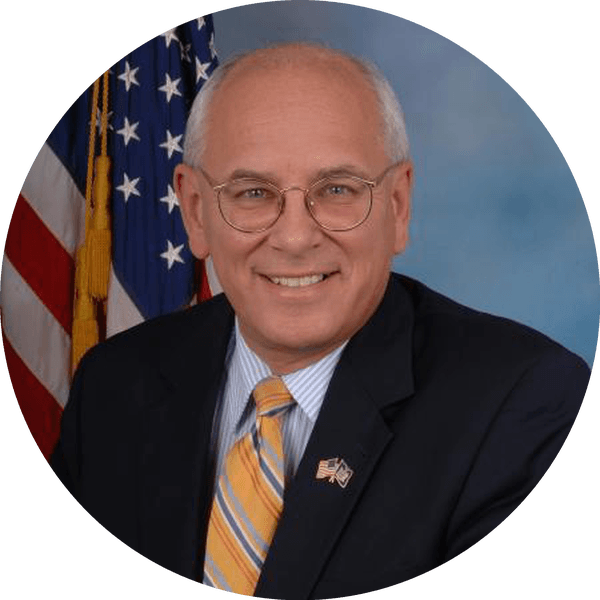
Marie Perez
Democrat · WA-3
Wall Street's favorite tax break pays 23.8% where you'd pay 37%
Why it matters
A hedge fund manager earning $10 million in carried interest pays a lower tax rate than a surgeon, a trial lawyer, or a small business owner earning the same amount. The difference is not an accident — it is a tax code provision that has survived every reform attempt since 2007, including Trump's own stated support for closing it.
Here is how carried interest works. A private equity or hedge fund manager typically collects two forms of compensation: a management fee (usually 2% of assets) and a performance allocation (usually 20% of profits). The management fee is taxed as ordinary income at rates up to 37%. But the performance allocation — carried interest — gets taxed at the long-term capital gains rate of 20%, plus a 3.8% net investment income tax, for a top rate of 23.8%. That is a 13-percentage-point discount on what is functionally payment for services rendered.
The bill's mechanism is straightforward. It creates a new Section 710 of the Internal Revenue Code that recharacterizes all net capital gain from an "investment services partnership interest" as ordinary income. It also repeals Section 1061 — the three-year holding period rule that Trump's 2017 tax law added as a half-measure. Under current law, if a fund holds an asset for three years, the manager's carried interest on that asset qualifies for capital gains treatment. H.R. 1091 eliminates that distinction entirely.
The bill does not stop at income recharacterization. It strips carried interest of access to the qualified small business stock exclusion under Section 1202, blocks qualified dividend treatment on dividends allocated to carried interest, and subjects carried interest income to self-employment tax — which it currently escapes. That last piece matters more than it sounds: the 15.3% self-employment tax (Social Security and Medicare) is a cost that W-2 employees and self-employed workers cannot avoid, but carried interest holders have never paid it.
For managers who try to game the new rules, the penalty is doubled. The standard 20% accuracy-related penalty on underpayments jumps to 40% for transactions designed to avoid Section 710. The reasonable cause defense still exists but requires the taxpayer to prove adequate disclosure, substantial authority, and a more-likely-than-not belief that their treatment was correct — a significantly higher bar than the usual standard.
The bill carves out one important exception: qualified capital interests. If a fund manager contributes actual money or property to a fund — their own capital at risk, not a profit share received for services — the returns on that contribution are still taxed at capital gains rates. The bill only targets the "sweat equity" portion of carried interest, not genuine investment returns.
The Congressional Budget Office has estimated that taxing carried interest as ordinary income would raise approximately $12 billion over ten years. The bill's sponsors cite a figure of $6.5 billion over a decade, reflecting the narrower scope of this particular legislation. Either way, the loophole's survival in Trump's "One Big Beautiful Bill" — signed July 4, 2025 — despite the President's own stated support for closing it, underscores how durable this tax break has proven against legislative assault.
Bill Progress
Latest Action · Feb 6, 2025
Referred to the House Committee on Ways and Means.
Visual Summary
H.R. 1091 at a Glance
<div style="max-width:100%;">
  <img src="https://legisletter.org/images/bill-infographics/hr1091-carried-interest-fairness-act.jpeg" alt="HR1091 Visual Summary - Carried Interest Fairness Act of 2025" style="max-width:100%;height:auto;display:block;" />
  <p style="margin:8px 0 0;font-size:14px;color:#555;text-align:center;">
    <a href="https://legisletter.org/bill/hr1091-carried-interest-fairness-act" target="_blank" rel="noopener noreferrer" style="color:inherit;text-decoration:underline;">HR1091 Visual Summary – Carried Interest Fairness Act of 2025</a>
    <span> via </span>
    <a href="https://legisletter.org" target="_blank" rel="noopener noreferrer" style="color:inherit;text-decoration:none;font-weight:500;">legisletter.org</a>
  </p>
</div>H.R. 1091 Bill Summary
What H.R. 1091 actually does.
All carried interest taxed as ordinary income
Net capital gain from an investment services partnership interest is recharacterized as ordinary income under a new Section 710 of the Internal Revenue Code. The 20% capital gains rate no longer applies to performance allocations received for managing other people's money.
Section 1061 three-year rule repealed
The 2017 tax law's compromise — requiring a three-year hold to qualify for capital gains treatment — is eliminated entirely. Under H.R. 1091, no holding period converts carried interest back into capital gains.
Self-employment tax now applies
Income from carried interest is included in net earnings from self-employment for the first time. Fund managers would owe the 15.3% Social Security and Medicare tax that every W-2 employee and self-employed worker already pays.
Qualified dividend and QSBS exclusions stripped
Dividends allocated to carried interest lose qualified dividend treatment, and gains on qualified small business stock (Section 1202) allocated to carried interest lose the exclusion. Two additional tax benefits that piggyback on the capital gains classification disappear.
40% penalty for avoidance schemes
The standard 20% accuracy-related penalty doubles to 40% for underpayments attributable to avoiding Section 710. The reasonable cause defense requires disclosure, substantial authority, and a more-likely-than-not standard — harder to meet than the usual threshold.
Genuine capital contributions still get capital gains treatment
The bill only targets sweat equity. If a manager invests their own money in the fund — a qualified capital interest — returns on that real capital are still taxed at the lower rate. The provision draws a line between investing your own money and profiting from investing other people's.
Who benefits from H.R. 1091?
The federal treasury
CBO estimates $12 billion in additional revenue over ten years from taxing carried interest as ordinary income. The bill's sponsors estimate $6.5 billion over a decade under this specific legislation. Either figure represents money currently left on the table.
Every other high earner who pays ordinary income rates
Surgeons, corporate executives, trial lawyers, and small business owners earning $10 million pay up to 37% in federal income tax. A hedge fund manager earning the same amount through carried interest pays 23.8%. This bill closes that gap.
Workers who pay self-employment and payroll taxes
The 15.3% self-employment tax is unavoidable for W-2 employees, freelancers, and small business owners. Carried interest has been exempt. Adding it to the self-employment tax base puts fund managers on the same footing as everyone else.
Who is affected by H.R. 1091?
Private equity fund managers
The industry's standard compensation model — 2% management fee plus 20% carry — would see the carried interest portion taxed at rates up to 37% plus 15.3% self-employment tax, instead of the current 23.8%. For a manager earning $50 million in carry, the tax difference could exceed $10 million annually.
Hedge fund managers and venture capitalists
Any manager holding an investment services partnership interest in a fund whose assets are substantially securities, real estate, commodities, or derivatives falls under the new rules. VC firms that take carried interest on startup investments are included.
SPAC sponsors
The bill explicitly covers special purpose acquisition companies. Founder shares and promote interests tied to investment management services are subject to the same recharacterization rules as traditional carried interest.
Tax advisors and fund administrators
The new regime requires tracking qualified capital interests separately from investment services partnership interests, applying the 40% penalty framework, and navigating anti-abuse provisions that give the IRS broad regulatory authority.
HR1091 Legislative Journey
House: Committee Action
Feb 6, 2025
Referred to the House Committee on Ways and Means.
About the Sponsor
Marie Perez
Democrat, Washington's 3rd congressional district · 3 years in Congress
Committees: Appropriations
View full profile →
Cosponsors (2)
All 2 cosponsors are Democrats. Cosponsors represent 2 states: California, Virginia.
Committee Sponsors

18 Democrats across this committee haven't cosponsored yet. Mobilize their constituents
What laws does H.R. 1091 change?
1 changes
Sections Amended
Section 211(a) of Social Security Act
striking ``and'' at the end of paragraph (15), by striking the period at the end of paragraph (16) and inserting ``; and'', and by inserting after paragraph (16) the following new paragraph: ``(17) Notwithstanding the preceding provisions of this subsection, in the case of any individual engaged in the trade or business of providing services described in section 710(c)(2) of the Internal Revenue Code of 1986 with respect to any entity, investment services partnership income or loss (as defined in section 1402(m) of such Code) shall be taken into account in determining the net earnings from self-employment of such individual
H.R. 1091 Quick Facts


- Committee
- Ways and Means
- Chamber
- House
- Policy
- Taxation
- Introduced
- Feb 6, 2025
Referred to the House Committee on Ways and Means.
Feb 6, 2025
Official Sources
Full bill text, cosponsors, and legislative history for the Carried Interest Fairness Act of 2025
Identical Senate version introduced by Sen. Tammy Baldwin (D-WI) and referred to the Finance Committee
Congressional Budget Office analysis estimating $12 billion in revenue over 10 years from taxing carried interest at ordinary income rates
Congressional Research Service report on carried interest characterization, legislative history, and policy arguments
Sponsor press release with endorsements from CWA, AFT, AFSCME, Americans for Tax Fairness, and Public Citizen
IRS final regulations on the three-year holding period rule that H.R. 1091 would repeal
Nonpartisan explainer of how carried interest works, who benefits, and the policy debate over taxing it as capital gains vs. ordinary income
H.R. 1091 Common Questions
What tax rate do hedge fund managers currently pay on carried interest?
The top rate on carried interest is 23.8% — the 20% long-term capital gains rate plus the 3.8% net investment income tax. That compares to the 37% top rate on ordinary income. The gap means a fund manager earning $10 million in carried interest pays roughly $1.3 million less in federal taxes than a surgeon earning the same amount.
Does the Carried Interest Fairness Act tax carried interest as ordinary income?
Yes. The bill creates a new Section 710 of the Internal Revenue Code that recharacterizes all net capital gain from an investment services partnership interest as ordinary income. It also repeals Section 1061, the three-year holding period rule from the 2017 tax law that was the last attempt at a compromise.
Would fund managers owe self-employment tax on carried interest under HR 1091?
Yes, for the first time. The bill adds carried interest income to net earnings from self-employment. That means fund managers would owe the 15.3% self-employment tax (Social Security and Medicare) that every W-2 employee, freelancer, and small business owner already pays. Under current law, carried interest escapes this tax entirely.
What is the penalty for trying to avoid the carried interest tax under HR 1091?
The standard 20% accuracy-related penalty doubles to 40% for underpayments tied to avoiding Section 710. To claim the reasonable cause defense, taxpayers must prove they disclosed the relevant facts, had substantial legal authority for their position, and reasonably believed their treatment was more likely than not correct. That is a higher bar than the usual standard.
Can fund managers still get capital gains rates on their own invested money?
Yes. The bill only targets sweat equity — the profit share received for managing other people's money. If a manager contributes their own cash or property to a fund (a qualified capital interest), returns on that real investment are still taxed at capital gains rates. The distinction is between money you put at risk and profits you earned for services.
Does HR 1091 eliminate the QSBS exclusion for carried interest gains?
Yes. Section 1202 qualified small business stock treatment does not apply to gains allocated to an investment services partnership interest. This closes a secondary benefit: under current law, some VC managers use the QSBS exclusion to shield up to $10 million (or 10x their basis) in startup gains from tax entirely. The bill shuts that door for carried interest allocations.
How much revenue would closing the carried interest loophole raise?
The Congressional Budget Office estimates roughly $12 billion over ten years from taxing carried interest as ordinary income. The bill sponsors cite a narrower $6.5 billion over a decade. The revenue comes from the rate differential — 37% vs. 23.8% — plus the self-employment tax that carried interest currently avoids.
Does the Carried Interest Fairness Act apply to SPAC sponsors?
Yes. The bill defines disqualified interests to include non-debt interests in special purpose acquisition companies tied to investment management services. SPAC founder shares and promote interests fall under the same recharacterization rules as traditional carried interest in PE and hedge funds.
Can a gift or inheritance of carried interest avoid the tax under HR 1091?
Partially. Gift and death transfers are exempt from immediate ordinary income recognition. But the interest keeps its character as an investment services partnership interest in the recipient's hands. And for estates, any gain that would have been ordinary income if the decedent had sold the interest immediately before death is treated as income in respect of a decedent — meaning it still gets taxed, just on the estate's return.
Is there a Senate version of the Carried Interest Fairness Act?
Yes. S. 445, introduced by Sen. Tammy Baldwin (D-WI) on the same day as H.R. 1091, is an identical companion bill. It was referred to the Senate Finance Committee. Despite bipartisan presidential rhetoric about closing the loophole, the bill currently has only Democratic sponsors in both chambers.
Based on H.R. 1091 bill text
H.R. 1091 Bill Text
“To amend the Internal Revenue Code of 1986 to provide for the proper tax treatment of personal service income earned in pass-thru entities.”
Source: U.S. Government Publishing Office
Get notified when H.R. 1091 moves
Committee votes, floor action, cosponsor changes — straight to your inbox.
Bill alerts + Legisletter's monthly briefing. Unsubscribe anytime.
Taxation Bills
9 related bills we're tracking
American Family Act





Referred to the House Committee on Ways and Means.
Apr 9, 2025
Freedom to Invest in Tomorrow’s Workforce Act





Referred to the House Committee on Ways and Means.
Feb 7, 2025
Main Street Tax Certainty Act



Referred to the House Committee on Ways and Means.
Jan 23, 2025
Death Tax Repeal Act



Referred to the House Committee on Ways and Means.
Feb 13, 2025
To amend the Internal Revenue Code of 1986 to modify the railroad track maintenance credit.




Referred to the House Committee on Ways and Means.
Jan 16, 2025
Tax Fairness for Workers Act





Referred to the House Committee on Ways and Means.
Apr 7, 2025
Health Care Affordability Act of 2025





Referred to the House Committee on Ways and Means.
Jan 9, 2025
Affordable Housing Credit Improvement Act of 2025
Referred to the House Committee on Ways and Means.
Apr 8, 2025
More Homes on the Market Act



Referred to the House Committee on Ways and Means.
Feb 13, 2025
Trending Right Now
Bills gaining momentum across Congress
North Platte Canteen Congressional Gold Medal Act





Referred to the House Committee on Financial Services.
Feb 21, 2025
ASAP Act


Ordered to be Reported in the Nature of a Substitute by the Yeas and Nays: 40 - 0.
Sep 16, 2026
Fit to Serve Act





Referred to the House Committee on Armed Services.
May 21, 2025
Tracking Taxation in Congress? Monitor bills, track cosponsor momentum, and launch advocacy campaigns — all from one advocacy platform.