S.Res. 118: A resolution designating March 6, 2025, as "National Slam the Scam Day" to raise awareness about pervasive scams and to promote education to prevent government imposter scams and other types of scams.
Sponsor
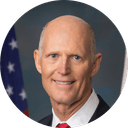
Rick Scott
Republican · FL
Bill Progress
Latest Action · Mar 6, 2025
Passed the Senate, received in House
Why it matters
Scam losses are hitting record highs, and the Senate is using a national awareness day to push people to recognize and report fraud right now.
S. Res. 118 is a simple Senate resolution that designates March 6, 2025, as "National Slam the Scam Day." Its main goal is public awareness: warn people about scams in which criminals pretend to be from agencies like Social Security, the IRS, Medicare, or the Postal Service. The resolution says these scams are widespread, costly, and especially harmful to older adults.
The measure leans heavily on recent fraud data to make its case. It points to more than $10 billion in reported consumer losses in 2023, up $1 billion from 2022, and says 1 in 4 people in the United States reported losing money to scams, with a median loss of $500. It also highlights thousands of complaints received by the Senate Aging Committee's fraud hotline, underscoring that this is not a niche problem.
What the resolution actually does is mostly symbolic and educational. It recognizes the role of law enforcement, consumer protection groups, telecom companies, aging agencies, and financial institutions in stopping scams and teaching the public how to avoid them. It also encourages people to ignore suspicious contacts, share warnings with family and friends, and report scams to the proper watchdogs, including inspectors general and the Federal Trade Commission.
Because this is a Senate resolution, it does not create a new federal program, change criminal law, or provide money. Its real value is messaging and coordination. In plain English, the Senate is trying to make scam prevention more visible and to reinforce a basic point: government agencies do not randomly demand money or sensitive personal information by phone, text, email, or social media.
What does S.Res. 118 do?
Creates National Slam the Scam Day
Designates March 6, 2025, as a national day to focus attention on scams, especially those involving fake government officials.
Targets government imposter scams
Calls out scams where criminals pretend to be from agencies like Social Security, the IRS, Medicare, or the Postal Service through phone calls, texts, emails, mail, social media, or fake websites.
Promotes public awareness and education
Frames the day as a chance to spread practical information so people can recognize scam tactics before they lose money or personal information.
Encourages stronger prevention efforts
Urges the use of policies, programs, and protective measures to stop government imposter scams and better shield the public.
Pushes people to report scams
Encourages the public to report scam attempts to the right government watchdogs and to the Federal Trade Commission.
Recognizes anti-scam partners
Highlights the role of law enforcement, consumer groups, phone companies, aging agencies, and financial institutions in preventing fraud and educating the public.
Who benefits from S.Res. 118?
Older adults
They are disproportionately targeted and often suffer larger losses, so broader awareness could help them avoid common scam tactics.
Consumers generally
Anyone who receives suspicious calls, texts, emails, or mail may benefit from clearer warnings about how government imposter scams work.
Families and caregivers
The resolution encourages people to share scam warnings with friends and relatives, helping families protect more vulnerable members.
Consumer protection and anti-fraud organizations
A national awareness day can amplify their education efforts and make it easier to get prevention messages in front of the public.
Who is affected by S.Res. 118?
Federal agencies often impersonated by scammers
Agencies like the Social Security Administration, IRS, Medicare-related offices, and USPS may face more pressure to educate the public and handle scam reports.
Law enforcement and watchdog offices
Inspectors general and consumer protection agencies could see more scam reporting and more public engagement around fraud prevention.
Telecom and technology platforms
Phone carriers and online platforms are recognized as part of the anti-scam response and may face expectations to strengthen blocking, detection, and warning tools.
Banks and financial institutions
They are identified as key partners in preventing losses and educating customers about suspicious payment demands.
SRES118 Legislative Journey
Floor Action
Mar 6, 2025
Submitted in the Senate, considered, and agreed to without amendment and with a preamble by Unanimous Consent. (consideration: CR S1616-1617; text: CR S1609-1610)
About the Sponsor
Rick Scott
Republican, FL · 7 years in Congress
Committees: Senate Special Committee on Aging, Homeland Security and Governmental Affairs, Armed Services
View full profile →
Cosponsors (6)
This bill has 6 cosponsors: 3 Democrats, 3 Republicans, reflecting bipartisan support. Cosponsors represent 6 states: Arizona, Connecticut, Florida, and 3 more.


S.Res. 118 Quick Facts


- Chamber
- Senate
- Policy
- Commerce
- Introduced
- Mar 6, 2025
Passed the Senate, received in House
Mar 6, 2025
S.Res. 118 Bill Text
“Designating March 6, 2025, as “National Slam the Scam Day” to raise awareness about pervasive scams and to promote education to prevent government imposter scams and other types of scams.”
Source: U.S. Government Publishing Office
Get notified when S.Res. 118 moves
Committee votes, floor action, cosponsor changes — straight to your inbox.
Bill alerts + Legisletter's monthly briefing. Unsubscribe anytime.
Commerce Bills
5 related bills we're tracking
Children and Teens’ Online Privacy Protection Act


Passed Senate with amendments by Unanimous Consent. (consideration: CR S860-869; text: CR S861-868)
Mar 5, 2026
Made in America Manufacturing Finance Act


Read twice. Placed on Senate Legislative Calendar under General Orders. Calendar No. 283.
Dec 4, 2025
App Store Accountability Act


Forwarded by Subcommittee to Full Committee (Amended) by Voice Vote.
Dec 11, 2025
SBA Fraud Enforcement Extension Act


Received in the Senate. Read twice. Placed on Senate Legislative Calendar under General Orders. Calendar No. 281.
Dec 2, 2025
Small Business Innovation and Economic Security Act


Held at the desk.
Mar 4, 2026
Trending Right Now
Bills gaining momentum across Congress
Healthy Families Act


Referred to the Committee on Education and Workforce, and in addition to the Committees on House Administration, and Oversight and Government Reform, for a period to be subsequently determined by the Speaker, in each case for consideration of such provisions as fall within the jurisdiction of the committee concerned.
Feb 12, 2026
Federal Extreme Risk Protection Order Act of 2026


Referred to the House Committee on the Judiciary.
Feb 17, 2026
ALERT Act


Referred to the Committee on Transportation and Infrastructure, and in addition to the Committee on Armed Services, for a period to be subsequently determined by the Speaker, in each case for consideration of such provisions as fall within the jurisdiction of the committee concerned.
Feb 20, 2026
Tracking Commerce in Congress? Monitor bills, track cosponsor momentum, and launch advocacy campaigns — all from one advocacy platform.