S. 2904: SHADOW Fleet Sanctions Act of 2026
Sponsor
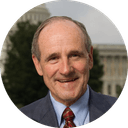
James Risch
Republican · ID
Bill Progress
Latest Action · Feb 10, 2026
Placed on Senate floor schedule under General Orders. Calendar No. 326.
Why it matters
Lawmakers are trying to choke off a major sanctions loophole that helps Russia keep selling oil and funding its war despite Western restrictions.
S. 2904 is a Senate bill designed to make it harder for Russia to use aging, opaque, and often poorly insured tankers to keep exporting oil. Those ships, often called the Russian “shadow fleet,” are widely viewed as a workaround to Western sanctions and the G7-led price cap. In plain terms, the bill tries to raise the cost of helping Russia ship oil by threatening sanctions on vessels, operators, service providers, and foreign ports tied to that trade.
The text provided shows the bill was significantly narrowed in committee. Large parts of the original version were struck out, including broader sections on Russian energy projects, the defense industrial base, military cooperation, Ukraine assistance, and emergency funding. What remains clear from the title and surviving table-of-contents language is the bill’s central focus: sanctions tied to shadow-fleet shipping, support networks for illicit maritime trade, and coordination with allies such as the European Union and United Kingdom.
The bill matters because sanctions only work if countries can enforce them. Russia has relied on shell companies, frequent ship renaming, murky ownership structures, weak oversight by some flag states, and questionable insurance arrangements to keep oil flowing. By targeting not just the ships but also the businesses and ports that enable them, the measure aims to plug holes in the current sanctions system and pressure third-country actors to think twice before participating.
Still, enforcement will be the real test. Maritime trade is complex, ownership can be hidden behind layers of companies, and some countries may resist U.S. pressure if they benefit from discounted Russian oil. The bill’s success would depend on strong Treasury and State Department follow-through, reliable intelligence sharing with allies, and a willingness to sanction foreign firms and facilities even when diplomacy gets uncomfortable.
What does S. 2904 do?
Sanctions on shadow fleet vessels
The bill targets ships suspected of helping Russia move oil or other goods through sanctions evasion networks.
Penalties for foreign support companies
It would sanction foreign people or companies that help illicit Russian shipping, including those connected to vessels already under U.S. sanctions.
Pressure on ports taking risky cargo
The bill goes after port terminals that accept oil delivered by Russian shadow-fleet vessels, expanding the pressure beyond the ships themselves.
Closer coordination with allies
It seeks to align U.S. designation powers with actions taken by the European Union and United Kingdom so sanctioned ships and operators have fewer safe places to operate.
Tracking vessels involved in illicit activity
The legislation calls for information-sharing and vessel databases related to sabotage and other suspicious maritime behavior, making it easier to identify repeat offenders.
Standards for ship registries and oversight
It pushes for minimum standards for countries that register ships under their flags, with a focus on stopping weak oversight that can enable sanctions evasion.
Who benefits from S. 2904?
Ukraine and its backers
They could benefit if Russia earns less oil revenue to finance its war and military operations.
U.S. and allied sanctions enforcers
The bill gives them clearer tools to target the shipping networks that help Russia dodge existing restrictions.
Responsible shipping and insurance firms
Companies that follow sanctions rules may face less unfair competition from operators using hidden ownership, weak insurance, or deceptive shipping practices.
Coastal states worried about unsafe tankers
Reducing use of old, poorly insured shadow-fleet vessels could lower the risk of accidents, spills, and other maritime hazards.
Who is affected by S. 2904?
Russian oil shipping networks
Ship owners, managers, brokers, and related middlemen involved in sanctions evasion would face greater legal and financial risk.
Foreign ports and terminals handling Russian oil
Facilities that continue taking cargo from shadow-fleet vessels could be cut off from U.S. markets or face sanctions exposure.
Flag-of-convenience registries with weak oversight
Countries or registries that let suspect vessels operate with little scrutiny may face pressure to tighten standards.
Countries buying discounted Russian oil through opaque channels
Importers relying on these shipping networks may see higher costs, more scrutiny, and reduced access to transport services.
S. 2904 Common Questions
How much money would the SHADOW Fleet Sanctions Act give to OFAC and the Office of Sanctions Coordination?
The SHADOW Fleet Sanctions Act would authorize $15 million for OFAC and $15 million for the Office of Sanctions Coordination in each of FY2026 and FY2027 (Section 202).
Can ports in China or India be sanctioned for taking Russian oil under S. 2904?
Yes. Under the SHADOW Fleet Sanctions Act, the President may sanction owners or operators of ports in China or India that accept oil from vessels violating the price cap or already under U.S. sanctions (Section 113).
How soon would sanctions on China or India port terminals take effect under the SHADOW Fleet Sanctions Act?
Port terminal sanctions could take effect 15 days after enactment under the SHADOW Fleet Sanctions Act (Section 113).
Can ship-to-ship transfers of Russian oil trigger sanctions under S. 2904?
Yes. According to S. 2904 Section 112, foreign persons can be sanctioned for engaging in ship-to-ship transfers tied to illicit Russian shipping.
What counts as a Russian shadow fleet vessel under the SHADOW Fleet Sanctions Act?
Under the SHADOW Fleet Sanctions Act, it means a foreign vessel used by or for Russia to transport Russian-origin petroleum products while circumventing U.S., UK, EU, or other international sanctions (Section 101).
How many warning signs can make a tanker prima facie evidence of sanctions evasion under S. 2904?
Three or more indicators can qualify, such as AIS deactivation, refusing a pilot, frequent flag changes, being uninsured, military escort, or sabotage-related behavior under S. 2904 Section 111.
Does the SHADOW Fleet Sanctions Act define beneficial owner as 25 percent ownership?
Yes. Under the SHADOW Fleet Sanctions Act, a beneficial owner includes someone who exercises substantial control or owns at least 25% of a vessel (Section 101).
Can Russian insurers count as adequate maritime insurance under S. 2904?
Not if they are organized under Russian law and continue covering sanctioned vessels without a waiver. S. 2904 Section 101 excludes those insurers from the bill's definition of adequate maritime insurance.
Which countries are in the price cap coalition under the SHADOW Fleet Sanctions Act?
The bill lists Australia, New Zealand, Canada, the EU, France, Germany, Italy, Japan, the UK, and the U.S. as the price cap coalition (Section 101).
How long do the sanctions authorities in the SHADOW Fleet Sanctions Act last?
According to S. 2904 Section 194, the sanctions authorities under Subtitles A, B, and C terminate 10 years after enactment.
Based on S. 2904 bill text
S2904 Legislative Journey
Committee Action
Feb 10, 2026
Committee on Foreign Relations. Reported by Senator Risch with an amendment in the nature of a substitute. Without written report.
Passed Committee
Jan 29, 2026
Committee on Foreign Relations. Ordered to be reported with an amendment in the nature of a substitute favorably.
Committee Action
Sep 18, 2025
Read twice and referred to the Committee on Foreign Relations.
About the Sponsor
James Risch
Republican, ID · 17 years in Congress
Committees: Foreign Relations, Small Business and Entrepreneurship, Senate Select Committee on Ethics
View full profile →
Cosponsors (13)
This bill has 13 cosponsors: 7 Democrats, 6 Republicans, reflecting bipartisan support. Cosponsors represent 13 states: Arkansas, Arizona, Connecticut, and 10 more.

Jeanne Shaheen
Democrat · NH

Tom Cotton
Republican · AR

Sheldon Whitehouse
Democrat · RI

Pete Ricketts
Republican · NE

Richard Blumenthal
Democrat · CT

Christopher Coons
Democrat · DE

Lindsey Graham
Republican · SC

Timothy Kaine
Democrat · VA

Roger Wicker
Republican · MS

John Curtis
Republican · UT

Tammy Duckworth
Democrat · IL

John Cornyn
Republican · TX
Committee Sponsors
Foreign Relations Committee
7 of 22 committee members cosponsored


9 Republicans across this committee haven't cosponsored yet. Mobilize their constituents
S. 2904 Quick Facts


- Committee
- Foreign Relations
- Chamber
- Senate
- Policy
- International Affairs
- Introduced
- Sep 18, 2025
Placed on Senate floor schedule under General Orders. Calendar No. 326.
Feb 10, 2026
Constituent Resources
Who is lobbying on S. 2904?
3 organizations lobbying on this bill
FDD ACTION | 4 |
RAZOM, INC. | 2 |
INTERNATIONAL SEAWAYS, INC. | 2 |
Showing 1-3 of 3 organizations
S. 2904 Bill Text
“To impose sanctions with respect to the shadow fleet of the Russian Federation, and for other purposes.”
Source: U.S. Government Publishing Office
Get notified when S. 2904 moves
Committee votes, floor action, cosponsor changes — straight to your inbox.
Bill alerts + Legisletter's monthly briefing. Unsubscribe anytime.
International Affairs Bills
8 related bills we're tracking
Enhanced Iran Sanctions Act of 2025


Motion to place bill on Consensus Calendar filed by Mr. Lawler.
Jan 12, 2026
United States-Israel Defense Partnership Act of 2025


Referred to the Committee on Armed Services, and in addition to the Committee on Foreign Affairs, for a period to be subsequently determined by the Speaker, in each case for consideration of such provisions as fall within the jurisdiction of the committee concerned.
Feb 12, 2025
Global Respect Act


Referred to the Committee on Foreign Affairs, and in addition to the Committee on the Judiciary, for a period to be subsequently determined by the Speaker, in each case for consideration of such provisions as fall within the jurisdiction of the committee concerned.
Nov 19, 2025
United States-Israel FUTURES Act of 2026


Referred to the Committee on Armed Services, and in addition to the Committee on Foreign Affairs, for a period to be subsequently determined by the Speaker, in each case for consideration of such provisions as fall within the jurisdiction of the committee concerned.
Feb 12, 2026
Food for Palestinian Children and Families in Gaza Act of 2026


Referred to the House Committee on Foreign Affairs.
Feb 12, 2026
No New Burma Funds Act


Received in the Senate and Read twice and referred to the Committee on Foreign Relations.
Dec 2, 2025
ARMS Act


Referred to the House Committee on Foreign Affairs.
Jul 17, 2025
No Escaping Justice Act of 2026

Referred to the Committee on Foreign Affairs, and in addition to the Committee on the Judiciary, for a period to be subsequently determined by the Speaker, in each case for consideration of such provisions as fall within the jurisdiction of the committee concerned.
Mar 5, 2026
Trending Right Now
Bills gaining momentum across Congress
Fair Housing for Survivors Act of 2026


Referred to the House Committee on the Judiciary.
Mar 5, 2026
Stop Militarizing Our Streets Act of 2026


Referred to the Committee on Armed Services, and in addition to the Committee on the Judiciary, for a period to be subsequently determined by the Speaker, in each case for consideration of such provisions as fall within the jurisdiction of the committee concerned.
Mar 5, 2026
MVP Act


Referred to the Committee on Energy and Commerce, and in addition to the Committee on Ways and Means, for a period to be subsequently determined by the Speaker, in each case for consideration of such provisions as fall within the jurisdiction of the committee concerned.
Mar 9, 2026
Tracking International Affairs in Congress? Monitor bills, track cosponsor momentum, and launch advocacy campaigns — all from one advocacy platform.