H.R. 6091: Bivens Act of 2025
Sponsor

Henry Johnson
Democrat · GA-4
Bill would let you sue federal agents for civil rights violations
Why it matters
Five words. That's all H.R. 6091 would add to a Reconstruction-era civil rights statute — "of the United States or" — to give people a clear statutory path to sue federal officials for violating their constitutional rights. Right now, suing a local cop under 42 U.S.C. 1983 is a well-established route; suing an FBI or ICE agent for the same conduct runs through a narrowing court-made doctrine called Bivens.
H.R. 6091, the Bivens Act of 2025, is one of the shortest bills in Congress this session. Its operative section is a single sentence: amend 42 U.S.C. 1983, the federal civil rights lawsuit statute on the books since 1871, by inserting "of the United States or" before the existing words "of any State." That's it.
Today, 42 U.S.C. 1983 lets people sue anyone acting under state or local authority who violates their constitutional rights. It does not cover federal officials. To sue a federal agent for a constitutional violation, you have to rely on a 1971 Supreme Court decision called Bivens v. Six Unknown Named Agents, which created a similar judge-made remedy. The Supreme Court has narrowed Bivens repeatedly over the past two decades — lower courts now routinely turn away claims unless they fit a few very specific factual scenarios.
The Bivens Act of 2025 takes the simplest possible route around that narrowing: write federal coverage directly into the statute. If enacted, an injured person suing an FBI agent, an ICE officer, a Border Patrol agent, or any other person acting under federal authority would have the same statutory hook that currently exists for suits against local police and state officials.
The bill is also notable for what it does not touch. It does not change qualified immunity, which limits damages even in successful civil rights cases. It does not create new categories of constitutional violations. It does not appropriate any money or set up a new agency program. The single operative change is who can be a defendant under the existing civil rights lawsuit statute.
Bill Progress
Latest Action · Nov 18, 2025
Referred to the House Committee on the Judiciary.
H.R. 6091 Bill Summary
What H.R. 6091 actually does.
Federal officials covered by civil rights lawsuit statute
H.R. 6091 inserts "of the United States or" before "of any State" in 42 U.S.C. 1983. The effect is that anyone acting under federal authority — not just state authority — would be a possible defendant under the civil rights lawsuit statute.
Same legal framework for federal and state misconduct
The bill puts federal officers on the same statutory civil rights footing as state and local officers. Plaintiffs would not have to argue separate doctrines for federal versus state defendants in the same lawsuit.
Bypasses the Bivens narrowing trend
By writing federal coverage directly into 42 U.S.C. 1983, Congress would supersede the case-by-case Bivens analysis that has limited federal-officer suits in recent decades. Plaintiffs would have a clear statutory hook rather than a contested judge-made one.
Five-word amendment, nothing else
The bill's operative section is one sentence. It does not change qualified immunity, the Federal Tort Claims Act, damages caps, attorney's fee rules, or any other element of civil rights litigation.
Who benefits from H.R. 6091?
People harmed by federal law enforcement
Anyone with a constitutional claim against an FBI agent, ICE officer, Border Patrol agent, federal marshal, ATF agent, DEA agent, or other person acting under federal authority. Today, those plaintiffs face a narrower path through the judge-made Bivens doctrine, which the Supreme Court has narrowed in recent decades.
Civil rights attorneys handling federal-actor cases
Lawyers gain a clear statutory cause of action instead of having to argue from a 1971 Supreme Court precedent that lower courts increasingly read against plaintiffs. The bill would reduce the threshold legal fight before any case can reach the merits.
Plaintiffs in mixed federal-state cases
In lawsuits involving joint federal-state task forces or interagency operations — common in drug, immigration, and counterterrorism enforcement — plaintiffs would no longer face different legal rules for different defendants in the same case.
Who is affected by H.R. 6091?
Federal law enforcement agencies
FBI, ICE, Border Patrol, ATF, DEA, U.S. Marshals, and other federal agencies whose officers could face the same civil rights lawsuits that state and local departments already do.
Federal courts
Judges would interpret the expanded statutory text and decide how it interacts with existing immunities like qualified immunity and the Federal Tort Claims Act.
The Justice Department
DOJ defends federal officers in civil suits. Expanded statutory coverage would mean more potential cases to defend and more federal officials subject to civil discovery.
HR6091 Legislative Journey
House: Committee Action
Nov 18, 2025
Referred to the House Committee on the Judiciary.
About the Sponsor
Henry Johnson
Democrat, Georgia's 4th congressional district · 19 years in Congress
Committees: Transportation and Infrastructure, the Judiciary
View full profile →
Cosponsors (30)
All 30 cosponsors are Democrats. Cosponsors represent 16 states: California, Connecticut, District of Columbia, and 13 more.
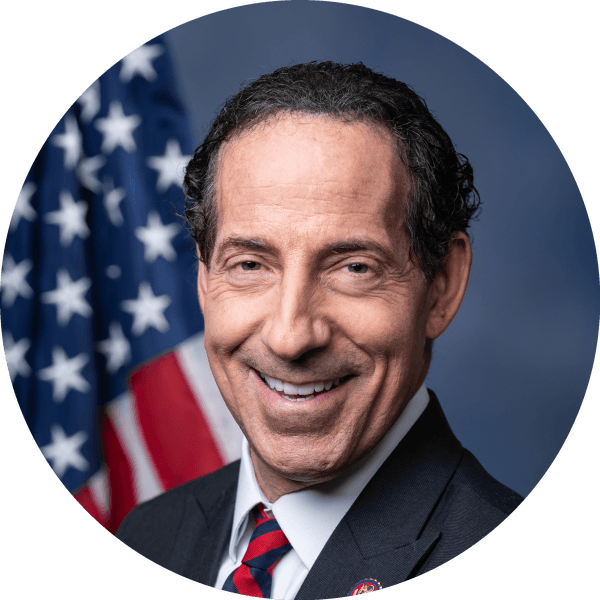
Jamie Raskin
Democrat · MD

Sanford Bishop
Democrat · GA

Suzanne Bonamici
Democrat · OR

Steve Cohen
Democrat · TN

Maxine Dexter
Democrat · OR

Jared Huffman
Democrat · CA

Sydney Kamlager-Dove
Democrat · CA

Raja Krishnamoorthi
Democrat · IL

Summer Lee
Democrat · PA

Dave Min
Democrat · CA

Eleanor Norton
Democrat · DC

Delia Ramirez
Democrat · IL
Committee Sponsors
Judiciary Committee
9 of 44 committee members cosponsored


10 Democrats across this committee haven't cosponsored yet. Mobilize their constituents
What laws does H.R. 6091 change?
1 changes
Sections Amended
Section 1979 of Revised Statutes (42 U.S.C. 1983)
inserting ``of the United States or'' before ``of any State''
H.R. 6091 Quick Facts
- Committee
- Judiciary
- Chamber
- House
- Policy
- Civil Rights and Liberties, Minority Issues
- Introduced
- Nov 18, 2025
Referred to the House Committee on the Judiciary.
Nov 18, 2025
Official Sources
Official Congress.gov page for the Bivens Act of 2025, with status, text, sponsors, and actions.
Official U.S. Code text of Section 1983, the Reconstruction-era civil rights statute H.R. 6091 would amend with its five-word edit.
Government Publishing Office's authoritative HTML version of 42 U.S.C. 1983, with amendment history showing the 1871 origin and 1979/1996 changes.
Full chapter housing Section 1983 alongside the rest of the federal civil rights statutes — useful context for where the Bivens Act would land.
Official federal court form for civil rights complaints — it currently distinguishes between Section 1983 suits against state actors and Bivens suits against federal officers, the exact gap H.R. 6091 would close.
Federal Judiciary's overview of civil rights litigation in federal court, covering both Section 1983 and Bivens-type claims.
Plain-language guide to how federal civil litigation works — the procedural backdrop for any Section 1983 or Bivens lawsuit.
H.R. 6091 Common Questions
Can I sue a federal officer for violating my rights under H.R. 6091?
If the bill passes, yes. H.R. 6091 would amend 42 U.S.C. 1983 to cover anyone acting under federal authority — the same civil rights lawsuit framework that already applies to state and local officials.
What's the difference between a 42 U.S.C. 1983 suit and a Bivens claim?
42 U.S.C. 1983 is a federal statute Congress passed in 1871 letting people sue state and local officials for constitutional violations. Bivens is a 1971 Supreme Court decision that created a similar judge-made remedy against federal officials — but the Court has narrowed Bivens significantly. H.R. 6091 would write federal coverage directly into the existing statute.
Does H.R. 6091 end qualified immunity for federal officers?
No. Qualified immunity is a separate court-made doctrine that protects officials from damages unless they violated "clearly established" law. H.R. 6091 only changes who can be sued under 42 U.S.C. 1983; it does not address the immunity defenses available in those suits.
Which federal officers would be covered by H.R. 6091?
Anyone acting under federal authority. That includes FBI agents, ICE officers, Border Patrol agents, ATF, DEA, U.S. Marshals, and other federal personnel — plus private actors operating under federal authority, like contracted detention staff.
Can I already sue federal officers for constitutional violations?
Sometimes. Under the Bivens doctrine, courts allow suits against federal officers in narrow circumstances — most reliably for excessive force during an unconstitutional home search. Outside those narrow categories, lower courts have increasingly refused to extend Bivens. H.R. 6091 would replace that case-by-case battle with a clear statutory path.
Why is the Bivens Act of 2025 only five words long?
The bill is structured as a surgical edit. Instead of writing a new statute, it inserts "of the United States or" before "of any State" in the existing civil rights lawsuit law — the smallest possible textual change to achieve the broadest possible reach.
What are H.R. 6091's chances of passing?
Difficult in the current Congress. The bill has 30 cosponsors, all Democrats, and sits in House Judiciary with no Republican support. It would need significant GOP buy-in to advance. There is no Senate companion bill listed.
Based on H.R. 6091 bill text
H.R. 6091 Bill Text
“To provide a civil remedy for an individual whose rights have been violated by a person acting under Federal authority, and for other purposes.”
Source: U.S. Government Publishing Office
Get notified when H.R. 6091 moves
Committee votes, floor action, cosponsor changes — straight to your inbox.
Bill alerts + Legisletter's monthly briefing. Unsubscribe anytime.
Civil Rights and Liberties, Minority Issues Bills
8 related bills we're tracking
Equality Act




Referred to the Committee on the Judiciary, and in addition to the Committees on Education and Workforce, Financial Services, House Administration, and Oversight and Government Reform, for a period to be subsequently determined by the Speaker, in each case for consideration of such provisions as fall within the jurisdiction of the committee concerned.
Apr 29, 2025
Congressional Tribute to Constance Baker Motley Act of 2025




Referred to the House Committee on Financial Services.
Sep 11, 2025
Ensuring Women’s Right to Reproductive Freedom Act


Referred to the House Committee on Energy and Commerce.
Jun 24, 2025
Do No Harm Act



Referred to the House Committee on the Judiciary.
Mar 6, 2025
To award a Congressional Gold Medal to the Freedom Riders, collectively, in recognition of their unique contribution to Civil Rights, which inspired a revolutionary movement for equality in interstate travel.



Referred to the Committee on Financial Services, and in addition to the Committee on House Administration, for a period to be subsequently determined by the Speaker, in each case for consideration of such provisions as fall within the jurisdiction of the committee concerned.
Feb 4, 2025
Commission to Study and Develop Reparation Proposals for African Americans Act



Referred to the House Committee on the Judiciary.
Jan 3, 2025
Life at Conception Act




Referred to the House Committee on the Judiciary.
Jan 24, 2025
Dismantle DEI Act of 2025





Referred to the Committee on Oversight and Government Reform, and in addition to the Committees on the Judiciary, Education and Workforce, Armed Services, Foreign Affairs, Financial Services, Energy and Commerce, Transportation and Infrastructure, and Intelligence (Permanent Select), for a period to be subsequently determined by the Speaker, in each case for consideration of such provisions as fall within the jurisdiction of the committee concerned.
Feb 4, 2025
Trending Right Now
Bills gaining momentum across Congress
America’s Olympic and Paralympic Games Commemorative Coins Act




Referred to the House Committee on Financial Services.
Jul 14, 2025
Fit to Serve Act




Referred to the House Committee on Armed Services.
May 21, 2025
ASAP Act





Ordered to be Reported in the Nature of a Substitute by the Yeas and Nays: 40 - 0.
Sep 16, 2026
Tracking Civil Rights and Liberties, Minority Issues in Congress? Monitor bills, track cosponsor momentum, and launch advocacy campaigns — all from one advocacy platform.