H.R. 3950: Truth in Gender Act of 2025
Sponsor

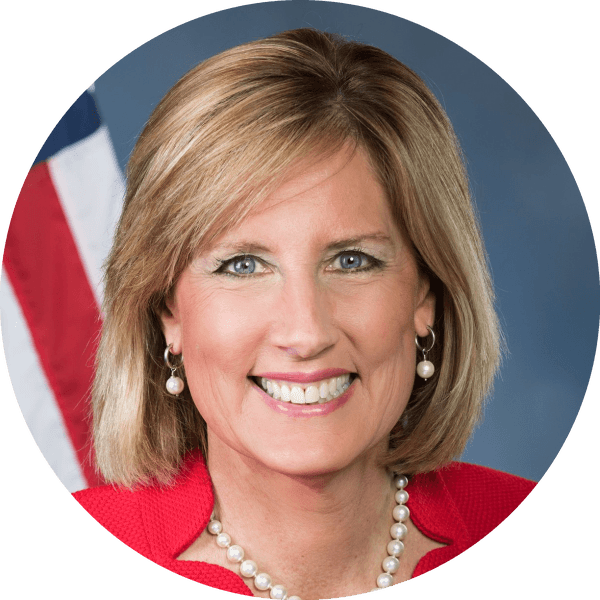
Earl Carter
Republican · GA-1
Your federal ID would follow birth sex, not gender identity
Why it matters
One bill would touch nearly every corner of the federal government at once. It sets a single definition of sex, gives HHS just 30 days to push it out to every agency, and gives agencies 120 days to report back on the changes. The reach runs from your passport and Global Entry card to prison housing, federal housing programs, and workplace discrimination cases.
H.R. 3950, the Truth in Gender Act of 2025, starts by writing one definition into federal policy: "sex" means a person's "immutable biological classification as either male or female," and does not include gender identity. The bill defines "female" as a person who at conception belongs to the sex that produces the large reproductive cell, and "male" as the sex that produces the small reproductive cell. Congress's findings in the bill describe gender identity as a subjective, internal sense of self that, in the bill's words, cannot replace biological sex.
From there, the bill turns definitions into marching orders. Within 30 days, the Secretary of Health and Human Services has to issue government-wide guidance. Every agency would then have to use these definitions in its rules, forms, and official business, use the word "sex" instead of "gender," and limit forms to "male" or "female" without asking for gender identity. The State Department, Homeland Security, and the Office of Personnel Management would have to make passports, visas, Global Entry cards, and federal personnel records reflect sex as the bill defines it.
The bill also rewrites rules for prisons, housing, and the workplace. It directs the Attorney General and Homeland Security to keep males out of women's prisons and detention centers, and bars federal money from paying for any inmate procedure, treatment, or drug meant to make an inmate appear as the opposite sex. It orders HUD to start unwinding its 2016 rule on housing access by gender identity. And it tells the Attorney General to issue guidance the bill says would correct how courts and agencies have applied the Supreme Court's Bostock ruling to sex-based distinctions, while directing the Justice Department, Labor Department, and EEOC to prioritize cases protecting single-sex spaces.
Two provisions sit in tension at the end. The bill says its requirements override conflicting provisions in any other law. But it also says it creates no right or benefit that anyone can enforce in court against the United States or its agencies.
Bill Progress
Latest Action · Jun 13, 2025
Assigned to Subcommittee on Transportation and Maritime Security. for review
H.R. 3950 Bill Summary
What H.R. 3950 actually does.
One definition of sex across the whole government
The bill defines "sex" as a person's immutable biological classification as male or female, set at conception, and states it does not include gender identity. Every federal agency would have to apply this definition when interpreting laws, writing rules, and conducting official business.
Federal forms limited to male or female
Agencies would have to require people to list their sex as "male" or "female" on forms and would be barred from asking for gender identity. Agencies would also have to use the term "sex" rather than "gender" in federal policies and documents.
Passports, visas, and personnel records reset
The State Department, Homeland Security, and the Office of Personnel Management would each have to make government-issued IDs — including passports, visas, and Global Entry cards — and federal personnel records reflect sex as the bill defines it.
Prison placement and inmate care
The Attorney General and Homeland Security would have to ensure males are not held in women's prisons or detention centers, including by amending the relevant federal regulation. The bill also bars federal funds for any inmate procedure, treatment, or drug meant to make an inmate appear as the opposite sex.
HUD's 2016 housing rule unwound
HUD would have to start notice-and-comment rulemaking to rescind its 2016 rule on equal access by gender identity, and submit a policy on single-sex rape shelters. Agencies would also have to designate intimate spaces by sex rather than identity.
30-day rollout, 120-day reports, and a funding ban
HHS guidance is due within 30 days, and each agency must report its changes to the President through OMB within 120 days. The bill also says no federal funds may be used to promote what it defines as "gender ideology," and orders agencies to rescind inconsistent guidance.
Who benefits from H.R. 3950?
People who want single-sex facilities defined by biological sex
The bill would give federal backing to sex-segregated spaces by requiring intimate spaces for women, girls, or females — and for men, boys, or males — to be designated by sex rather than identity, and by directing that males not be held in women's prisons or detention centers.
Employers and workers who favor binary-sex workplace rules
The Justice Department would issue guidance protecting expression of what the bill calls the binary nature of sex and the right to single-sex spaces in workplaces covered by federal civil rights law, with the DOJ, Labor Department, and EEOC told to prioritize those cases.
Agencies looking for one uniform standard
Instead of a patchwork of sex and gender-identity policies, agencies would get a single definition from HHS within 30 days to apply across rules, forms, IDs, and personnel records.
People who oppose federal funding of transition-related prison care
The bill flatly bars federal funds for any inmate procedure, treatment, or drug intended to make an inmate appear as the opposite sex.
Who is affected by H.R. 3950?
Transgender people interacting with the federal government
Federal forms could only ask for "male" or "female," agencies could not request gender identity, and IDs like passports, visas, and Global Entry cards would have to reflect sex as the bill defines it rather than gender identity.
Federal agencies and executive departments
Agencies would have to overhaul forms, rules, records, and guidance on a tight timeline — HHS guidance within 30 days, and implementation reports to the President through OMB within 120 days.
People in federal prisons and immigration detention
Placement rules would change because the Attorney General and Homeland Security must keep males out of women's prisons and detention centers, and federal funds could no longer cover treatments or drugs meant to conform an inmate's appearance to the opposite sex.
Housing providers and HUD grantees
HUD-tied programs would be affected because the bill orders HUD to begin rescinding its 2016 equal-access rule and to designate intimate spaces by sex rather than identity.
HR3950 Legislative Journey
House: Committee Action
Jun 13, 2025
Referred to the Subcommittee on Transportation and Maritime Security.
House: Committee Action
Jun 12, 2025
Referred to the Committee on the Judiciary, and in addition to the Committees on Oversight and Government Reform, Foreign Affairs, Financial Services, Education and Workforce, Homeland Security, and Ways and Means, for a period to be subsequently determined by the Speaker, in each case for consideration of such provisions as fall within the jurisdiction of the committee concerned.
About the Sponsor
Earl Carter
Republican, Georgia's 1st congressional district · 11 years in Congress
Committees: Energy and Commerce, the Budget
View full profile →
Cosponsors (1)
This bill has 1 cosponsor: 1 Republican. Cosponsors represent 1 state: Alabama.
Committee Sponsors
Homeland Security Committee
0 of 33 committee members cosponsored
No committee members have cosponsored this bill
Ways and Means Committee
0 of 45 committee members cosponsored
No committee members have cosponsored this bill
Education and Workforce Committee
0 of 37 committee members cosponsored
No committee members have cosponsored this bill
Financial Services Committee
0 of 53 committee members cosponsored
No committee members have cosponsored this bill
Foreign Affairs Committee
0 of 53 committee members cosponsored
No committee members have cosponsored this bill
Oversight and Government Reform Committee
0 of 47 committee members cosponsored
No committee members have cosponsored this bill

133 Republicans across these committees haven't cosponsored yet. Mobilize their constituents
H.R. 3950 Quick Facts

- Committee
- Homeland Security
- Chamber
- House
- Policy
- Civil Rights and Liberties, Minority Issues
- Introduced
- Jun 12, 2025
Assigned to Subcommittee on Transportation and Maritime Security. for review
Jun 13, 2025
Official Sources
Official Congress.gov page for the Truth in Gender Act of 2025, with bill text, status, and actions.
HHS is directed to issue government-wide guidance under the bill, and its civil rights office is a likely hub for sex-based policy guidance.
The bill would require passport sex markers to reflect the bill's definitions, making the State Department's passport forms page directly relevant.
The bill specifically mentions Global Entry cards, which are administered by Customs and Border Protection.
OPM would be required to update federal personnel records so they reflect sex as defined by the bill.
The bill expressly directs amendment of 28 C.F.R. 115.41 concerning screening for risk in confinement settings.
This is the official publication of the 2016 HUD rule that the bill orders rescinded.
The bill orders DOJ to issue guidance addressing how Bostock v. Clayton County is applied to sex-based distinctions.
The bill requires the Bureau of Prisons to revise medical-care-related policies for inmates to conform with the Act.
H.R. 3950 Common Questions
What would H.R. 3950 actually change?
It writes one definition of sex — biological male or female, set at conception — into federal policy, then orders every agency to use it on forms, IDs, and rules, and bars forms from asking about gender identity.
How fast would these changes take effect?
Fast. HHS would have 30 days after enactment to issue government-wide guidance, and each agency would have 120 days to report its changes to the President through OMB.
Would H.R. 3950 change the sex marker on my passport?
Yes. Passports, visas, Global Entry cards, and federal personnel records would all have to reflect sex as the bill defines it — biological male or female — rather than gender identity.
Could transgender inmates still get transition-related care under H.R. 3950?
Not with federal money. The bill bars federal funds for any inmate procedure, treatment, or drug meant to make an inmate appear as the opposite sex, and directs the Bureau of Prisons to revise its medical policies.
Does H.R. 3950 change who is held in women's prisons?
Yes. The Attorney General and Homeland Security would have to ensure males are not held in women's prisons or detention centers, including by amending the federal screening regulation.
What happens to HUD's 2016 gender identity housing rule?
HUD would have to start the rulemaking process to rescind its 2016 equal-access rule and submit a policy protecting single-sex rape shelters.
What does H.R. 3950 do on workplace rules?
It directs the Justice Department to issue guidance protecting expression of what the bill calls the binary nature of sex and access to single-sex workplace spaces, and tells DOJ, Labor, and the EEOC to prioritize those cases.
Could I sue the government under H.R. 3950?
No. The bill says it creates no right or benefit anyone can enforce in court against the United States or its agencies — even as it says its requirements override conflicting laws.
Based on H.R. 3950 bill text
H.R. 3950 Bill Text
“To defend women’s rights and protect freedom of conscience by using clear and accurate language and policies recognizing that women are biologically female and men are biologically male, and for other purposes.”
Source: U.S. Government Publishing Office
Get notified when H.R. 3950 moves
Committee votes, floor action, cosponsor changes — straight to your inbox.
Bill alerts + Legisletter's monthly briefing. Unsubscribe anytime.
Civil Rights and Liberties, Minority Issues Bills
8 related bills we're tracking
Equality Act




Referred to the Committee on the Judiciary, and in addition to the Committees on Education and Workforce, Financial Services, House Administration, and Oversight and Government Reform, for a period to be subsequently determined by the Speaker, in each case for consideration of such provisions as fall within the jurisdiction of the committee concerned.
Apr 29, 2025
Congressional Tribute to Constance Baker Motley Act of 2025



Referred to the House Committee on Financial Services.
Sep 11, 2025
Ensuring Women’s Right to Reproductive Freedom Act


Referred to the House Committee on Energy and Commerce.
Jun 24, 2025
Do No Harm Act




Referred to the House Committee on the Judiciary.
Mar 6, 2025
To award a Congressional Gold Medal to the Freedom Riders, collectively, in recognition of their unique contribution to Civil Rights, which inspired a revolutionary movement for equality in interstate travel.



Referred to the Committee on Financial Services, and in addition to the Committee on House Administration, for a period to be subsequently determined by the Speaker, in each case for consideration of such provisions as fall within the jurisdiction of the committee concerned.
Feb 4, 2025
Commission to Study and Develop Reparation Proposals for African Americans Act



Referred to the House Committee on the Judiciary.
Jan 3, 2025
Life at Conception Act





Referred to the House Committee on the Judiciary.
Jan 24, 2025
Dismantle DEI Act of 2025




Referred to the Committee on Oversight and Government Reform, and in addition to the Committees on the Judiciary, Education and Workforce, Armed Services, Foreign Affairs, Financial Services, Energy and Commerce, Transportation and Infrastructure, and Intelligence (Permanent Select), for a period to be subsequently determined by the Speaker, in each case for consideration of such provisions as fall within the jurisdiction of the committee concerned.
Feb 4, 2025
Trending Right Now
Bills gaining momentum across Congress
America’s Olympic and Paralympic Games Commemorative Coins Act





Referred to the House Committee on Financial Services.
Jul 14, 2025
Fit to Serve Act




Referred to the House Committee on Armed Services.
May 21, 2025
ASAP Act




Ordered to be Reported in the Nature of a Substitute by the Yeas and Nays: 40 - 0.
Sep 16, 2026
Tracking Civil Rights and Liberties, Minority Issues in Congress? Monitor bills, track cosponsor momentum, and launch advocacy campaigns — all from one advocacy platform.