H.R. 1533: PIIA Reform Act
Sponsor
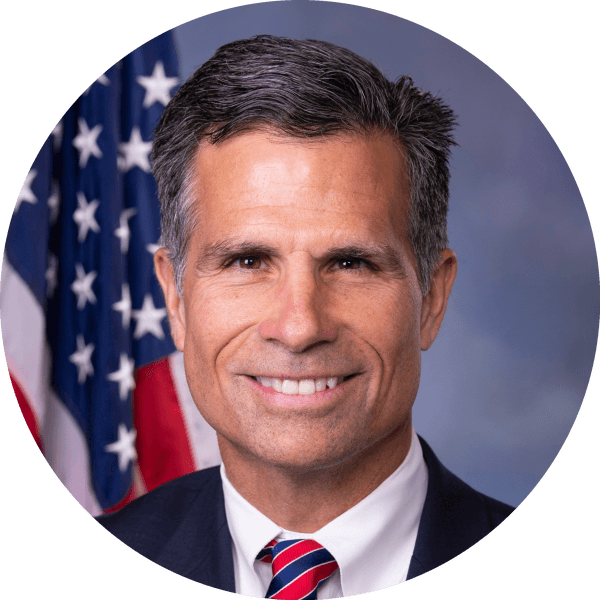
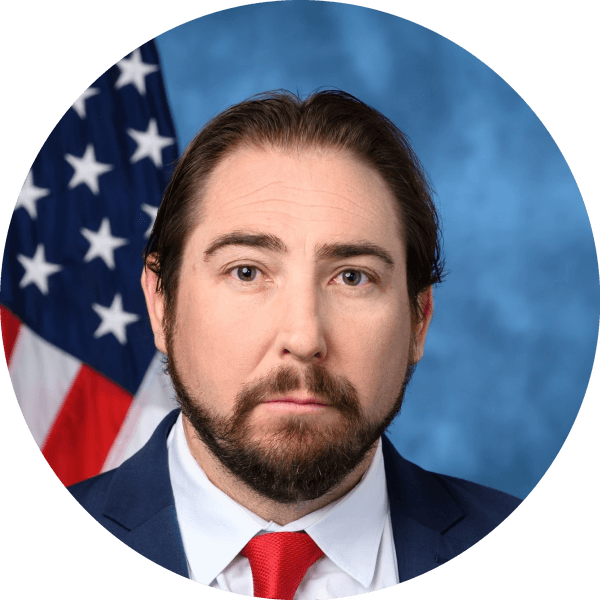
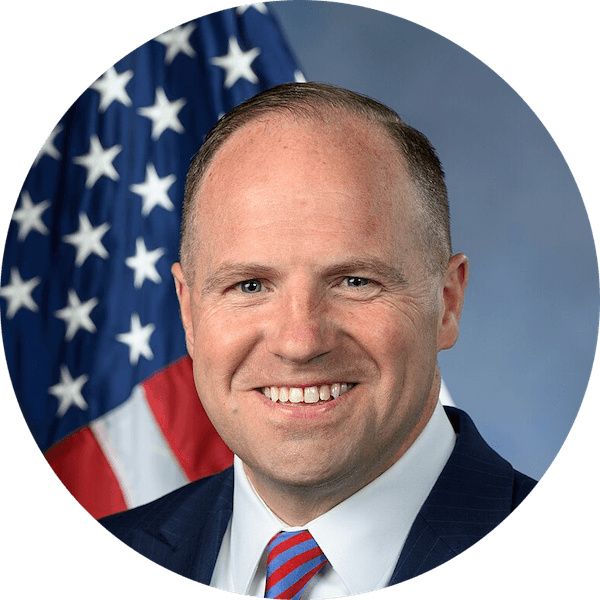
Daniel Meuser
Republican · PA-9
Misspend federal money, lose up to 10% of your budget
Why it matters
H.R. 1533 would hit agencies that keep sending payments to the wrong people with automatic budget cuts — 5% of their top administrative account after one year of noncompliance, 10% after two. It also creates a new "Overpayment Czar" inside the White House budget office and tells states that they have to repay the Treasury for every dollar of overpayment if they skip the fraud-screening tools they'd be required to use.
H.R. 1533, the PIIA Reform Act, would create a new federal official the bill calls the Director of Improper Payment Mitigation — nicknamed the "Overpayment Czar" — inside the Office of Federal Financial Management. The Czar would be appointed and removable by the head of the Office of Management and Budget, help agencies spot and prevent improper payments and fraud, and send the Controller an annual report proposing fixes.
The bill widens the net for which programs get extra scrutiny. Any new federal program that pays out more than $100 million in its first year, or is expected to top $100 million in any of its first three years while still in its first four years of operation, would automatically count as "susceptible to significant improper payments." Programs with unresolved Inspector General recommendations get swept in too. An agency head can still exempt a program, but only after a review concludes it isn't actually at risk.
The enforcement is the sharp end. An agency that stays noncompliant for one year would see its highest-level administrative account cut by 5% in that year's final sequestration report; two or more years pushes the cut to 10%. Agencies would also file annual reports for ten straight years on their internal controls, fraud-risk practices, and progress on the 11 leading practices from a 2015 GAO fraud-risk framework.
States get new obligations as well. Starting one year after the bill becomes law, states running TANF, Medicaid, SNAP, Federal-State unemployment compensation, and WIC would have to use payment-integrity tools published by OMB and report every September 30 on how those tools performed. A state that skips the required tools would owe the Treasury an amount equal to the total overpayment in that program. The bill also makes the federal "Do Not Pay" system permanent — removing its three-year sunset — and expands it from screening for payments to deceased individuals to all of the system's authorized uses.
Bill Progress
Latest Action · Feb 24, 2025
Referred to Oversight and Government Reform, and in addition to the Committee on Ways and Means, for a period to be subsequently determined by the Speaker, in each case for consideration of such provisions as fall within the jurisdiction of the committee concerned. for review
H.R. 1533 Bill Summary
What H.R. 1533 actually does.
A new "Overpayment Czar" runs point on waste
The bill creates a Director of Improper Payment Mitigation inside the Office of Federal Financial Management. The official works under the Controller, is appointed and removable by the OMB Director, and must submit an annual report proposing corrective actions on improper payments and fraud.
Big new programs get flagged automatically
Any new federal program that pays out more than $100 million in its first year — or is expected to exceed $100 million in any of its first three fiscal years while still in its first four years of operation — would be treated as susceptible to significant improper payments unless an agency review finds otherwise.
Noncompliant agencies lose 5%, then 10%
An executive agency that's noncompliant for one year would have its highest-level administrative appropriation account cut by 5% in that year's final sequestration report. If noncompliance continues for two or more years, the cut rises to 10%.
Ten years of fraud-risk reporting
Agencies would file annual reports for the first fiscal year after enactment and the following nine years, covering internal financial controls, fraud-risk principles under GAO standards, OMB Circular A-123, vulnerabilities like payroll and grants, and progress on the 11 leading practices from GAO's 2015 fraud-risk framework.
States must screen payments — or repay every dollar
States running TANF, Medicaid, SNAP, Federal-State unemployment compensation, and WIC would have to use OMB-published payment-integrity tools and report by September 30 each year. A state that skips the required tools would owe the Treasury an amount equal to the total overpayment in that program. These rules take effect one year after enactment.
"Do Not Pay" becomes permanent and broader
The bill removes the three-year sunset on the federal Do Not Pay working system, making it permanent, and expands its use beyond screening for payments to deceased individuals to all of the system's authorized uses.
Who benefits from H.R. 1533?
Taxpayers
Anyone footing the bill for federal spending could come out ahead if tighter screening stops improper payments before the money leaves — especially in large programs that pay out more than $100 million a year.
OMB leadership
The budget office gains a new Director of Improper Payment Mitigation, authority over which payment-integrity tools states must use, annual state reports each September 30, and a permanent, expanded Do Not Pay system.
Inspectors General and oversight staff
Programs with unresolved Inspector General recommendations on improper payments would automatically face more scrutiny, giving watchdog findings more practical weight.
Agencies with strong controls already in place
Agencies that already follow OMB Circular A-123, GAO fraud-risk principles, and the 11 leading practices from GAO's 2015 framework would be better positioned to avoid the 5% and 10% budget cuts.
Who is affected by H.R. 1533?
Executive agencies
They would add a plan to reduce improper payments to their financial-management plans, route it through the Overpayment Czar, and file annual reports for ten fiscal years starting the first year after enactment — or risk 5% to 10% cuts to their administrative accounts.
Agency Chief Financial Officers
The Overpayment Czar could recommend policy changes directly to any agency's CFO to produce more reliable estimates of improper payments.
States running TANF, Medicaid, SNAP, unemployment, and WIC
Starting one year after enactment, these states would have to use OMB-published payment-integrity tools, report annually by September 30, and repay the Treasury for the total overpayment in a covered program if they fail to use the required tools.
New high-spending federal programs
Programs in their first four years of operation are more likely to be classified as susceptible to significant improper payments if they exceed $100 million in first-year payments or expected outlays in any of their first three fiscal years.
HR1533 Legislative Journey
House: Committee Action
Feb 24, 2025
Referred to the Committee on Oversight and Government Reform, and in addition to the Committee on Ways and Means, for a period to be subsequently determined by the Speaker, in each case for consideration of such provisions as fall within the jurisdiction of the committee concerned.
About the Sponsor
Daniel Meuser
Republican, Pennsylvania's 9th congressional district · 7 years in Congress
Committees: Small Business, Financial Services
View full profile →
Committee Sponsors
Ways and Means Committee
0 of 45 committee members cosponsored
No committee members have cosponsored this bill
Oversight and Government Reform Committee
0 of 47 committee members cosponsored
No committee members have cosponsored this bill
52 Republicans across these committees haven't cosponsored yet. Mobilize their constituents
What laws does H.R. 1533 change?
1 changes
Sections Amended
Section 417 of Social Security Act (42 U.S.C. 617)
striking the period at the end and inserting ``or as the Secretary may determine is necessary to carry out subsections (a) through (e) of section 3352 of title 31, United States Code, with respect to any program or activity authorized by this part
H.R. 1533 Quick Facts
- Committee
- Ways and Means
- Chamber
- House
- Policy
- Government Operations and Politics
- Introduced
- Feb 24, 2025
Referred to Oversight and Government Reform, and in addition to the Committee on Ways and Means, for a period to be subsequently determined by the Speaker, in each case for consideration of such provisions as fall within the jurisdiction of the committee concerned. for review
Feb 24, 2025
Official Sources
Official Congress.gov page for the PIIA Reform Act with bill text, actions, and status.
Official federal payment integrity portal covering improper payments, agencies, and government-wide compliance efforts directly related to the bill.
Official site for the federal Do Not Pay working system that the bill would make permanent and expand.
This is the July 28, 2015 GAO fraud-risk framework report cited in the bill for the 11 leading practices agencies must report on.
The bill amends title 31 provisions governing improper payments, including sections 3351 through 3357.
The bill specifically amends 42 U.S.C. 617 to support TANF data reporting for improper payment estimation.
The bill requires agencies to report progress on OMB Circular A-123's leading practices for managing fraud risk.
The bill ties agency fraud-risk reporting to the fraud risk principles in GAO's Green Book internal control standards.
H.R. 1533 Common Questions
What is the "Overpayment Czar" in H.R. 1533?
It's a new federal official the bill calls the Director of Improper Payment Mitigation, placed inside the Office of Federal Financial Management. They'd help agencies prevent improper payments and fraud, and they're appointed and removable by the OMB Director.
How much would a federal agency lose for noncompliance under H.R. 1533?
An agency that's noncompliant for one year would have its highest-level administrative account cut by 5%. If it stays noncompliant for two or more years, the cut rises to 10%.
Would states have to repay overpayments under H.R. 1533?
Yes. A state that fails to use the OMB payment-integrity tools it's required to use would owe the Treasury an amount equal to the total overpayment in that program.
Which state programs are covered by H.R. 1533?
Five: TANF, Medicaid, SNAP, Federal-State unemployment compensation, and WIC. States running them would have to use OMB-published payment-integrity tools and report on the results each year.
How much spending triggers automatic scrutiny for a new federal program?
A new program is flagged if it pays out more than $100 million in its first year, or is expected to top $100 million in any of its first three fiscal years while still in its first four years of operation.
Does H.R. 1533 make the federal Do Not Pay system permanent?
Yes. The bill removes the current three-year sunset on the Do Not Pay working system and expands it from screening for payments to deceased individuals to all of the system's authorized uses.
When would the new state rules take effect?
One year after the bill becomes law. After that, states would have to use the required tools and file a report to OMB by September 30 each year on how those tools performed.
Where does H.R. 1533 stand right now?
It was introduced in February 2025 by Rep. Daniel Meuser (R-PA) and referred to the House Oversight and Ways and Means committees. It has no cosponsors and has not advanced out of committee.
Based on H.R. 1533 bill text
H.R. 1533 Bill Text
“To amend title 31, United States Code, to establish an Overpayment Czar, strengthen oversight and accountability for improper payments, and for other purposes.”
Source: U.S. Government Publishing Office
Get notified when H.R. 1533 moves
Committee votes, floor action, cosponsor changes — straight to your inbox.
Bill alerts + Legisletter's monthly briefing. Unsubscribe anytime.
Government Operations and Politics Bills
9 related bills we're tracking
Protect Our Letter Carriers Act of 2025
Referred to the Committee on the Judiciary, and in addition to the Committee on Oversight and Government Reform, for a period to be subsequently determined by the Speaker, in each case for consideration of such provisions as fall within the jurisdiction of the committee concerned.
Feb 6, 2025
John R. Lewis Voting Rights Advancement Act of 2025

Referred to the House Committee on the Judiciary.
Mar 5, 2025
Washington, D.C. Admission Act


Referred to the Committee on Oversight and Government Reform, and in addition to the Committees on Rules, Armed Services, the Judiciary, and Energy and Commerce, for a period to be subsequently determined by the Speaker, in each case for consideration of such provisions as fall within the jurisdiction of the committee concerned.
Jan 3, 2025
Rights for the TSA Workforce Act


Referred to the Subcommittee on Transportation and Maritime Security.
Mar 11, 2025
DISCLOSE Act of 2026

Referred to the Committee on House Administration, and in addition to the Committees on Ways and Means, and the Judiciary, for a period to be subsequently determined by the Speaker, in each case for consideration of such provisions as fall within the jurisdiction of the committee concerned.
Mar 4, 2026
Federal Retirement Fairness Act

ASSUMING FIRST SPONSORSHIP - Ms. Randall asked unanimous consent that she may hereafter be considered as the first sponsor of H.R. 1522, a bill originally introduced by Representative Connolly, for the purpose of adding cosponsors and requesting reprintings pursuant to clause 7 of rule XII. Agreed to without objection.
Jul 22, 2025
FIND Act
Referred to the House Committee on Oversight and Government Reform.
Jan 3, 2025
Fair Pay for Federal Contractors Act of 2025
Referred to the Committee on Appropriations, and in addition to the Committee on Oversight and Government Reform, for a period to be subsequently determined by the Speaker, in each case for consideration of such provisions as fall within the jurisdiction of the committee concerned.
Sep 30, 2025
Saving the Civil Service Act
ASSUMING FIRST SPONSORSHIP - Mr. Walkinshaw asked unanimous consent that he may hereafter be considered as the first sponsor of H.R. 492, a bill originally introduced by Representative Connolly, for the purpose of adding cosponsors and requesting reprintings pursuant to clause 7 of rule XII. Agreed to without objection.
Sep 16, 2025
Trending Right Now
Bills gaining momentum across Congress
America’s Olympic and Paralympic Games Commemorative Coins Act

Referred to the House Committee on Financial Services.
Jul 14, 2025
Fit to Serve Act
Referred to the House Committee on Armed Services.
May 21, 2025
ASAP Act
Ordered to be Reported in the Nature of a Substitute by the Yeas and Nays: 40 - 0.
Sep 16, 2026
Tracking Government Operations and Politics in Congress? Monitor bills, track cosponsor momentum, and launch advocacy campaigns — all from one advocacy platform.