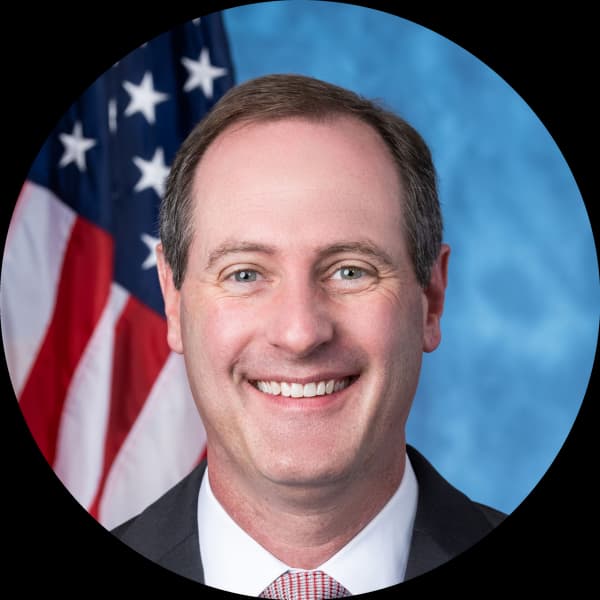
Tracey Mann
Kansas's 1st congressional district
KS-1 Midterms Intelligence
Tracey Mann represents one of the country’s safest rural Republican seats: KS-01 sits at R+38 and has continued drifting right, giving him broad room to posture as a farm-country conservative without meaningful general-election threat. The district’s identity is set by scale and spread—large, lightly urbanized, heavily white but with a meaningful Hispanic presence tied to workforce needs—and by an economy where agriculture remains culturally dominant even if healthcare/education and manufacturing employ more people. Mann’s issue mix reflects that reality: agriculture first, but always filtered through taxes, government skepticism, and national-security rhetoric.
For advocates, this is not a persuasion district so much as a permission structure district. Messages work when they defend producers, lower costs, and protect local institutions rather than expand Washington; health access can break through if framed around workforce stability in a district with 9.1% uninsured and 38.6% obesity. The opening is practical, not ideological: connect policy to hospitals, ag supply chains, and small-town employers, and avoid culture-war cues that trigger reflexive resistance in a seat where Democratic vote share is just 30.9%.
Economic & Demographic Snapshot
Data sourced from U.S. Census Bureau ACS 5-Year Estimates (2017-2021 vs. 2019-2023). All figures are statistical estimates with 90% confidence level.
Kansas District 1 Demographics
Median Age 36 (vs 38.5) · Homeownership 65.6% (vs 65.5%) · Bachelor’s+ 30.4% (vs 33.7%) · Poverty 7.7% (vs 12.4%) · Income $66,270 (vs $37,585)
Age Distribution
Skews younger than the national average (median age 36 vs 38.5 nationally). 29% of residents are in the 20–39 working-age bracket — housing affordability, student debt, and workforce messaging indexes high.
Race & Ethnicity
White residents are the largest group at 78.6%. Also significant: Hispanic (16.2%).
* Hispanic includes respondents of any race. Racial categories include both Hispanic and non-Hispanic individuals.
Education
30.4% hold a bachelor’s degree or higher, below the 33.7% national average. 9.3% of residents lack a high school diploma.
Income Distribution
Median household income is $66,270, well above the $37,585 national median.
Housing
Homeownership at 65.6% (vs 65.5% nationally). Median rent is $944. Median home value is $171,800.
How People Get to Work
Car-dependent: 75.4% drive alone to work. Average commute is 17.5 minutes.
Kansas District 1 FAQ
Reach Kansas Lawmakers
Representative Mann focuses on Agriculture and Food, Health and Taxation. Deliver personalized constituent letters to Kansas's federal, state, and local officials — live in under five minutes.
Grassroots advocacy & legislator intelligence. Used by nonprofits, associations, and GR firms nationwide.
Start a Campaign