H.R. 3642: Final Honors Act of 2025
Sponsor
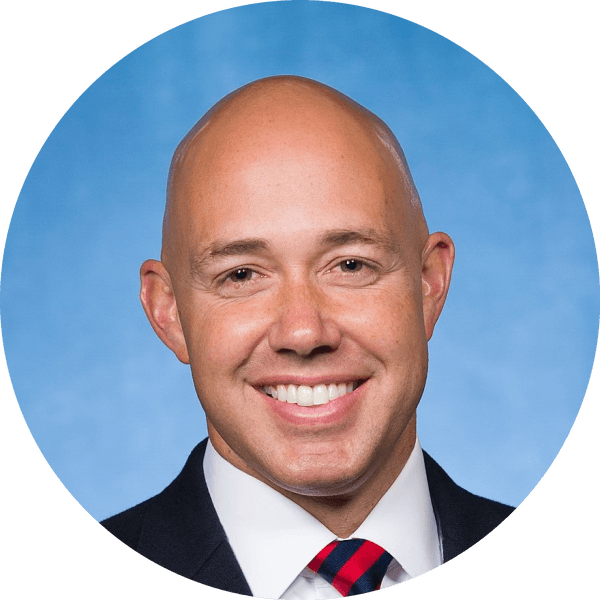
Brian Mast
Republican · FL-21
Fallen troops could lie in honor at the Capitol — if families ask
Why it matters
Lying in honor in the Capitol Rotunda is one of the rarest tributes the nation gives — only a handful of people have ever received it. H.R. 3642 would open that space to any service member who dies from a line-of-duty injury, but only when their closest surviving family member requests it.
H.R. 3642, the Final Honors Act of 2025, is short and ceremonial. It would let the remains of a fallen service member lie in honor in the Capitol Rotunda if three things are true: the person served in the Armed Forces, they died from an injury suffered in the line of duty, and that injury isn't one the law carves out as an exception.
The key word is request. This honor never happens on the government's own initiative. It's triggered only when the primary surviving next of kin — the closest family member — asks for it. The family holds the decision.
The military also has to reach out first. The branch that oversaw the service member must formally notify the next of kin, using the same notification process already on the books for service deaths.
From there, the Architect of the Capitol takes over the logistics, working under the Speaker of the House and the President pro tempore of the Senate. The Architect would set the date and time for the honor and write the rules for deciding who counts as the closest surviving family member when it isn't obvious.
The bill looks forward, not back. It would apply only to service members who die on or after the day it becomes law, so it wouldn't reopen the question for families who lost someone earlier. There are no dollar amounts, grants, or penalties in the text — any cost would be the administrative and ceremonial work of pulling each honor together.
Bill Progress
Latest Action · May 29, 2025
Referred to the House Committee on House Administration.
H.R. 3642 Bill Summary
What H.R. 3642 actually does.
Fallen troops can lie in honor in the Rotunda
The remains of a service member who died from a line-of-duty injury could lie in honor in the Capitol Rotunda, as long as the injury isn't one the law excludes from eligibility.
The family decides — nothing happens without their request
The honor is triggered only when the primary surviving next of kin requests it. The federal government cannot proceed on its own; the choice belongs to the closest surviving family member.
The military must notify the family
The branch responsible for the service member must formally notify the next of kin, following the same notification process Congress set for service deaths in the 2006 defense authorization law.
An existing legal definition decides who's responsible
Rather than invent a new term, the bill ties the notification duty to the existing legal definition of which military secretary is in charge, so responsibility lands on a clearly identified office.
The Architect of the Capitol runs the logistics
Working under the Speaker of the House and the President pro tempore of the Senate, the Architect of the Capitol would set the date and time of the honor and write the rules for identifying the closest surviving family member.
It applies only going forward
The bill covers only service members who die on or after the day it becomes law. It would not extend eligibility to families who lost someone before enactment.
Who benefits from H.R. 3642?
Families of fallen service members
The closest surviving family member would gain the right to request that their loved one lie in honor in the Capitol Rotunda — a tribute previously reserved for a tiny number of Americans — and the military would be required to notify them of that option.
Service members who die in the line of duty
Any member of the Armed Forces who dies from a line-of-duty injury could become eligible for this national honor, so long as the injury isn't excluded under the law's exceptions.
Capitol leadership and ceremonial staff
The Speaker, the President pro tempore, and the Architect of the Capitol would have a clear framework for approving, scheduling, and managing these honors instead of handling each one as a one-off decision.
Military communities and the public
The bill creates a predictable, visible path for honoring line-of-duty deaths in the Capitol, replacing case-by-case discretion with a defined process families can count on.
Who is affected by H.R. 3642?
Armed Forces families seeking the honor
Whether a family can request the Rotunda honor turns on whether they're recognized as the 'primary surviving next of kin' under regulations the Architect of the Capitol would still have to write.
Military department leadership
The military secretary in charge of the relevant branch would carry a new duty: notify the closest surviving family member, using the existing service-death notification process.
The Architect of the Capitol
The Architect would have to carry out the law under the direction of the Speaker and the President pro tempore — setting each honor's date and time and drafting the next-of-kin rules.
Families of service members who died before enactment
Because the bill applies only to deaths on or after the day it becomes law, families who lost a service member earlier would not be covered.
HR3642 Legislative Journey
House: Committee Action
May 29, 2025
Referred to the House Committee on House Administration.
About the Sponsor
Brian Mast
Republican, Florida's 21st congressional district · 9 years in Congress
Committees: Foreign Affairs, Transportation and Infrastructure
View full profile →
Committee Sponsors
Committee on House Administration
0 of 12 committee members cosponsored
No committee members have cosponsored this bill
8 Republicans across this committee haven't cosponsored yet. Mobilize their constituents
H.R. 3642 Quick Facts
- Committee
- House Administration
- Chamber
- House
- Policy
- Congress
- Introduced
- May 29, 2025
Referred to the House Committee on House Administration.
May 29, 2025
Official Sources
Official Congress.gov page for the Final Honors Act of 2025 with bill text, actions, and status updates.
Congressional Research Service explainer on how lying in state and lying in honor in the Capitol Rotunda work — the exact tribute this bill would extend to fallen service members.
Provides the statutory definitions in title 10, including the bill's cross-reference at section 101(9) for the term 'Secretary concerned.'
Official U.S. Code section referenced by the bill for the line-of-duty exclusion that determines whether an injury counts for eligibility.
Death gratuity statute; the bill's next-of-kin notification duty is cross-referenced at the 10 U.S.C. 1475 note.
Official GovInfo publication of the National Defense Authorization Act for Fiscal Year 2006, whose section 562 the bill cites for next-of-kin notification procedures.
H.R. 3642 Common Questions
What would H.R. 3642 actually do?
The Final Honors Act of 2025 would let a service member who died from a line-of-duty injury lie in honor in the Capitol Rotunda. It happens only if the closest surviving family member requests it.
Does the family have to ask, or does it happen automatically?
The family has to ask. The honor is never the government's call — it's triggered only when the primary surviving next of kin requests it. The decision belongs entirely to the closest surviving family member.
Does H.R. 3642 cover service members who died before it becomes law?
No. The bill applies only to members of the Armed Forces who die on or after the day it's enacted, so it wouldn't reopen eligibility for earlier deaths.
What kind of death qualifies a service member for the honor?
The member must have died from an injury suffered in the line of duty. Certain injuries are carved out by an exclusion in title 38 of the U.S. Code, and those wouldn't count toward eligibility.
Who has to tell the family this option exists?
The military secretary in charge of the service member's branch must notify the closest surviving family member, following the same notification process Congress set for service deaths in the 2006 defense authorization law.
Who decides when a fallen service member lies in honor at the Capitol?
The Architect of the Capitol sets the date and time, working under the direction of the Speaker of the House and the President pro tempore of the Senate.
Who counts as the 'primary surviving next of kin'?
The bill doesn't spell it out. It directs the Architect of the Capitol to write regulations defining who the closest surviving family member is, which matters most when a family's situation isn't clear-cut.
Based on H.R. 3642 bill text
H.R. 3642 Bill Text
“To permit the remains of certain members of the armed forces who died in line of duty to lie in honor in the rotunda of the United States Capitol, and for other purposes.”
Source: U.S. Government Publishing Office
Get notified when H.R. 3642 moves
Committee votes, floor action, cosponsor changes — straight to your inbox.
Bill alerts + Legisletter's monthly briefing. Unsubscribe anytime.
Congress Bills
5 related bills we're tracking
Restore Trust in Congress Act





Referred to the House Committee on House Administration.
Sep 3, 2025
TRUST in Congress Act



Referred to the House Committee on House Administration.
Jan 14, 2025
Stop Insider Trading Act





Motion to proceed to consideration of measure withdrawn in Senate.
Sep 28, 2026
Armenian Genocide Education Act





Referred to the House Committee on House Administration.
Apr 1, 2025
Semiquincentennial Congressional Time Capsule Act




Became Public Law No: 119-79.
Feb 18, 2026
Trending Right Now
Bills gaining momentum across Congress
America’s Olympic and Paralympic Games Commemorative Coins Act





Referred to the House Committee on Financial Services.
Jul 14, 2025
Fit to Serve Act





Referred to the House Committee on Armed Services.
May 21, 2025
ASAP Act




Ordered to be Reported in the Nature of a Substitute by the Yeas and Nays: 40 - 0.
Sep 16, 2026
Tracking Congress in Congress? Monitor bills, track cosponsor momentum, and launch advocacy campaigns — all from one advocacy platform.