Mr. Speaker, to close, I strongly support H.R. 6719, the Combating Online Predators Act. I encourage all of our colleagues to support it, and I praise the gentlewoman for her leadership on this legislation. Mr. Speaker, I yield back the balance of my time.
H.R. 6719: Combating Online Predators Act
Introduced Dec 15, 20252 cosponsors
Sponsor

Laurel Lee
Republican · FL-15
Bill Progress
IntroducedDec 15
Committee
Pass HouseJan 12
Pass Senate
Signed
Law
Latest Action · Feb 26, 2026
1/3
Passed the House, received in Senate
Threatening a kid into sextortion would be a federal crime
3 min readLast updated June 14, 2026
Why it matters
A predator who threatens to leak a teenager's explicit images unless they send more doesn't always fit cleanly into federal child-exploitation law, sponsors argue. H.R. 6719 makes the threat itself a federal crime — even when the offender is bluffing or the victim is only someone the offender believes is a minor.
H.R. 6719, the Combating Online Predators Act (or COP Act), adds a single new offense to two existing federal child-exploitation laws. It makes it a crime to knowingly send a threat to distribute a sexually explicit image of a minor when the goal is to pressure that minor into producing or sending more.
The crime is the threat, not the image. Under the bill, a predator doesn't have to actually possess or share anything — sending the threat across state lines or online is enough to trigger charges.
It also covers cases where the target is someone the offender believes is a minor, which sponsors say closes a gap that let some offenders argue they didn't know the victim's age. According to the bill's official summary, attempts and conspiracies to make these threats are covered too.
The bill doesn't set new prison terms. Instead, it folds the threat offense into the penalty structures already attached to the federal child-pornography statutes it amends, so prosecutors charge it like the related crimes already on the books.
H.R. 6719 Bill Summary
What H.R. 6719 actually does.
1
Sending the threat becomes the crime
Makes it a federal offense to knowingly distribute, offer, send, or provide a threat to share a sexually explicit image of a minor, with the intent of coercing that minor into producing more.
2
Covers victims the offender believes are minors
Applies whether the target is an actual minor or a person the defendant believes is a minor — which sponsors say removes an age-knowledge defense.
3
Reaches online and cross-state threats
Triggers when the threat is made in or affecting interstate or foreign commerce, which covers most online communication.
4
Adds attempts and conspiracies
Per the bill's official summary, trying to make such a threat or conspiring to do so is also prohibited, not just a completed threat.
5
Uses existing penalty structures
Places the new offense under the penalty framework of the federal child-pornography statutes it amends rather than setting a separate sentence.
Who benefits from H.R. 6719?
Minors targeted by sextortion
Threats aimed at coercing them into producing explicit content become chargeable on their own, before any image changes hands.
Parents and guardians
Gain a clearer federal basis to involve law enforcement when a child is threatened online.
Federal prosecutors
Get an explicit statute for the threat itself rather than having to fit sextortion into laws written around possessing or sharing images.
Who is affected by H.R. 6719?
People who send sextortion threats
Face federal charges for the threat alone, including when they are bluffing or the victim is someone they believe is a minor.
Social media and messaging platforms
Where most of these threats are sent, and where reporting and cooperation with investigators may come into play.
Courts and defense attorneys
Must apply a new offense that turns on belief about a victim's age and intent, which may draw legal challenges over how broadly it reaches.
On the Record
What Congress Is Saying
H.R. 6719 has come up 20 times in the Congressional Record so far.
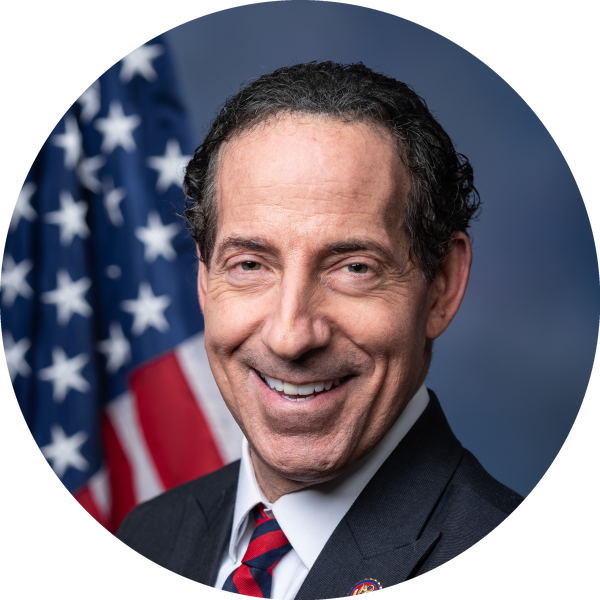
Mr. Speaker, I rise in support of H.R. 6719, the Combating Online Predators Act, and I echo my distinguished colleague in noting that sextortion is a serious and rising threat faced by countless unsuspecting teens all over America when they use the internet and social media. The National Center for Missing and Exploited Children, or NCMEC, operates a Cyber Tip Line to receive reports of suspected child exploitation. The Cyber Tip Line has received many more reports of sextortion of minors in recent years, amounting to tens of thousands of potential victims.
H.R. 6719 also appeared in 1 in the Extensions of Remarks and 6 routine cosponsor filings.
HR6719 Legislative Journey
Passed Committee
Feb 26, 2026
Committee on the Judiciary. Ordered to be reported with an amendment in the nature of a substitute favorably.
Committee Action
Jan 13, 2026
Received in the Senate and Read twice and referred to the Committee on the Judiciary.
House: Vote Held
Jan 12, 2026
On motion to suspend the rules and pass the bill, as amended Agreed to by voice vote. (text: CR H628)
House: Vote Held
Dec 18, 2025
Ordered to be Reported in the Nature of a Substitute by Voice Vote.
House: Committee Action
Dec 15, 2025
Referred to the House Committee on the Judiciary.
About the Sponsor
Laurel Lee
Republican, Florida's 15th congressional district · 3 years in Congress
Committees: House Administration, the Judiciary, Energy and Commerce
View full profile →
Cosponsors (2)
No new cosponsors in 189 days — momentum stalled
This bill has 2 cosponsors: 1 Democrat, 1 Republican, reflecting bipartisan support. Cosponsors represent 2 states: Kansas, New York.
1Democrat1Republican·2 statesBipartisan
Committee Sponsors
Judiciary Committee
10D11R
|0 signed21 not yet0 of 21 committee members cosponsored
No committee members have cosponsored this bill

34 Republicans across these committees haven't cosponsored yet. Mobilize their constituents
What laws does H.R. 6719 change?
1 changes
Sections Amended
Section 2 of PROTECT Our Children Act of 2008 (34 U.S.C. 21101)
striking paragraph (1) and inserting the following: ``(1) Child exploitation
H.R. 6719 Quick Facts
Cosponsors
2


- Committee
- Judiciary
- Chamber
- House
- Policy
- Crime and Law Enforcement
- Introduced
- Dec 15, 2025
Passed the House, received in Senate
Feb 26, 2026
Official Sources
H.R. 6719 on Congress.gov
The official bill page with full text, the substitute amendment, actions, and cosponsors.
S. 3704 — Identical Senate Companion
The identical Senate version moving in parallel through the Judiciary Committee.
18 U.S.C. § 2252A
One of the two federal child-exploitation statutes the bill amends to add the new threat offense.
18 U.S.C. § 2252
The second statute the bill amends, supplying the penalty framework the new threat offense folds into.
FBI — Sextortion
The FBI's official guidance on the sextortion tactic this bill targets, including how to report it.
DOJ Project Safe Childhood
The Justice Department initiative that prosecutes the online child-exploitation crimes this bill addresses.
H.R. 6719 Common Questions
What does the Combating Online Predators Act actually make illegal?
It makes it a federal crime to knowingly send a threat to share a sexually explicit image of a minor when the goal is to pressure that minor into producing or sending more. That coercion tactic is commonly called sextortion.
Is the threat illegal even if no image is ever sent?
Yes. Under H.R. 6719 the crime is the threat itself. The offender doesn't have to possess or distribute any image — knowingly sending the threat is enough to be charged.
Does it apply if the predator was bluffing or the image is fake?
Because the offense is built around the threat rather than a real image, sponsors say it reaches offenders who bluff or fabricate. How courts treat fabricated images is likely to be tested in early cases.
What if the offender didn't know the victim was a minor?
The bill covers threats aimed at someone the defendant believes is a minor. Sponsors say that closes a gap that let some offenders argue they didn't know the victim's real age.
Does it cover threats sent online or across state lines?
Yes. The offense applies when a threat is made in or affecting interstate or foreign commerce, which covers most online messages, DMs, and texts that cross state or national borders.
What are the penalties under the COP Act?
The bill doesn't set a separate sentence. It folds the new threat offense into the penalty structures of the federal child-pornography statutes it amends, so it's punished alongside those related crimes.
Has H.R. 6719 become law?
Not yet. The House passed it by voice vote in January 2026, and the Senate Judiciary Committee ordered it reported favorably on February 26, 2026. It still needs a full Senate vote and the President's signature.
Who introduced the bill and does it have bipartisan support?
Representative Laurel Lee (R-FL) introduced H.R. 6719. Its cosponsors include a Republican and a Democrat, and an identical Senate version, S. 3704, is moving in parallel.
Based on H.R. 6719 bill text
H.R. 6719 Bill Text
“To prohibit threats to a minor, and for other purposes.”
Source: U.S. Government Publishing Office
Bill Alerts
Get notified when H.R. 6719 moves
Committee votes, floor action, cosponsor changes — straight to your inbox.
Bill alerts + Legisletter's monthly briefing. Unsubscribe anytime.
Crime and Law Enforcement Bills
9 related bills we're tracking
H.R. 909
Crime Victims Fund Stabilization Act of 2025

Ann WagnerR-MO



+323
327 cosponsors
Received in the Senate and Read twice and referred to the Committee on the Judiciary.
Jan 13, 2026
HouseCrime and Law Enforcement
H.R. 18
Bipartisan Background Checks Act of 2025

Mike ThompsonD-CA




+210
214 cosponsors
Referred to the House Committee on the Judiciary.
Jun 10, 2025
HouseCrime and Law Enforcement
H.R. 2853
Combating Organized Retail Crime Act of 2025

David JoyceR-OH




+202
206 cosponsors
Received in the Senate and Read twice and referred to the Committee on the Judiciary.
May 13, 2026
HouseCrime and Law Enforcement
H.R. 1564
Ethan's Law

Rosa DeLauroD-CT




+196
200 cosponsors
Referred to the House Committee on the Judiciary.
Feb 25, 2025
HouseCrime and Law Enforcement
H.R. 3115
Assault Weapons Ban of 2025

Lucy McBathD-GA


+185
189 cosponsors
+3 this monthReferred to the House Committee on the Judiciary.
Apr 30, 2025
HouseCrime and Law Enforcement
H.R. 38
Constitutional Concealed Carry Reciprocity Act of 2025

Richard HudsonR-NC




+185
189 cosponsors
Placed on the Union Calendar, Calendar No. 289.
Oct 3, 2025
HouseCrime and Law Enforcement
H.R. 1269
Honoring Our Fallen Heroes Act of 2025

Mary ScanlonD-PA


+176
180 cosponsors
Referred to the House Committee on the Judiciary.
Feb 12, 2025
HouseCrime and Law Enforcement
H.R. 2368
Raise the Age Act of 2025

Glenn IveyD-MD

+167
171 cosponsors
+3 this monthReferred to the House Committee on the Judiciary.
Mar 26, 2025
HouseCrime and Law Enforcement
H.R. 21
Born-Alive Abortion Survivors Protection Act
Ann WagnerR-MO



+159
163 cosponsors
Received in the Senate and Read twice and referred to the Committee on the Judiciary.
Jan 24, 2025
HouseCrime and Law Enforcement
Trending Right Now
Bills gaining momentum across Congress
H.R. 9250Surging+96
Great American Outdoors Act 250

Bruce WestermanR-AR



+213
217 cosponsors
+96 this monthOrdered to be Reported in the Nature of a Substitute (Amended) by Voice Vote.
Jun 24, 2026
HousePublic Lands and Natural Resources
H.R. 4382Surging+37
America’s Olympic and Paralympic Games Commemorative Coins Act

Brad ShermanD-CA




+155
159 cosponsors
+37 this monthReferred to the House Committee on Financial Services.
Jul 14, 2025
HouseFinance and Financial Sector
H.R. 6130Surging+30
ASAP Act

Vern BuchananR-FL




+172
176 cosponsors
+30 this monthReferred to the Committee on Energy and Commerce, and in addition to the Committee on Ways and Means, for a period to be subsequently determined by the Speaker, in each case for consideration of such provisions as fall within the jurisdiction of the committee concerned.
Nov 19, 2025
HouseHealth
Tracking Crime and Law Enforcement in Congress? Monitor bills, track cosponsor momentum, and launch advocacy campaigns — all from one advocacy platform.